Title
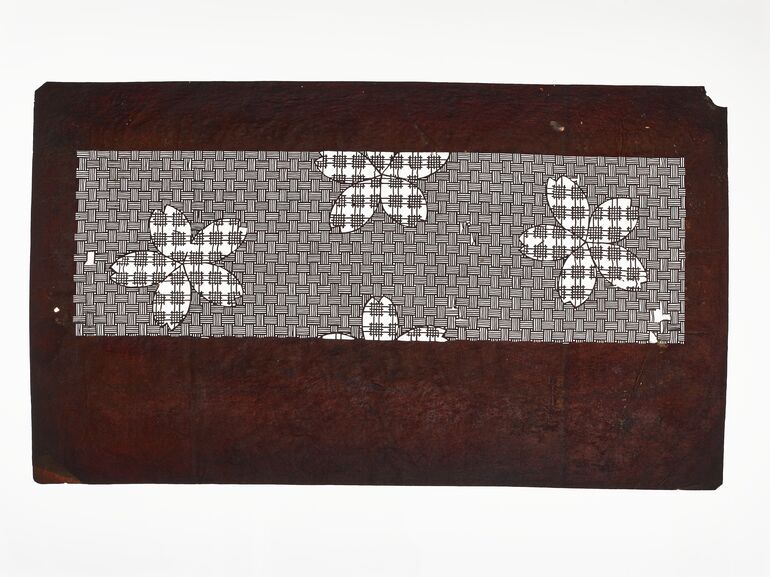
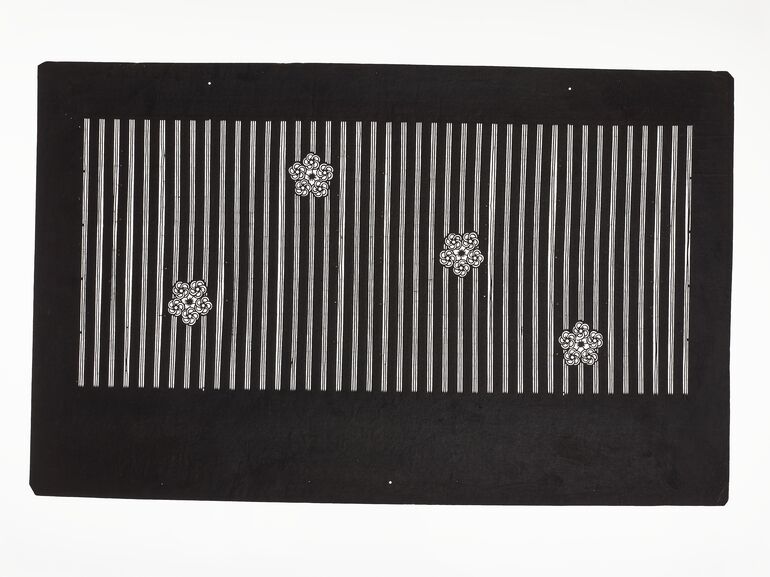
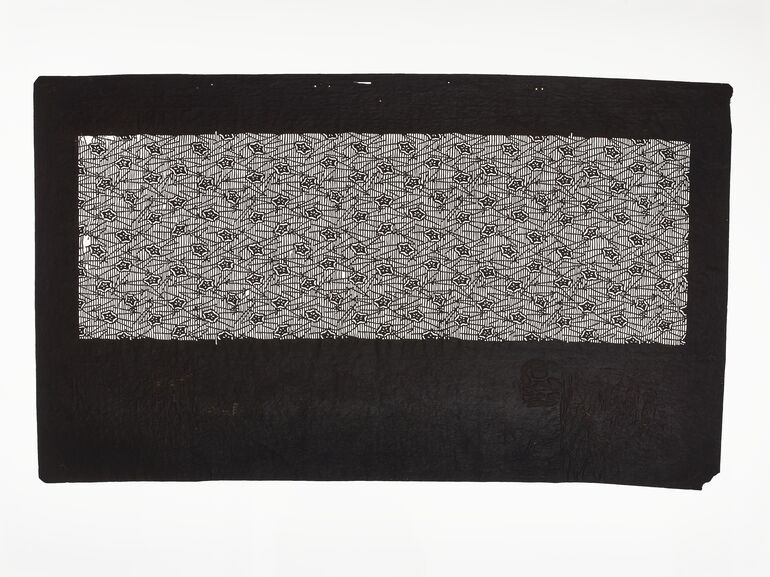
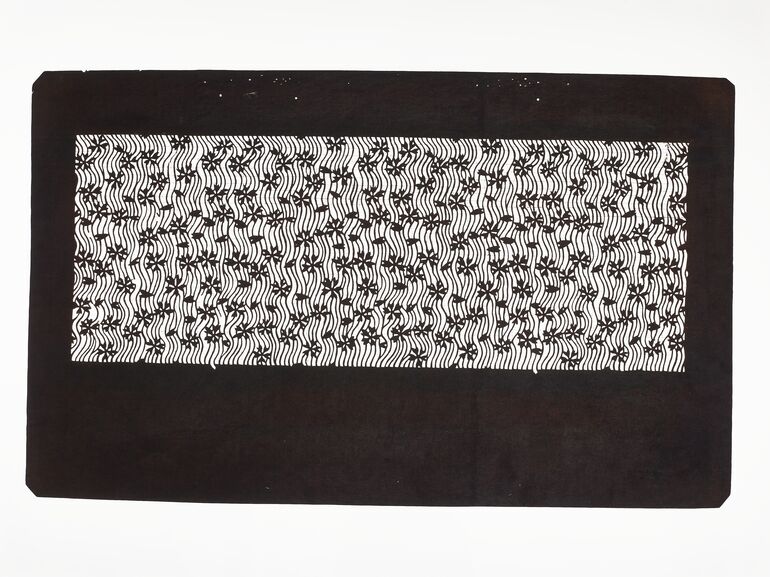
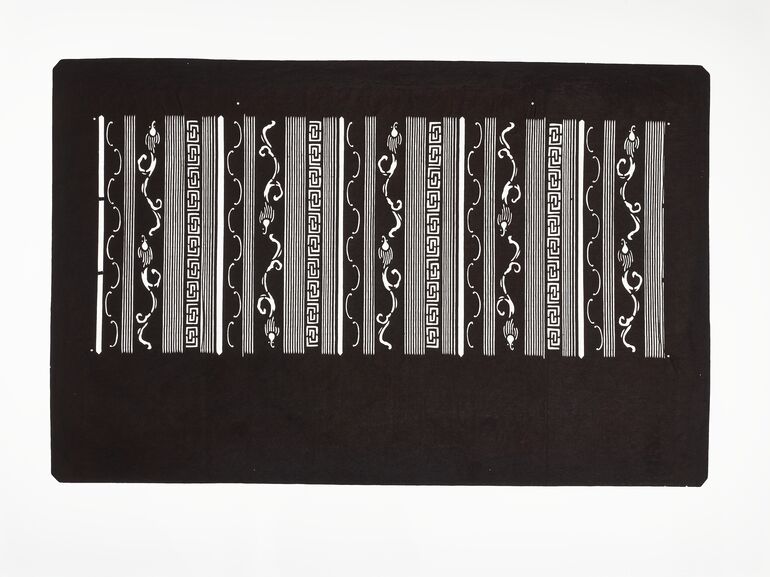
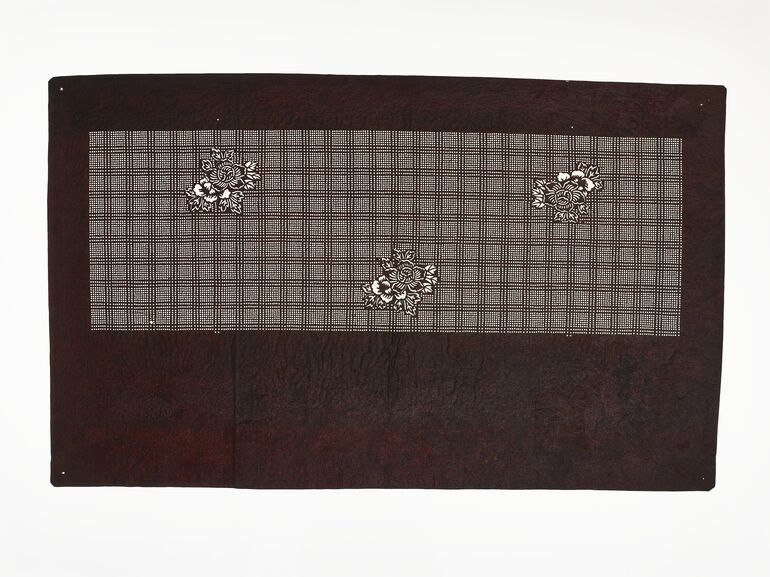
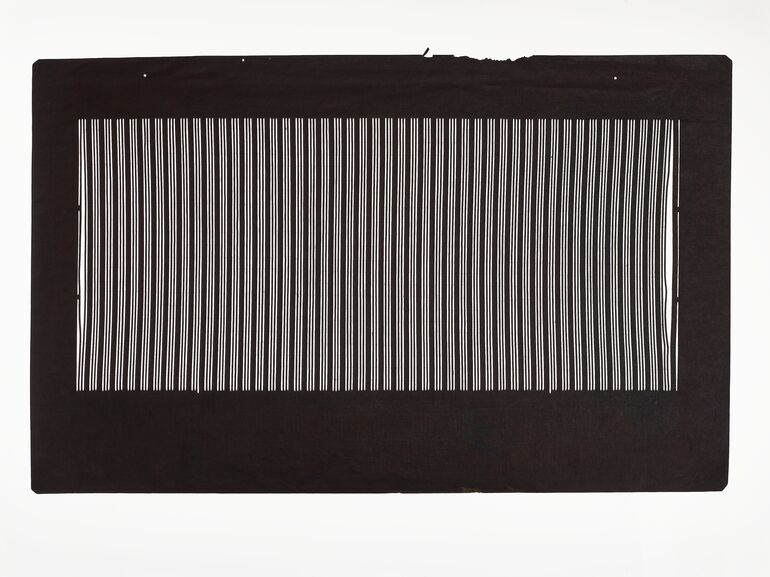
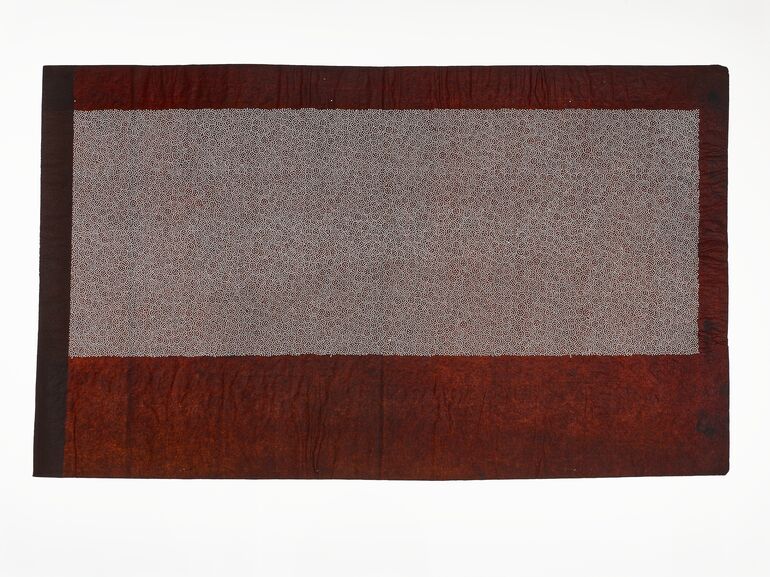
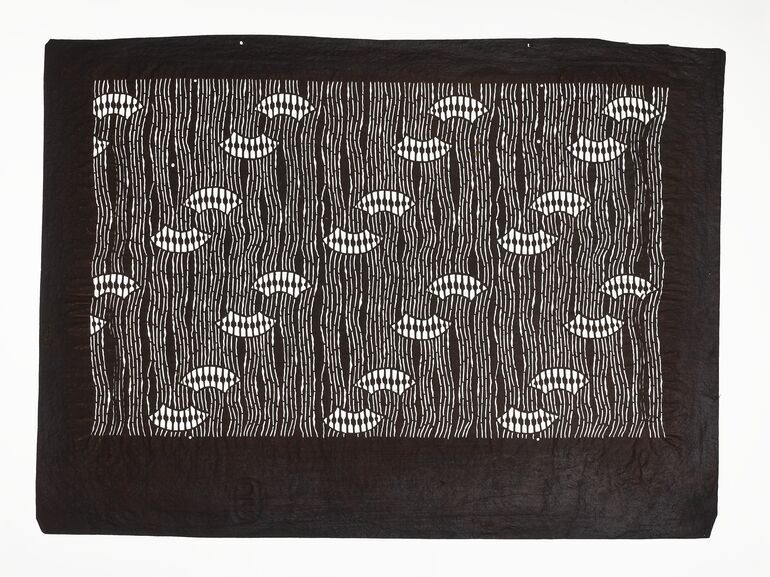
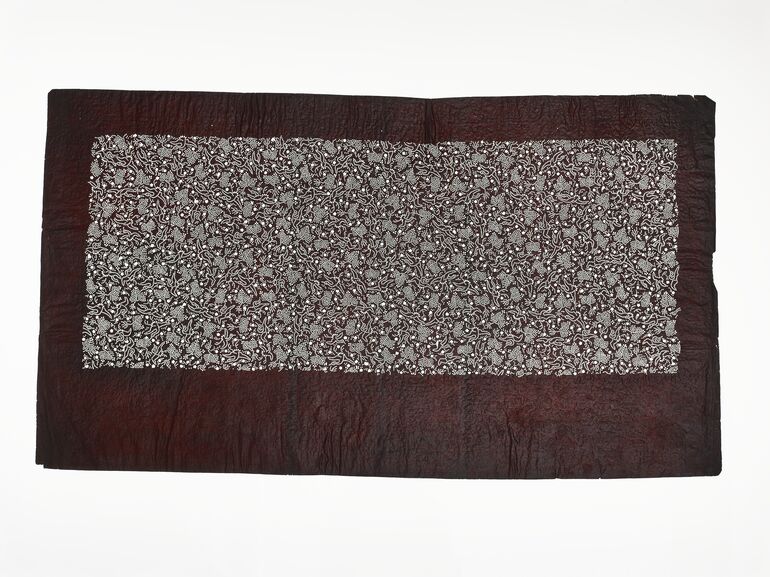
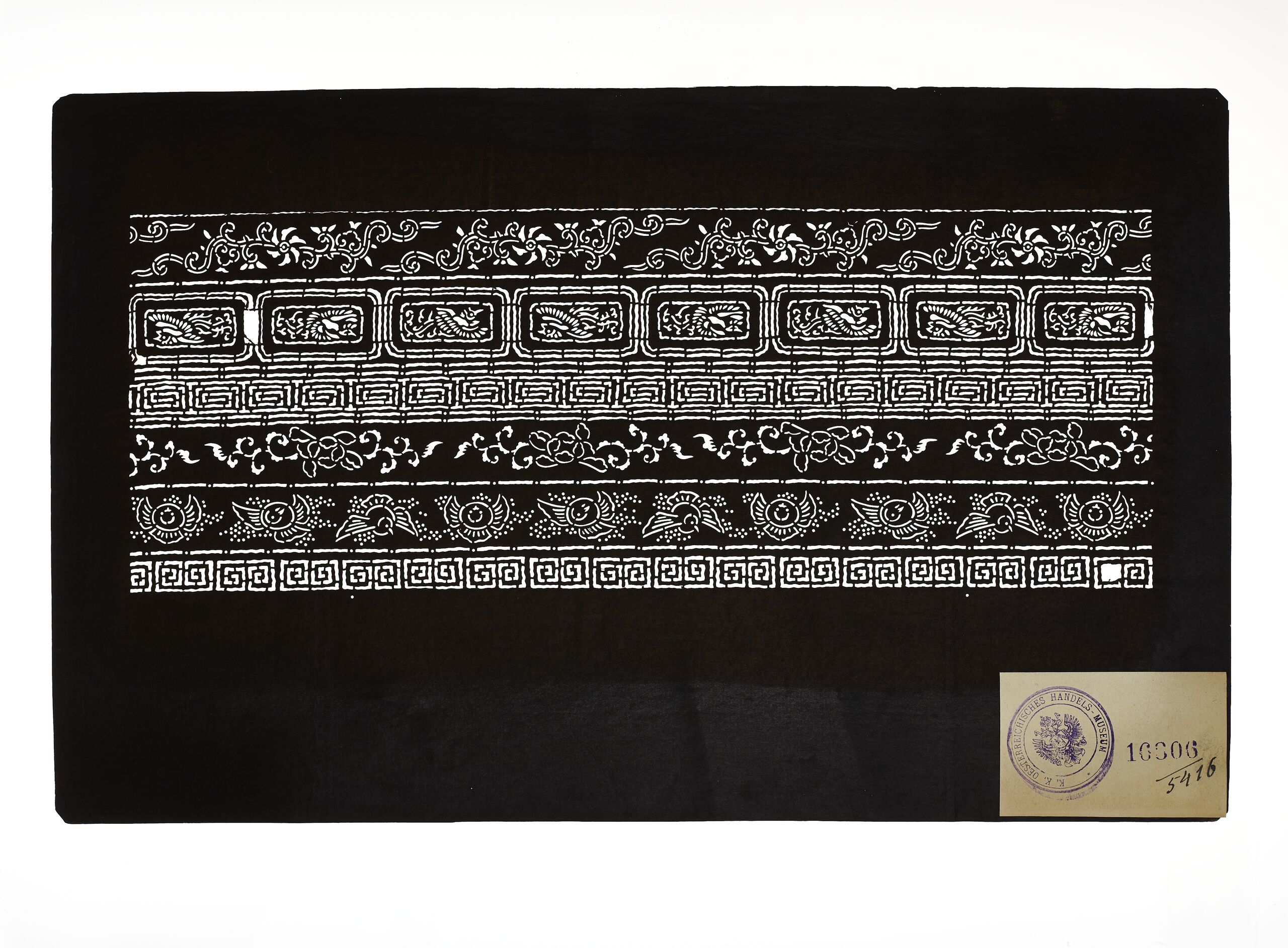
- Plant pattern (shokubutsu monyō 植物文様), animal pattern (dōbutsu monyō 動物文様), surface pattern (waritsuke monyō 割付文様), stripe pattern (shima monyō 縞文様): horizontal stripes with meander (raimon 雷文), with tendrils and "twisted" flowers (nejiribana ねじり花), with peonies and tendrils, with fluffed sparrows (fukura suzume ふくら雀) and arare あられ (hailstones: dots) and with phoenix in rectangles
Collection
Period | Style | School
Material | Technique
Measurements
- height: 25.6 cm
- width: 41.2 cm
- 1 Muster - height: 13.1 cm
- 1 Muster - width: 35.6 cm
Inventory number
- OR 3925-5416
Acquisition
- assumption , 1907
Department
- Asia Collection
Description
-
"Dyed ground" (jizomari 地染).
Peonies symbolise wealth and beauty. Because of their magnificent blossom with many petals, they are often used as a motif for handicrafts. Red peonies were even said to be able ensure longevity and immortality when drunk as an herbal decoction.
Fukura suzume (fluffed sparrow) is an auspicious motif, as the name can also be written with the characters fuku福 (happiness), ra 良 (good) and suzume 雀 (sparrow) or with the characters fuku福 (happiness), rai来 (coming) and suzume 雀 (sparrow). Its 'fluffed and puffed-up' shape gives the impression of a good, carefree life.
The Chinese phoenix is a mythical creature with plumage in five colours, combining the characteristics of the qilin, deer, snake, fish, turtle, swallow and chicken. As a divine being who only appears in times of peace and prosperity, he has become a symbol of good fortune in various Asian cultures throughout history. The phoenix motif was likely introduced to Japan during the Asuka period (7th century). It represents happiness, peace, and prosperity, as well as marital harmony and immortality.
-
stencil (katagami 型紙), Plant pattern (shokubutsu monyō 植物文様), animal pattern (dōbutsu monyō 動物文様), surface pattern (waritsuke monyō 割付文様), stripe pattern (shima monyō 縞文様): horizontal stripes with meander (raimon 雷文), with tendrils and "twisted" flowers (nejiribana ねじり花), with peonies and tendrils, with fluffed sparrows (fukura suzume ふくら雀) and arare あられ (hailstones: dots) and with phoenix in rectangles, Anonym, MAK Inv.nr. OR 3925-5416
-
https://sammlung.mak.at/en/collect/plant-pattern-shokubutsu-monyo-植物文様-animal-pattern-dobutsu-monyo-動物文様-surface-pattern-waritsuke-monyo-割付文_341563
Last update
- 25.02.2026
Related via
Artist
Artist
Location
Material