Title
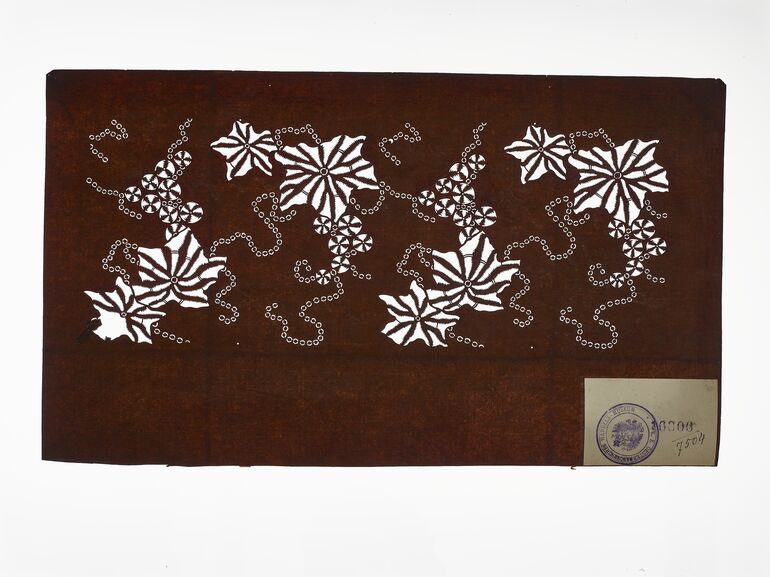
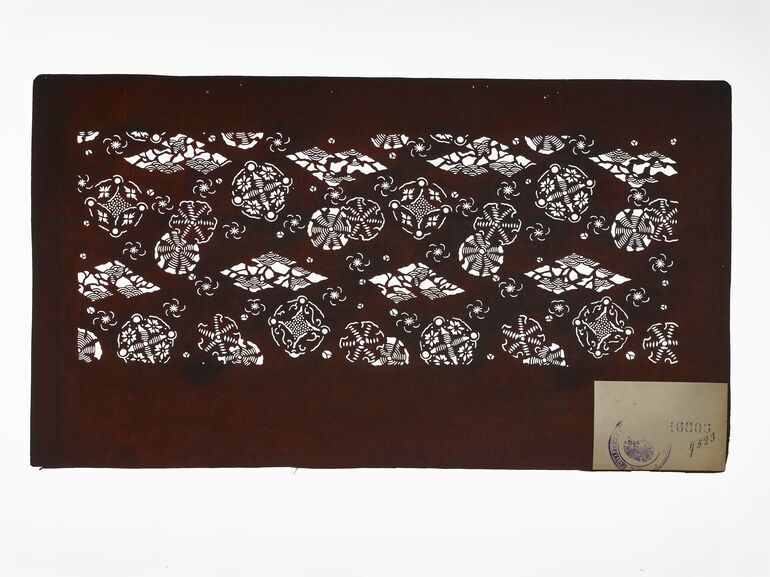
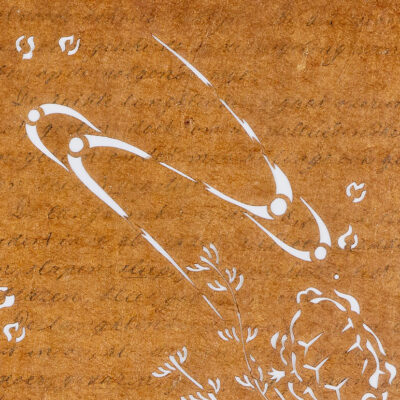
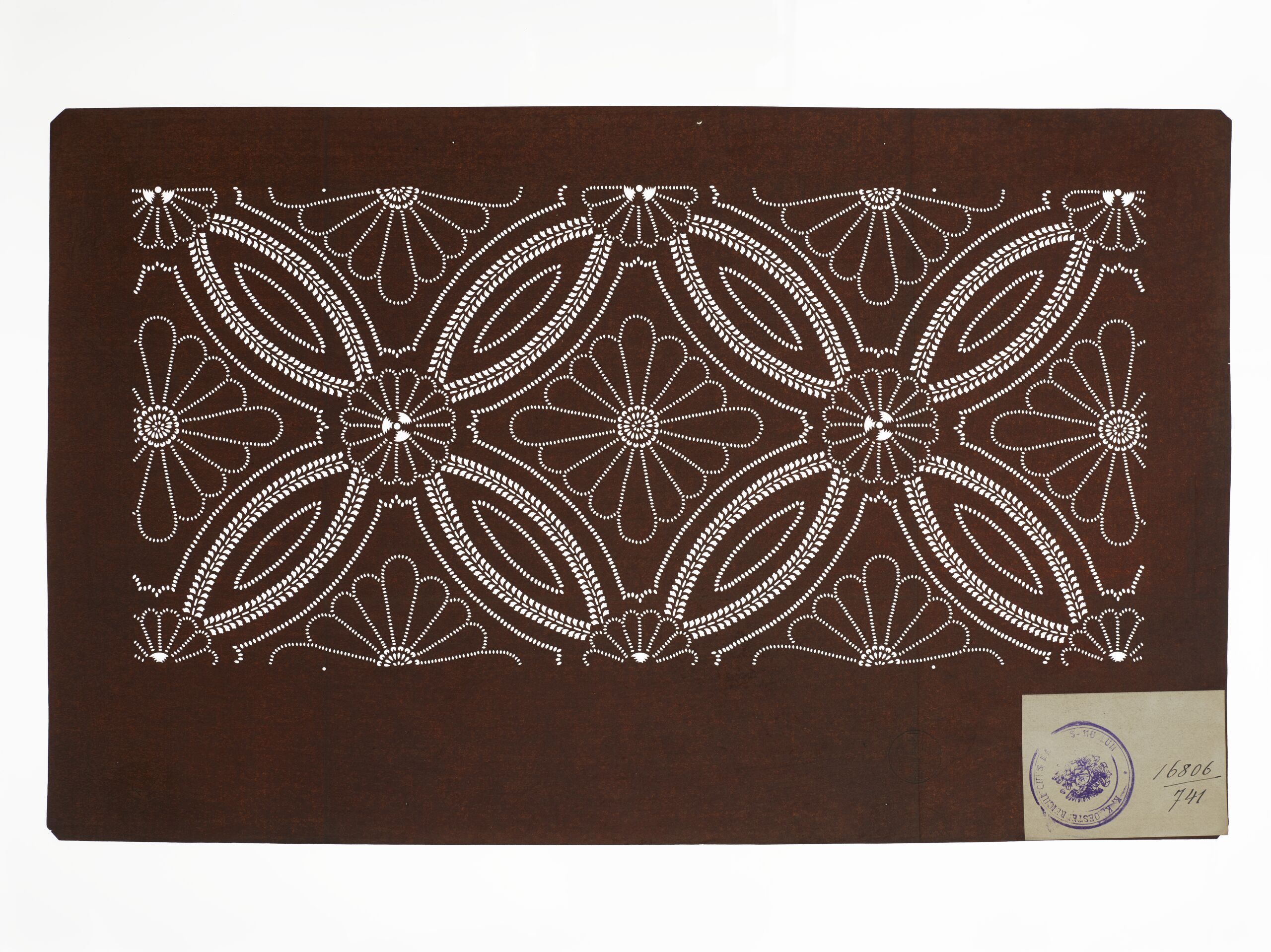
- Surface pattern (waritsuke monyō 割付文様)/plant pattern (shokubutsu monyō 植物文様): interlaced circles (shippō tsunagi 七宝繋ぎ) of petals, chrysanthemums and wisteria flowers
Collection
Period | Style | School
Material | Technique
Measurements
- height: 25.8 cm
- width: 41.6 cm
- 1 Muster - height: 16.7 cm
- 1 Muster - width: 35.6 cm
Inventory number
- OR 3925-741
Acquisition
- assumption , 1907
Department
- Asia Collection
Inscriptions
- stamp: Dealer (型売商人 katauri shōnin): [寺尾斎兵衛 Terao Saibee]Shop Name (暖簾名 noren na): 寺尾 TeraoTrader’s Logo (yagō 屋号): 曲尺にサ kanejaku with "sa"Location (所在地 shozaichi): 勢州白子 Seishū, ShirokoBlack stamp, round (丸型、黒印 marugata, kokuin) Dealer (型売商人 katauri shōnin): [寺尾斎兵衛 Terao Saibee]Shop Name (暖簾名 noren na): 寺尾 改 Terao aratame Trader’s Logo (yagō 屋号): 曲尺にサ kanejaku with "sa"Location (所在地 shozaichi): ---Black stamp Black stamp in the shape of a calabash (瓢箪型 、黒印 hyōtangata, kokuin)Note: 改aratame = an inspection seal, e.g., from the Kishū domain, which also attests to high quality.
Description
-
"Dyed ground" (jizomari 地染). Round stencil dealers' seal (shōin 商印) at the bottom of the stencil.
Shippō tsunagi 七宝繋ぎ („seven Treasures“; interlaced circles): an auspicious pattern (kisshō monyō 吉祥文様) with circles of equal size, placed and connected in an overlapping manner. The circle represents perfection. It is uncertain whether this pattern can be associated with the "Seven Treasures" of Buddhism. Perhaps because human relationships and connections are just as valuable as the “Seven Treasures”.
The chrysanthemum (kiku 菊) symbolizes longevity, which dates back to a Chinese legend. The Yellow River once originated in a chrysanthemum meadow, and a villager who drank from the spring achieved a long life. In Japan, the motif first appears in the Kokin-wakashū 古今和歌集 (early 10th century), while the Man’yōshū 万葉集 from the 8th century lists 157 plant species but does not contain a single poem about chrysanthemums. It is therefore assumed that the flower was first introduced to Japan from China at the end of the 8th or beginning of the 9th century.
Due to their long lifespan and good reproductive capacity, wisteria (fuji 藤) is considered auspicious and is frequently celebrated in the oldest poetry (Man'yōshū 万葉集). The wisteria was also the family crest of the Fujiwara clan.
-
stencil (katagami 型紙), Surface pattern (waritsuke monyō 割付文様)/plant pattern (shokubutsu monyō 植物文様): interlaced circles (shippō tsunagi 七宝繋ぎ) of petals, chrysanthemums and wisteria flowers, Anonym, MAK Inv.nr. OR 3925-741
-
https://sammlung.mak.at/en/collect/surface-pattern-waritsuke-monyo-割付文様-plant-pattern-shokubutsu-monyo-植物文様-interlaced-circles-shippo-tsunagi-七宝_315748
Last update
- 21.07.2026
Related via
Artist
Artist
Location
Material