Title
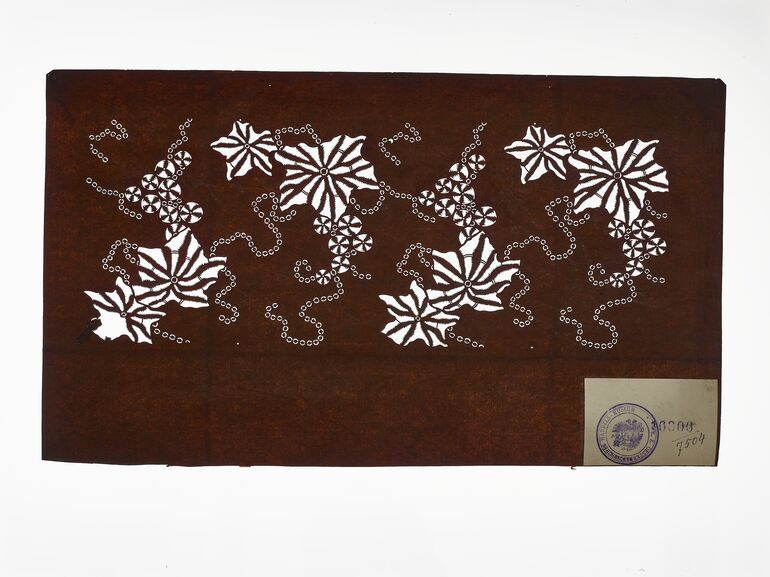
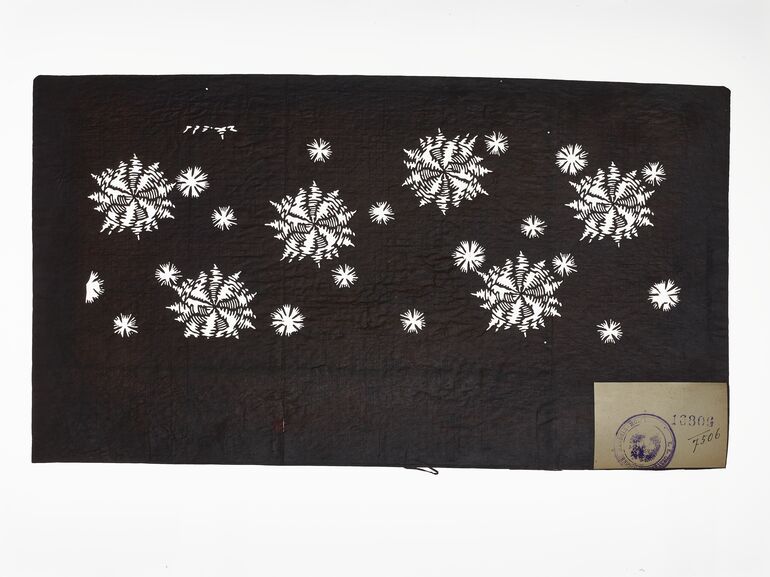
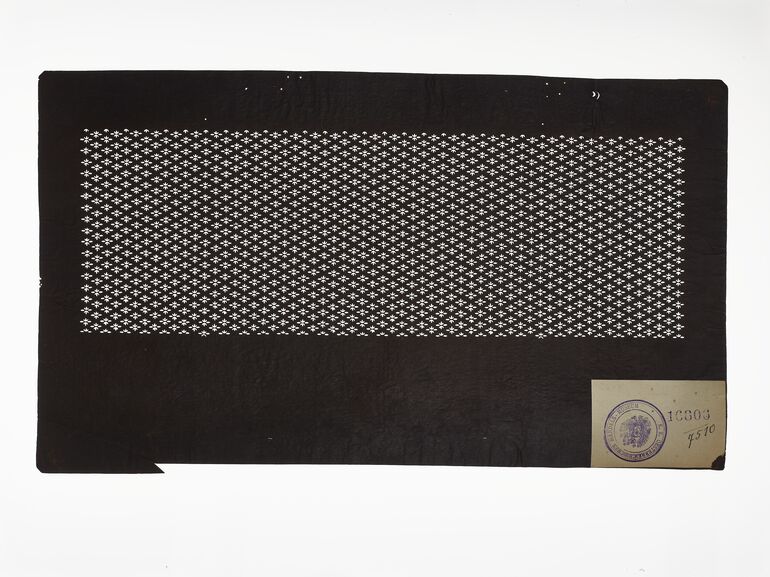
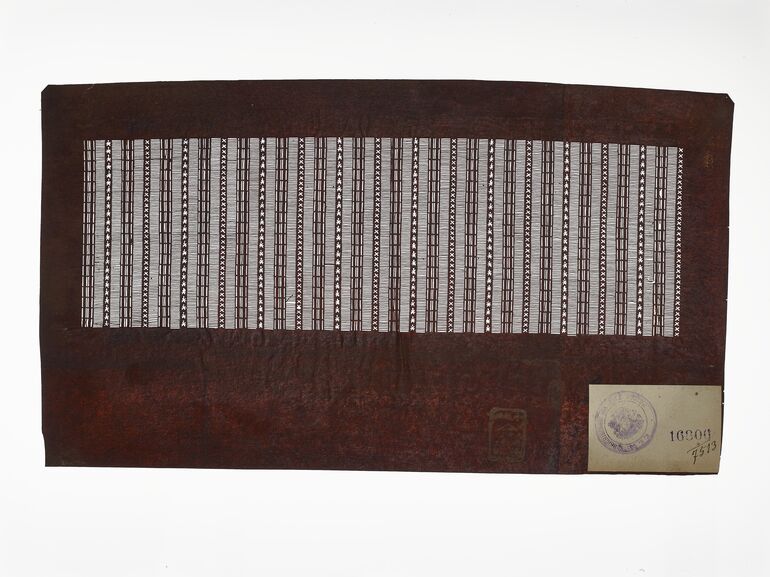
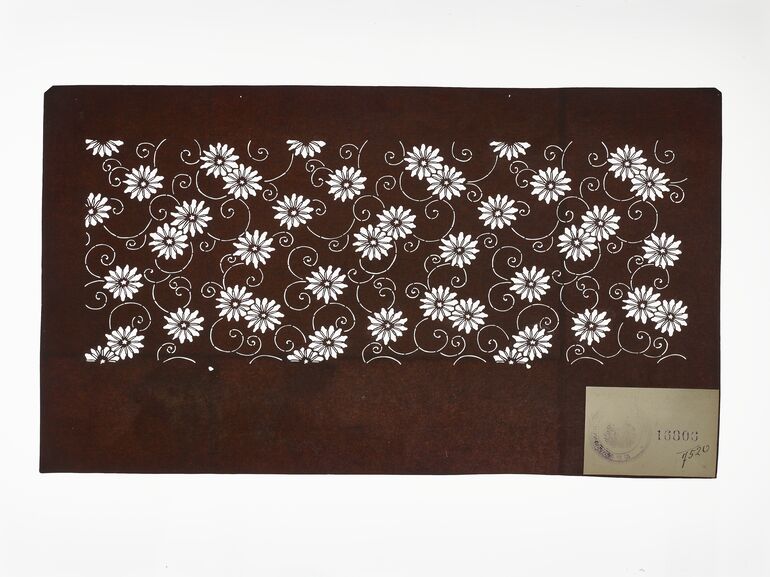
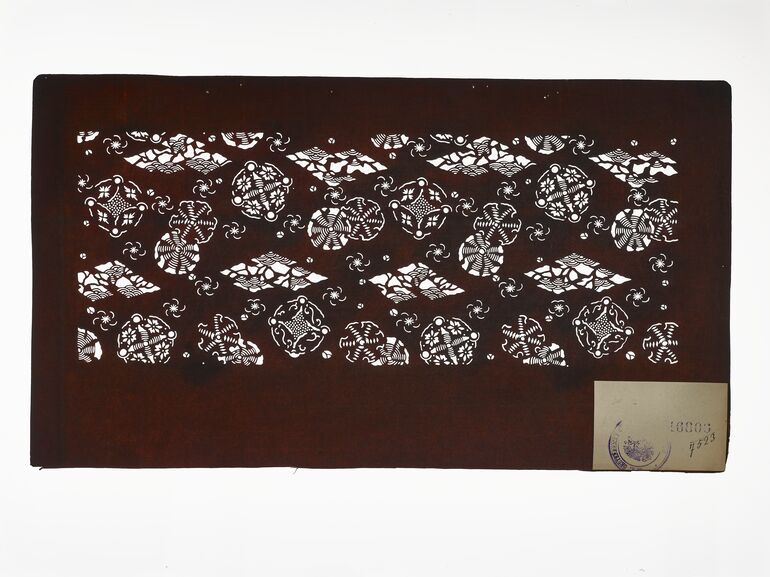
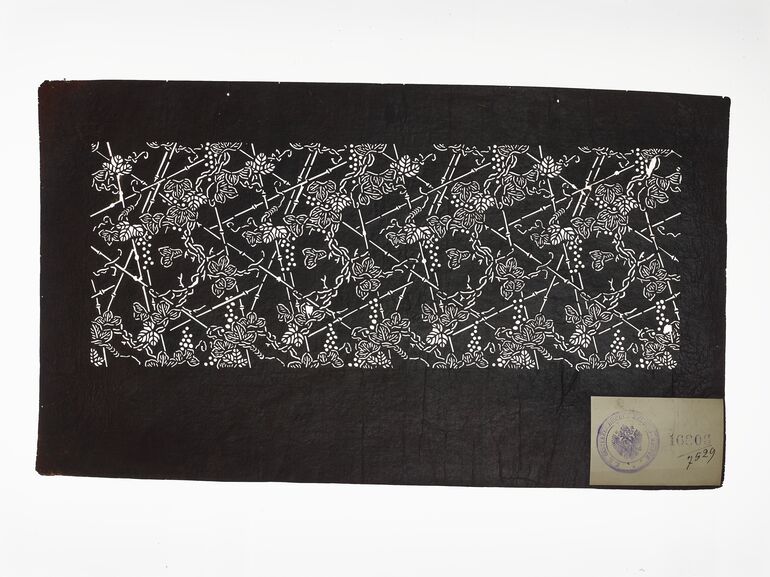
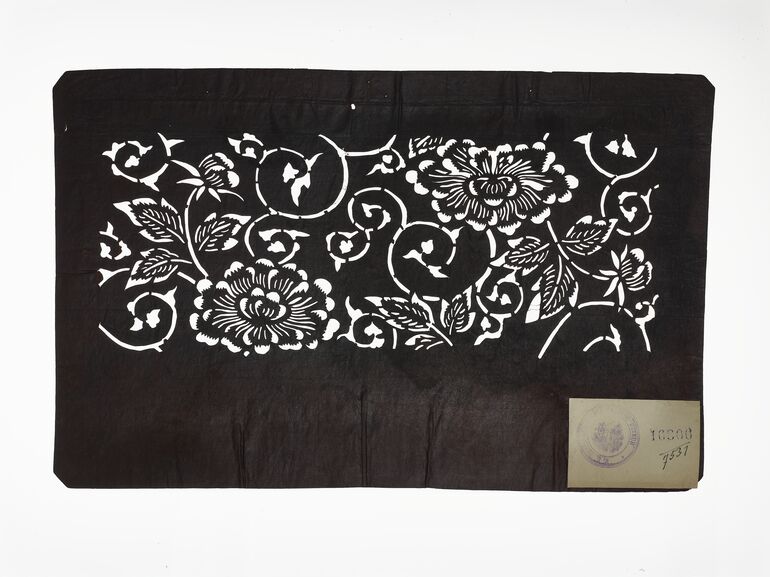
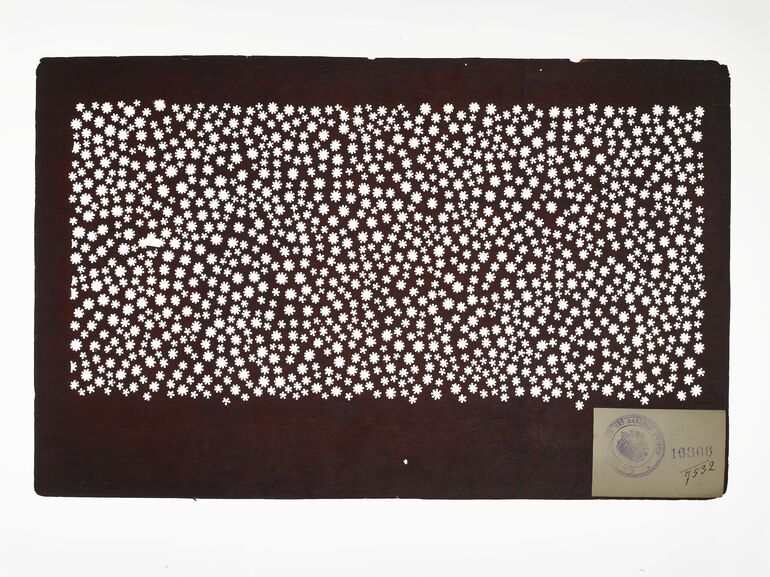
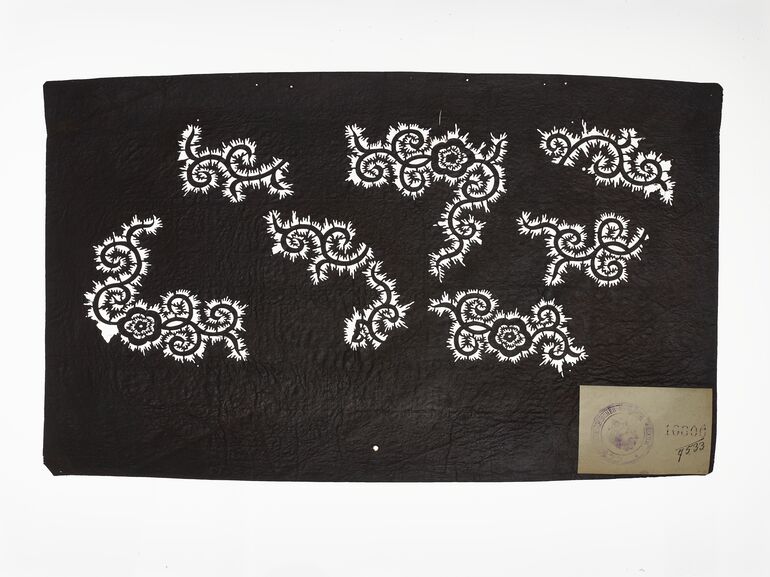
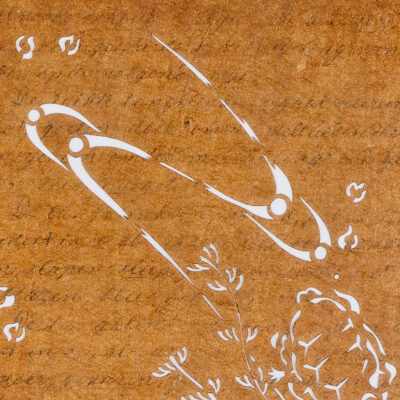
- Part of a set. Plant pattern (shokubutsu monyō 植物文様), animal pattern (dōbutsu monyō 動物文様), nature pattern (shizen monyō 自然文様): circular clouds with phoenix, mandarin duck on blue ocean waves (seigaiha 青海波), dragon circles(?), chrysanthemums, flowers and mitsumori kikkō 三つ盛り亀甲 (triple hexagon/tortoiseshell)
Collection
Period | Style | School
Material | Technique
Measurements
- height: 25.2 cm
- width: 41.6 cm
- 1 Muster - height: 13.5 cm
- 1 Muster - width: 34.4 cm
Inventory number
- OR 3925-2894
Acquisition
- assumption , 1907
Department
- Asia Collection
Description
-
"Dyed ground" (jizomari 地染), "main stencil" (omogata 主型).
The Chinese phoenix is a mythical creature with plumage in five colours, combining the characteristics of the qilin, deer, snake, fish, turtle, swallow and chicken. As a divine being who only appears in times of peace and prosperity, he has become a symbol of good fortune in various Asian cultures throughout history. The phoenix motif was likely introduced to Japan during the Asuka period (7th century). It represents happiness, peace, and prosperity, as well as marital harmony and immortality.
The chrysanthemum (kiku 菊) symbolizes longevity, which dates back to a Chinese legend. The Yellow River once originated in a chrysanthemum meadow, and a villager who drank from the spring achieved a long life. In Japan, the motif first appears in the Kokin-wakashū 古今和歌集 (early 10th century), while the Man’yōshū 万葉集 from the 8th century lists 157 plant species but does not contain a single poem about chrysanthemums. It is therefore assumed that the flower was first introduced to Japan from China at the end of the 8th or beginning of the 9th century.
-
stencil (katagami 型紙), Part of a set. Plant pattern (shokubutsu monyō 植物文様), animal pattern (dōbutsu monyō 動物文様), nature pattern (shizen monyō 自然文様): circular clouds with phoenix, mandarin duck on blue ocean waves (seigaiha 青海波), dragon circles(?), chrysanthemums, flowers and mitsumori kikkō 三つ盛り亀甲 (triple hexagon/tortoiseshell), Anonym, MAK Inv.nr. OR 3925-2894
-
https://sammlung.mak.at/en/collect/part-of-a-set-plant-pattern-shokubutsu-monyo-植物文様-animal-pattern-dobutsu-monyo-動物文様-nature-pattern-shizen-monyo-自_333741
Last update
- 25.04.2026
Related via
Artist
Artist
Location
Material