Title
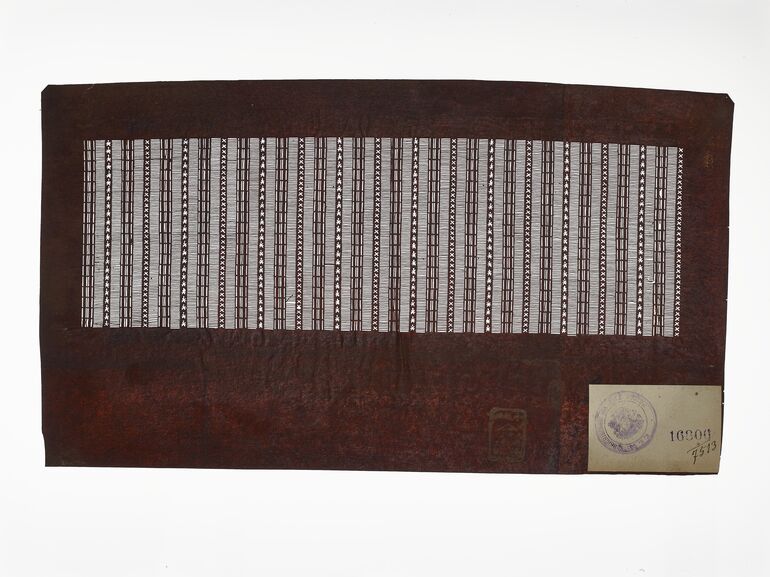
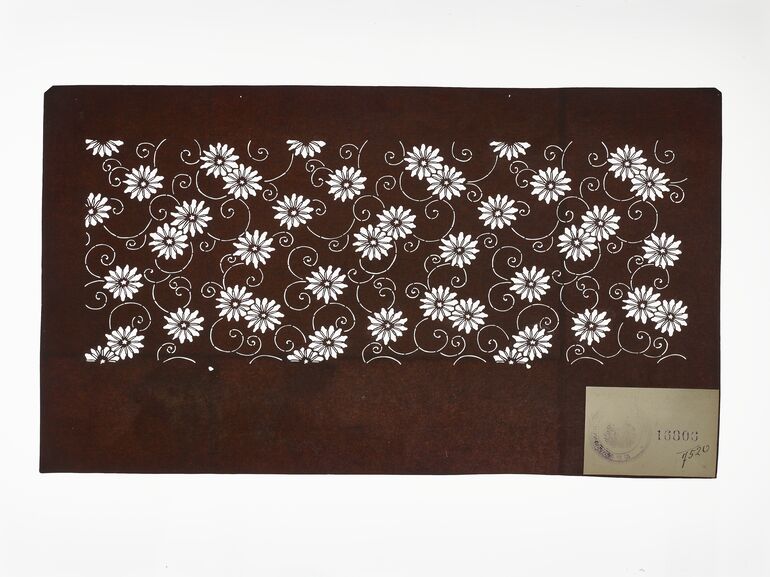
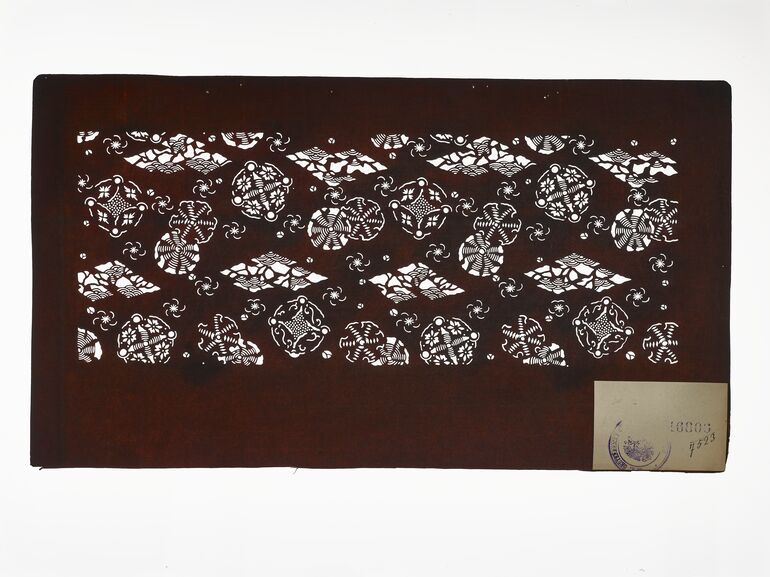
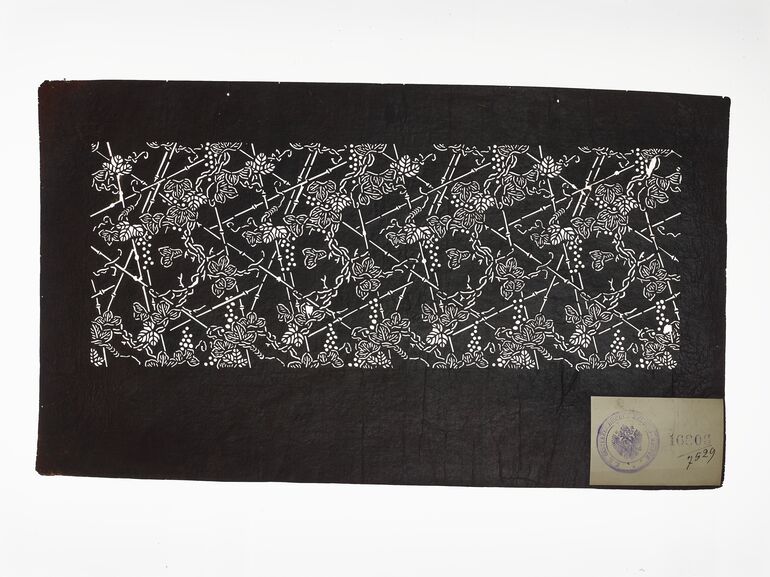
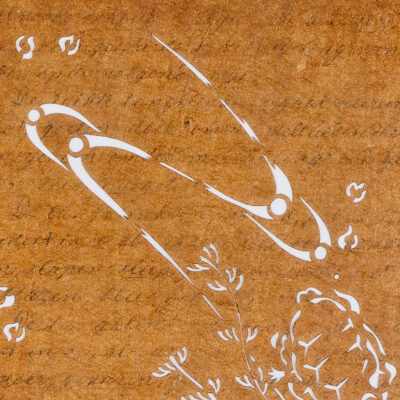
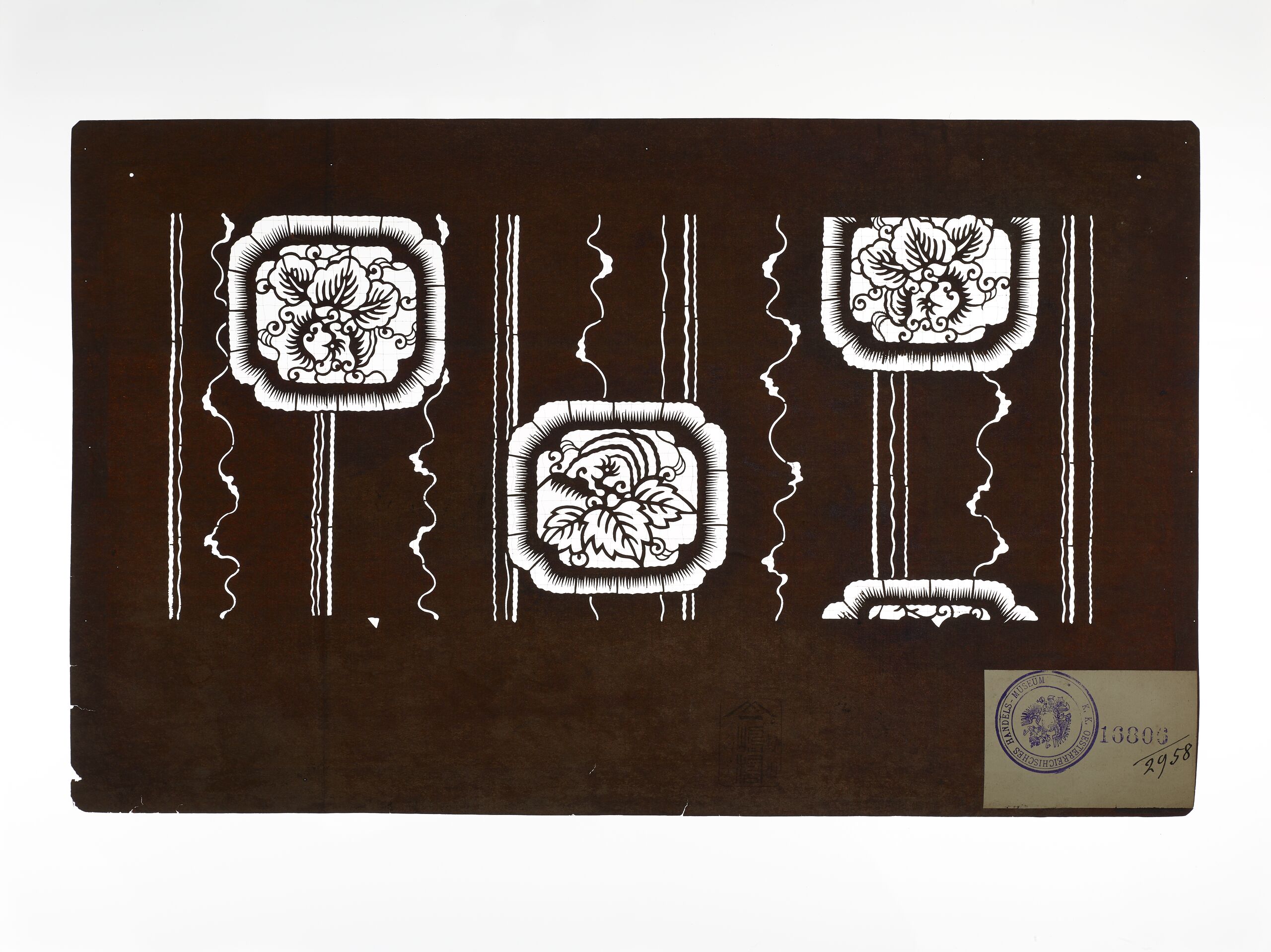
- Part of a set. Pattern with objects (kibutsu monyō 器物文様), animal pattern (dōbutsu monyō 動物文様), plant pattern (shokubutsu monyō 植物文様), stripe pattern (shima monyō 縞文様): yōrōjima 養老縞 (irregular stripes) and frames with phoenix and paulownia picture
Collection
Production
- execution: anonymous, Mie, 19th century
- retailer: Shimakiri 嶋桐
Period | Style | School
Material | Technique
Measurements
- height: 25.5 cm
- width: 41.1 cm
- 1 Muster - height: 14.8 cm
- 1 Muster - width: 33.6 cm
Inventory number
- OR 3925-2958
Acquisition
- assumption , 1907
Department
- Asia Collection
Inscriptions
- stamp: Dealer (型売商人 katauri shōnin): ---Shop Name (暖簾名 noren na): 嶋桐 ShimakiriTrader’s Logo (yagō 屋号): 入り山形に一 iri yamagata with "ICHI, ITSU/hito(tsu)" Location (所在地 shozaichi): 勢州白子 Seishū, ShirokoBlack stamp, rectangular with rounded corners (角丸長方形 、黒印 kadomaru chōhōkei, kokuin)
Description
-
Stencil dealers' seal (shōin 商印) at the bottom of the stencil.
Yōrōjima 養老 縞 is also called yorokejima よ ろ け 縞 (= "lurching" stripes).
The Chinese phoenix is a mythical creature with plumage in five colours, combining the characteristics of the qilin, deer, snake, fish, turtle, swallow and chicken. As a divine being who only appears in times of peace and prosperity, he has become a symbol of good fortune in various Asian cultures throughout history. The phoenix motif was likely introduced to Japan during the Asuka period (7th century). It represents happiness, peace, and prosperity, as well as marital harmony and immortality.
The paulownia motif (kiri 桐) symbolizes purity, happiness, and prosperity. Because a Chinese legend supposedly says that the phoenix only ensconces on a paulownia, it also symbolizes high status and was used as the 'private' crest of the imperial family. After the Meiji Restoration, the paulownia became the emblem of the Japanese government as the "5-7 Paulownia" (go-shichi (no) kiri 五七桐).
-
stencil (katagami 型紙), Part of a set. Pattern with objects (kibutsu monyō 器物文様), animal pattern (dōbutsu monyō 動物文様), plant pattern (shokubutsu monyō 植物文様), stripe pattern (shima monyō 縞文様): yōrōjima 養老縞 (irregular stripes) and frames with phoenix and paulownia picture, Anonym, MAK Inv.nr. OR 3925-2958
-
https://sammlung.mak.at/en/collect/part-of-a-set-pattern-with-objects-kibutsu-monyo-器物文様-animal-pattern-dobutsu-monyo-動物文様-plant-pattern-shokubutsu-monyo-植_333783
Last update
- 03.09.2026
Related via
Artist
Artist
Location
Material