Latticework objects by the Wiener Werkstätte
Album curated by: Anne-Katrin Rossberg, 2026
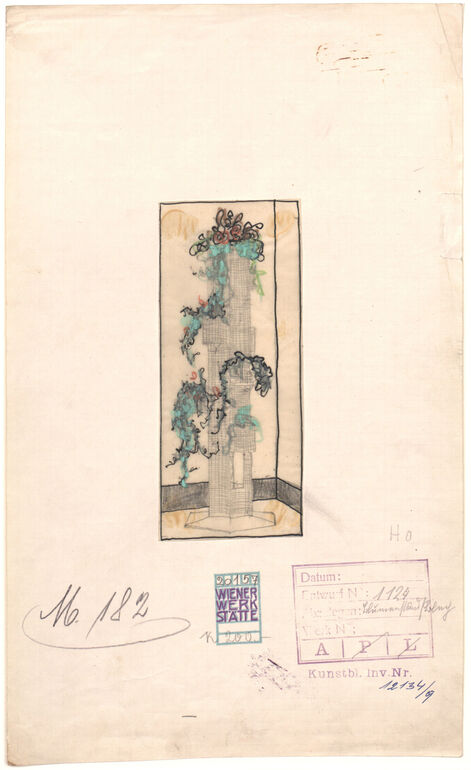
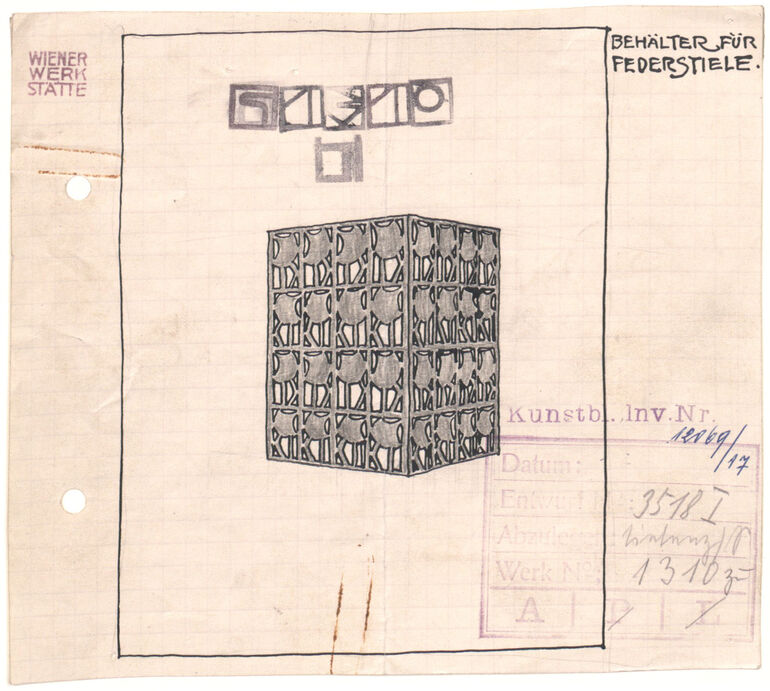
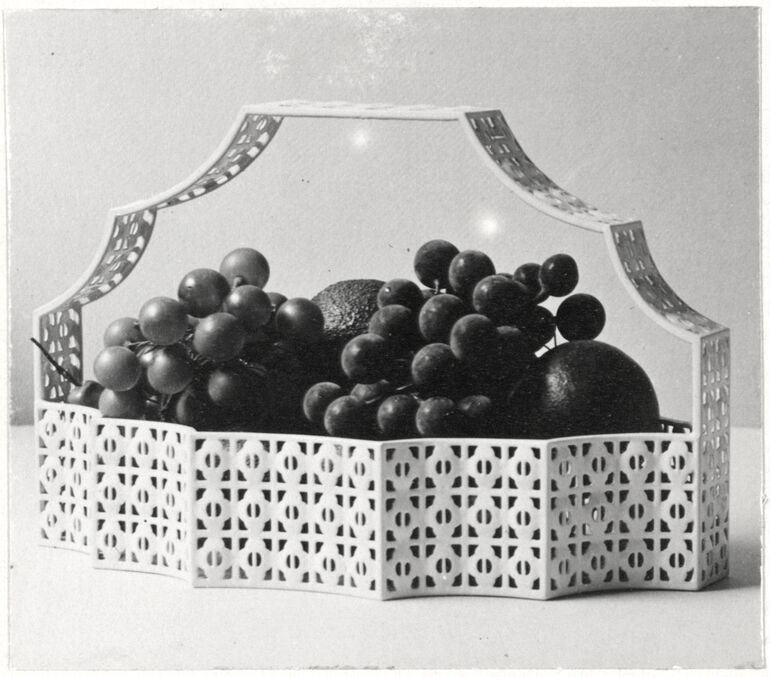
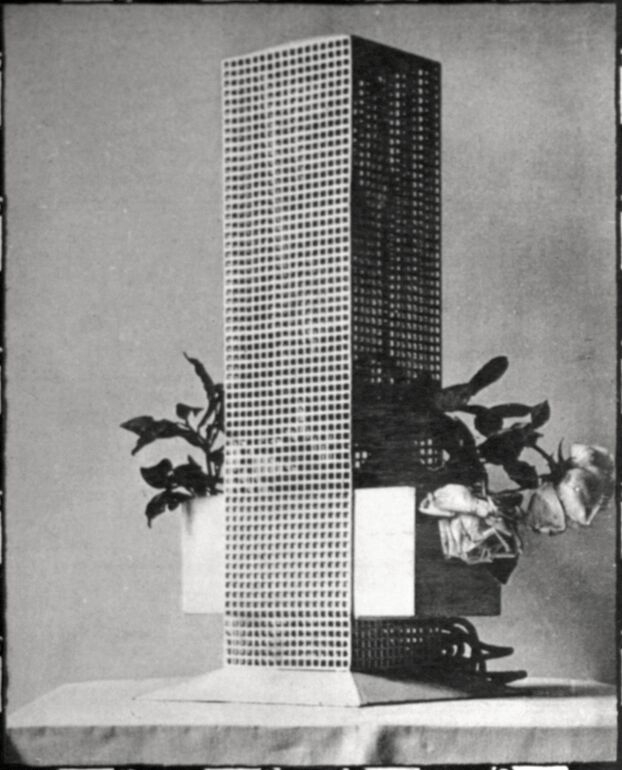
Soon after its founding in 1903, the Wiener Werkstätte (WW) produced its first “latticework objects” in perforated sheet iron painted white. Josef Hoffmann and Koloman Moser designed vases, centerpieces, handled baskets, and even plant stands as tall as a man. Perforated sheet metal was an ideal material for the geometric objects typical of the WW’s early period that often resembled architecture in miniature—high-rises, bridges, or towers.
They were among the WW’s more affordable products and sold well. They were also promoted separately—on their own cards featuring an illustration and description in the subtle graphic design style of early WW. Their production in large number was later undertaken by the sheet metal and metalware factory of Christoph Cloeter. There were even latticework objects made of perforated silver: the first object of this kind was a simple napkin ring after a design by Koloman Moser.
Life was soon breathed into this rigid grid by the insertion of—either flat and punched or three-dimensional and chased—floral, ivy, and cloverleaf motifs. Designers experimented with these decorative options and with the objects’ functions: they were simultaneously plant stands and bird cages, vases and lamps, or centerpieces for flowers and bread rolls. These pieces artfully succeeded in combining architecture and nature in their design and use.