題名
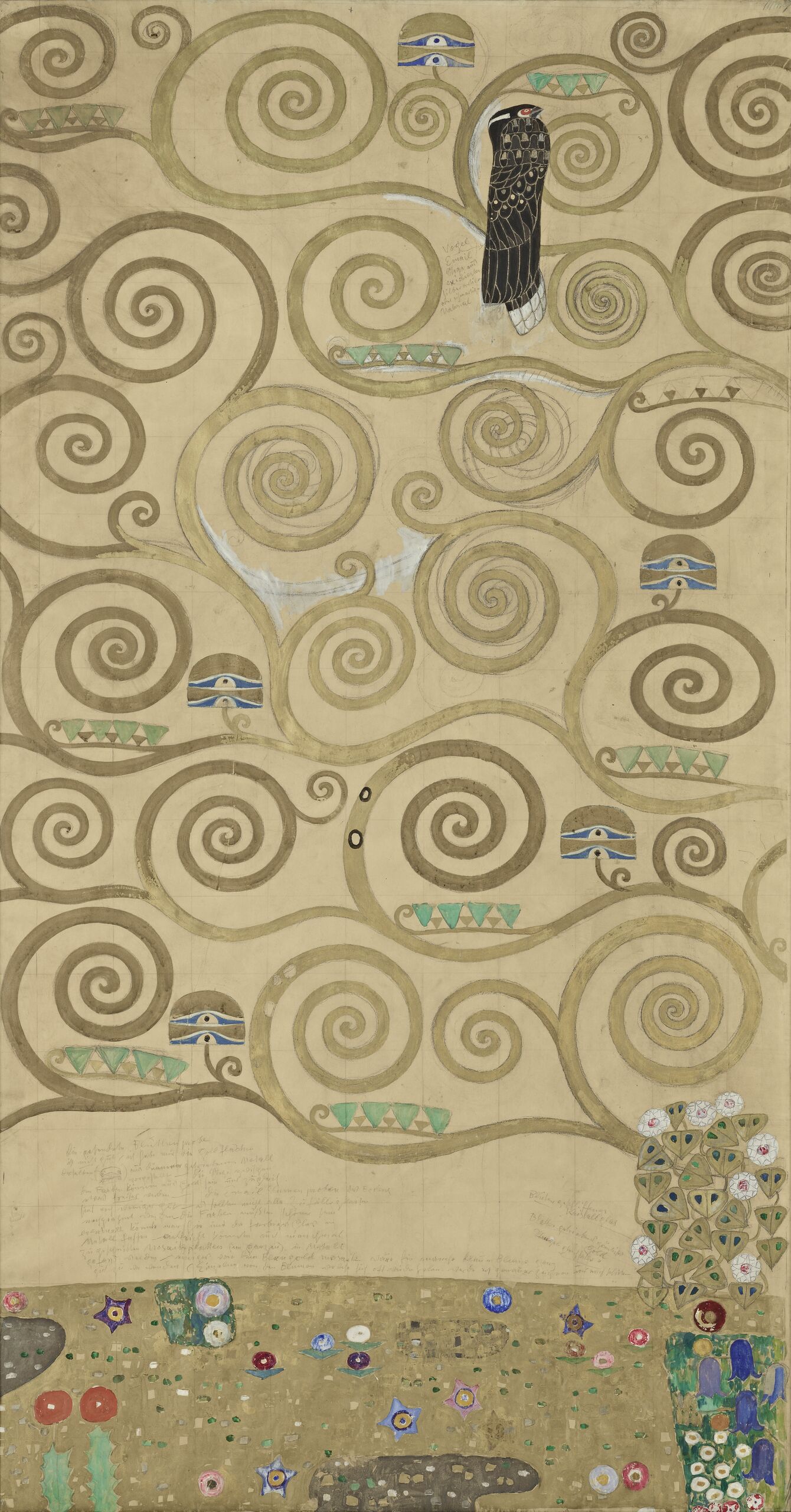
- Working Drawing of the Execution of a Mosaic Frieze for the Dining Hall of Stoclet House in Brussels: Part 3, Part of the Tree of Life
Production
- デザイン: Gustav Klimt, Kammerl am Attersee, 1910 - 1911
- デザイン: Gustav Klimt, ウイーン, 1910 - 1911
時代 | 王朝 | 様式
Measurements
- 縦幅: 195 cm
- 横幅: 102 cm
作品番号
- MAL 226-3
Acquisition
- purchase , 1961-03-24
Department
- Library and Works on Paper Collection
Inscriptions
- 作品に記載されている文章: [Anweisungen für die Umsetzung:] 3. THEIL / Die gesendete Blüthenprobe ist nicht gut, ich habe mir die / Goldflächen derselben aus dünnerem getriebenen Metall / vorgestellt - die Stege zwischen den Farben können aus / Gold sein und zugleich etwas breiter werden - Die Email / Blumen proben des Bodens sind noch weniger gut - / es sollen nicht alle Zufälligkeiten nachgeahmt werden - / die Farben müssten schöner sein eventuell könnte man hie / und da farbiges Glas in Metall fassen - vielleicht könnten / auch manchmal zugeschnitten Mosaikplatten (im ganzen) in / Metall gefasst werden - einiges wie beim Blaugold mosaik / wäre für manche blaue Blume ganz gut zu verwenden / (Einzelne von den Blumen welche sich oft wiederholen werde / ich genauer zeichnen und nachschicken / Blüten geschliffenes Kristallglas / Blätter getriebenes grünliches Gold Stengel gleichfalls / Dieses Mass wurde nur von der Werkstätte angegeben, / dürfte falsch sein / Goldmosaik / Ungefähr richtiges Mass (genau nicht möglich anzugeben weil / das Papier sich stets verändert.) / Richtiges Mass / Vogel Email Stege aus oxidiertem silberartigem oder / eisenartigem Material
Superordinated Object
Description
-
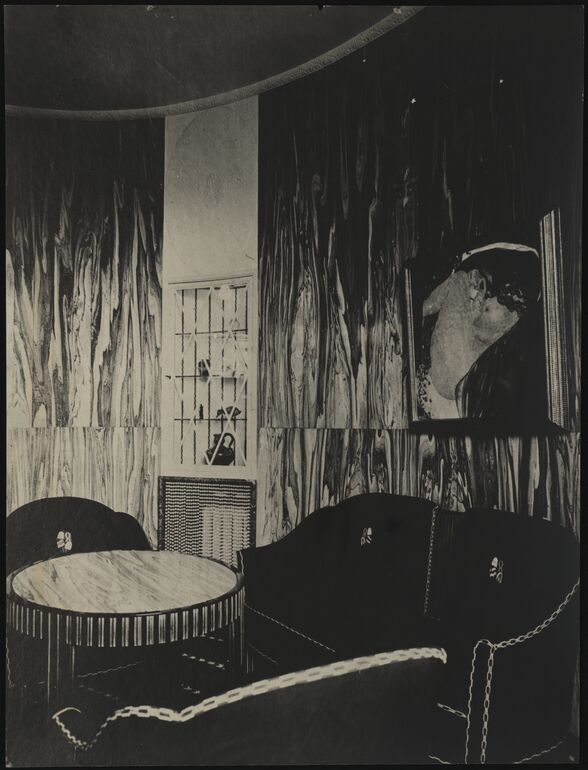
Palais Stoclet (also known as the Stoclet House) in Brussels was planned between 1905 and 1911 by Josef Hoffmann in the style of the Vienna Secession and decorated by him and a great number of Wiener Werkstätte members, as well as others from that circle, in keeping with the ideal of the Gesamtkunstwerk. Not only the building
and the interior design, but in fact the entire decorating scheme is permeated by a synthesis of the three arts of painting, sculpture and architecture, wholly in keeping with the spirit of the Wiener Werkstätte. For the interior decorating, the best-known artists of the period around 1900 were called upon—including Carl Otto Czeschka,
Eduard Josef Wimmer- Wisgrill and Ludwig Heinrich Jungnickel. The commission to do the dining room walls went to Gustav Klimt. Klimt’s years of work on this project produced nine cartoons at a scale of 1:1 that were then realized as mosaics. The motif of a sweeping tree of life on the long side of the room is mirrored on the opposite wall; the Dancer (Expectation) corresponds to the Lovers (Fulfillment) across from her. The front end of the room contains the abstract figure of the Knight. For these friezes’ execution by the Wiener Werkstätte and the Wiener Mosaikwerkstätte [Vienna Mosaic Workshop], Klimt handwrote on the cartoons instructions for Forstner according to which only the finest materials—such as enamel, mother-of-pearl and gold leaf—were to be used. This work is among the few that Klimt did at a monumental scale, and with its recourse to Egyptian, Byzantine, and Japanese models, it represents the climax of his artistically mature output.
(Pokorny-Nagel, Kathrin)
On display
on display
-
デザイン, Working Drawing of the Execution of a Mosaic Frieze for the Dining Hall of Stoclet House in Brussels: Part 3, Part of the Tree of Life, Gustav Klimt, MAK Inv.nr. MAL 226-3
-
https://sammlung.mak.at/ja/collect/working-drawing-of-the-execution-of-a-mosaic-frieze-for-the-dining-hall-of-stoclet-house-in-brussels-part-3-part-of-the-tree-of-life_158522
Last update
- 24.07.2026
Related via
Exhibition
Exhibition
Artist
Location