Title
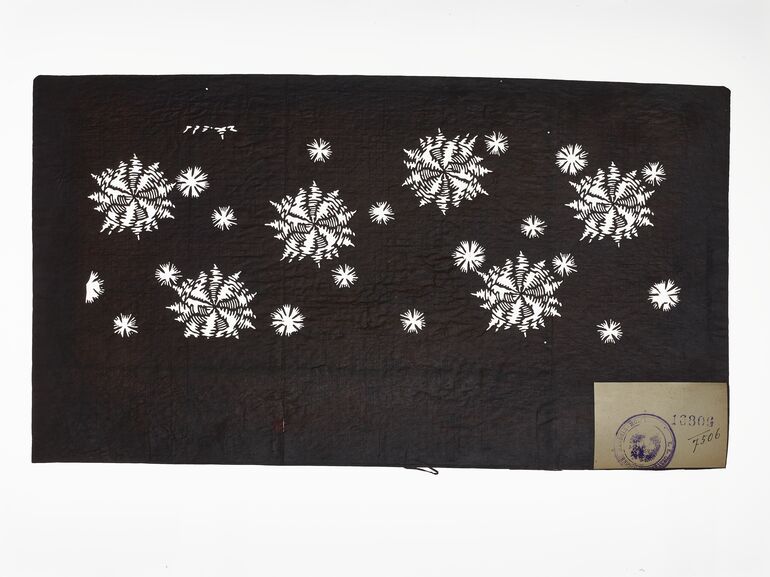
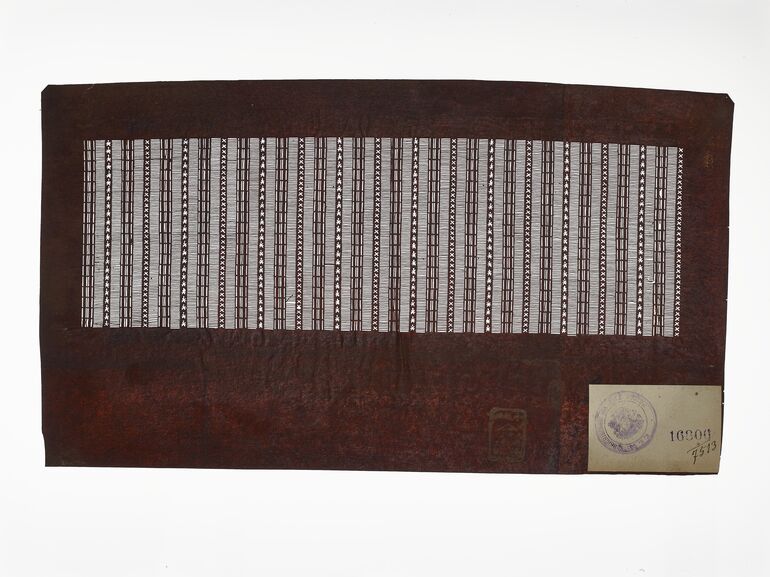
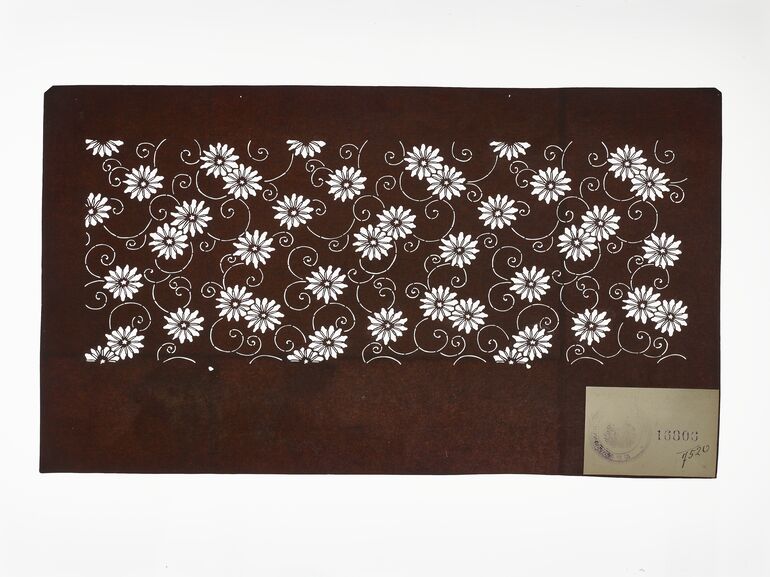
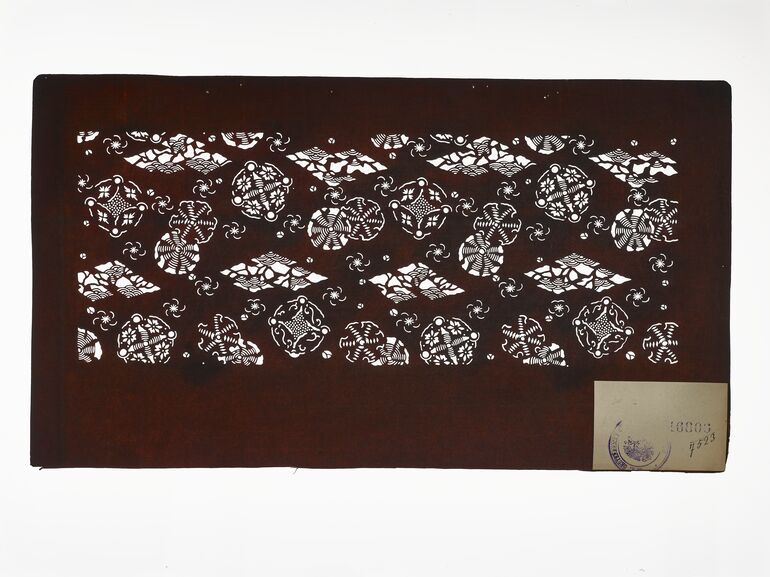
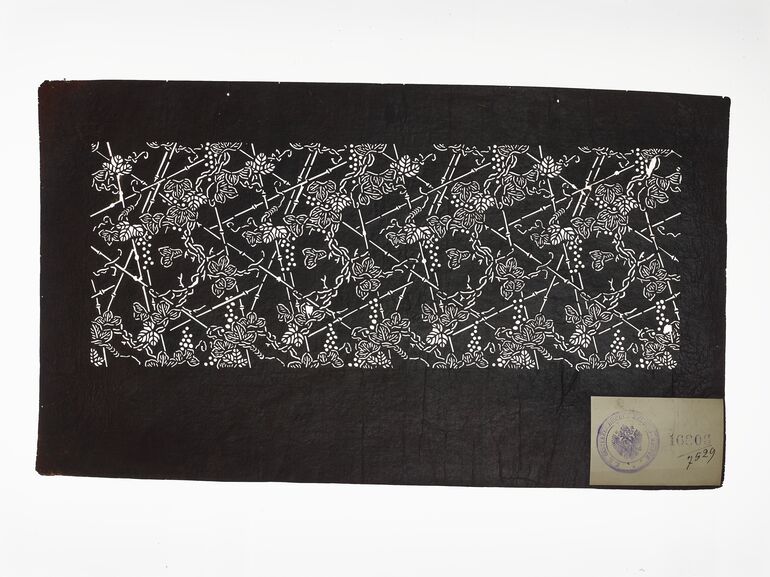
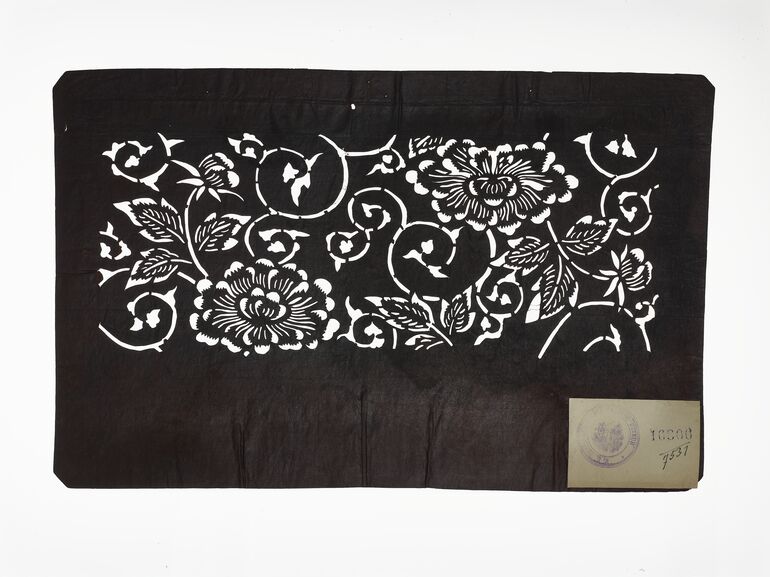
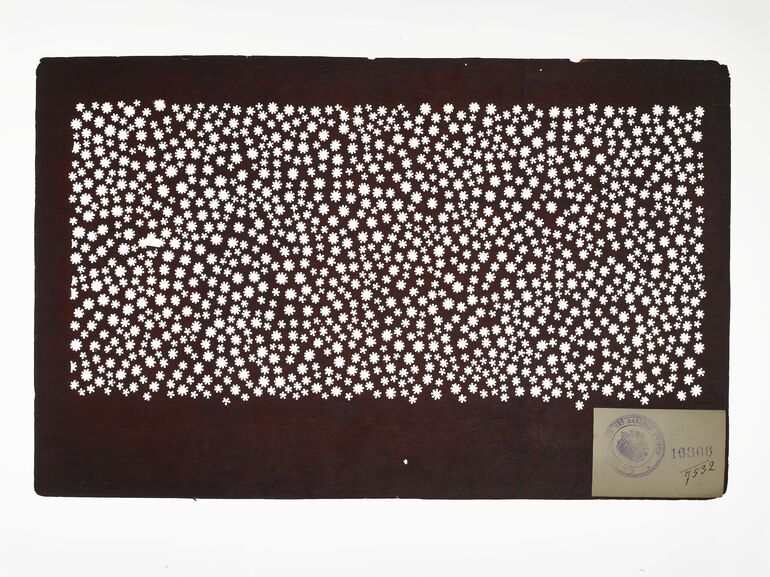
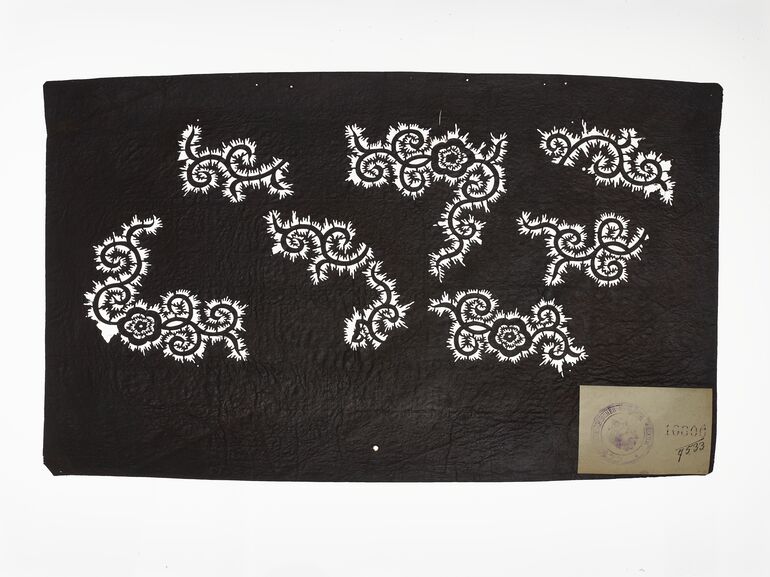
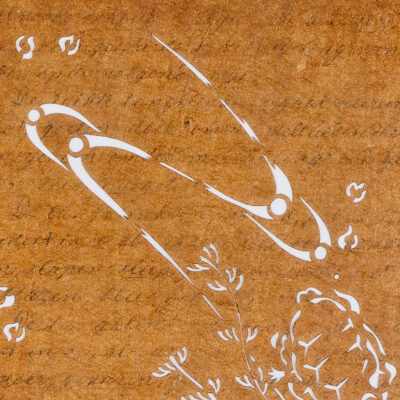
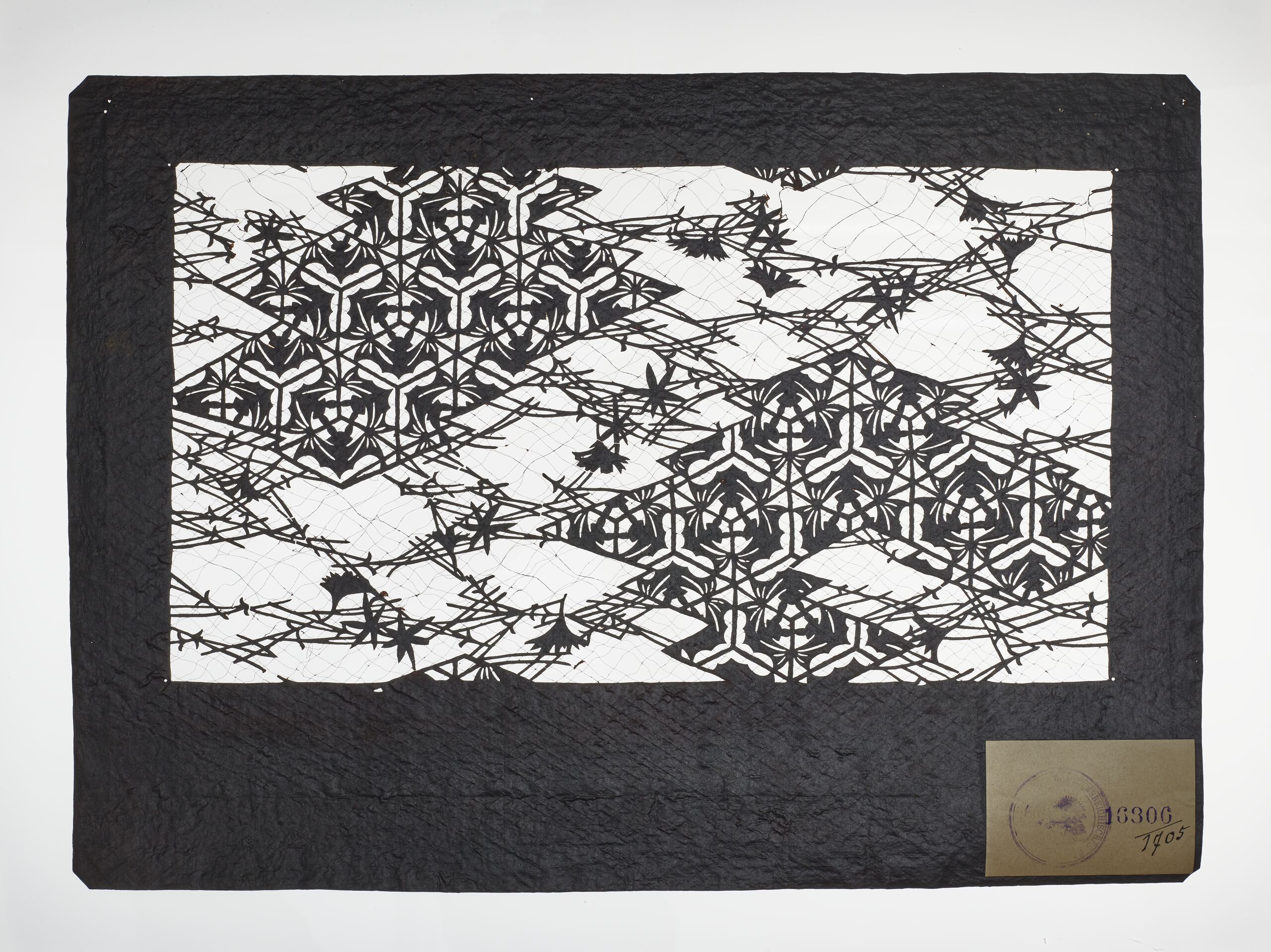
- Part of a set. Plant pattern (shokubutsu monyō 植物文様): matsukawabishi kuzushi 松皮菱崩し ("disbanded" matsukawabishi, a matsukawabishi variant) composed of diamonds with bat motif and "blown" (fukiyose 吹き寄せ) pine needles, maple and ginkgo leaves
Collection
Period | Style | School
Material | Technique
Measurements
- height: 30 cm
- width: 41.8 cm
- 1 Muster - height: 19 cm
- 1 Muster - width: 34.5 cm
Inventory number
- OR 3925-1705
Acquisition
- assumption , 1907
Department
- Asia Collection
Description
-
"White ground" (jishiro 地白).
Matsukawabishi 松皮菱 pattern is a combination of 3 diamonds; matsukawa 松皮 = pine-bark, bishi/hishi 菱 = diamond.
The ginkgo is considered a symbol of vitality due to its tall growth and long life. Its fan-shaped leaves are also said to bring good luck and prosperity.
The maple leaf (kaede 楓, also: momiji 紅葉) is considered a symbol of a long and successful life because it changes color depending on the season. Especially in autumn, the foliage shines in the most beautiful colors. Maple leaves are already sung about in the oldest poetry (Man'yōshū 万葉集, Kokin Wakashū 古今和歌集), and maple leaf motifs on robes are described in the Heian period (Makura-no Sōshi 枕草子, Eiga Monogatari 栄花物語). Even banquets "to admire discolored maple leaves" are said to have been held from the second half of the Heian period onwards.
Pine needles (matsuba 松葉) usually grow in pairs and are held together at the base by a needle sheath. The motif of pairs of needles below the pine tree is considered a symbol of marital love and harmony.
-
stencil (katagami 型紙), Part of a set. Plant pattern (shokubutsu monyō 植物文様): matsukawabishi kuzushi 松皮菱崩し ("disbanded" matsukawabishi, a matsukawabishi variant) composed of diamonds with bat motif and "blown" (fukiyose 吹き寄せ) pine needles, maple and ginkgo leaves, Anonym, MAK Inv.nr. OR 3925-1705
-
https://sammlung.mak.at/en/collect/part-of-a-set-plant-pattern-shokubutsu-monyo-植物文様-matsukawabishi-kuzushi-松皮菱崩し-disbanded-matsukawabishi-a-matsukawabishi_319608
Last update
- 25.04.2026
Related via
Artist
Artist
Location
Material