Title
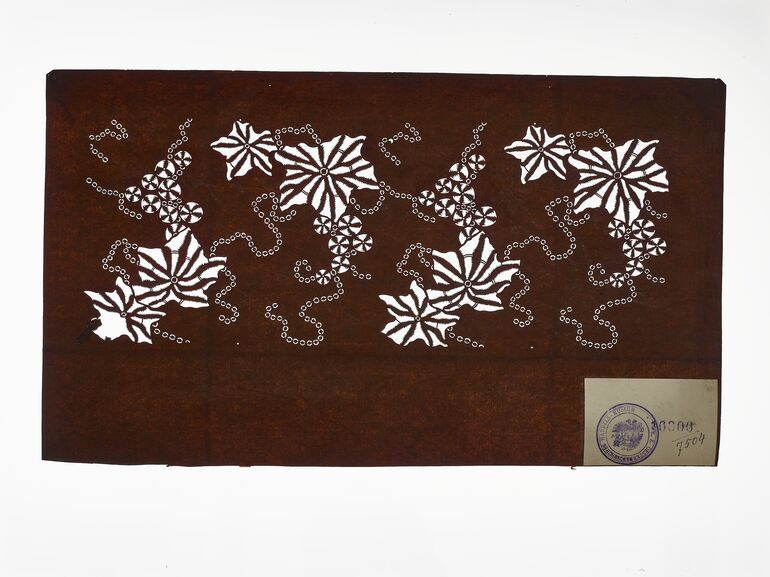
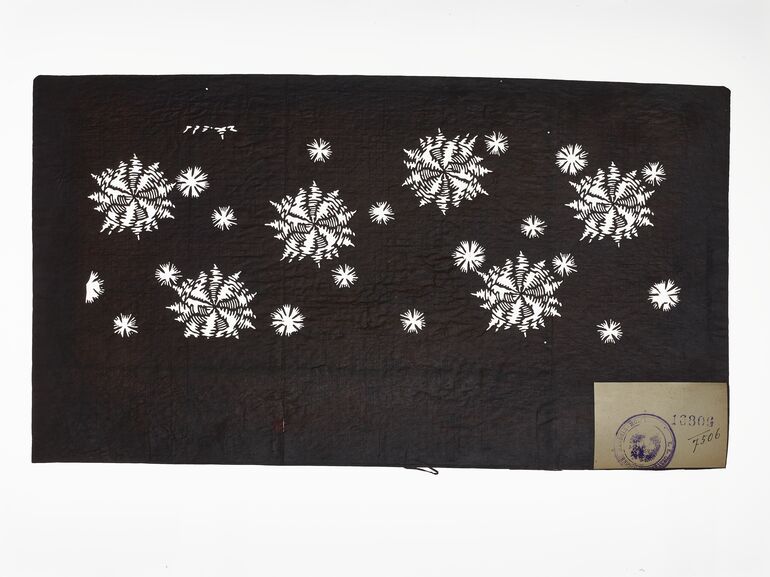
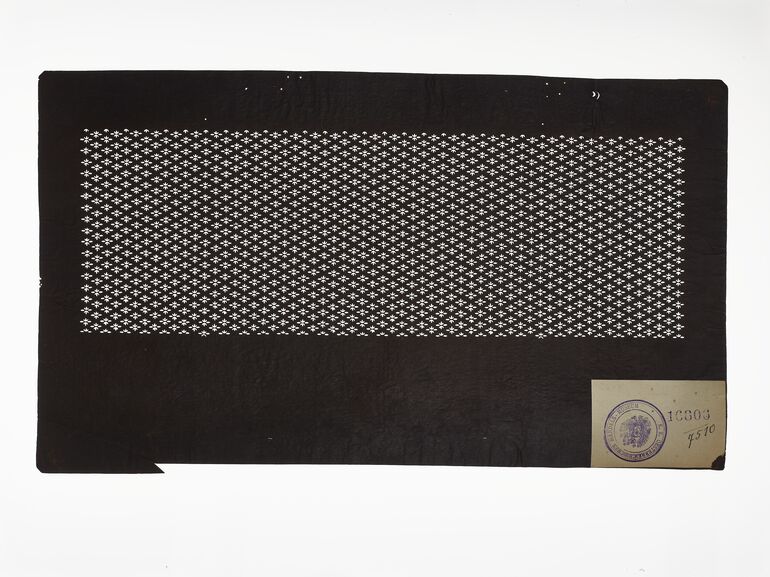
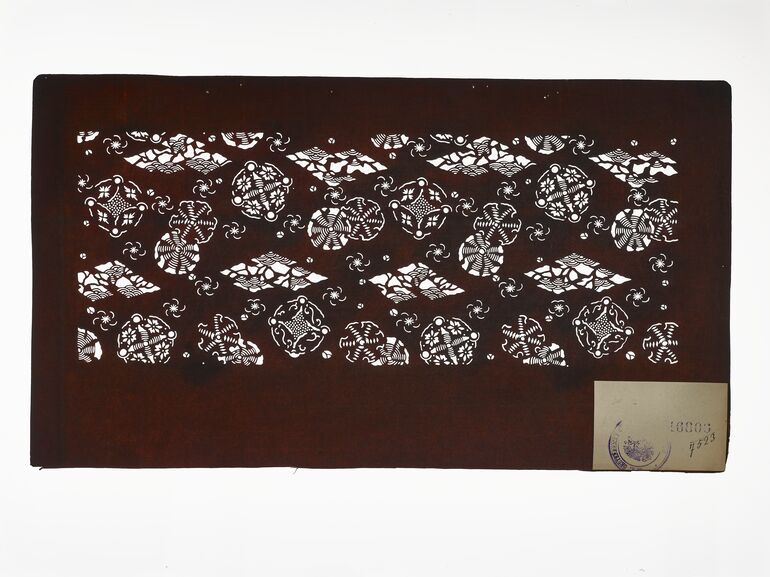
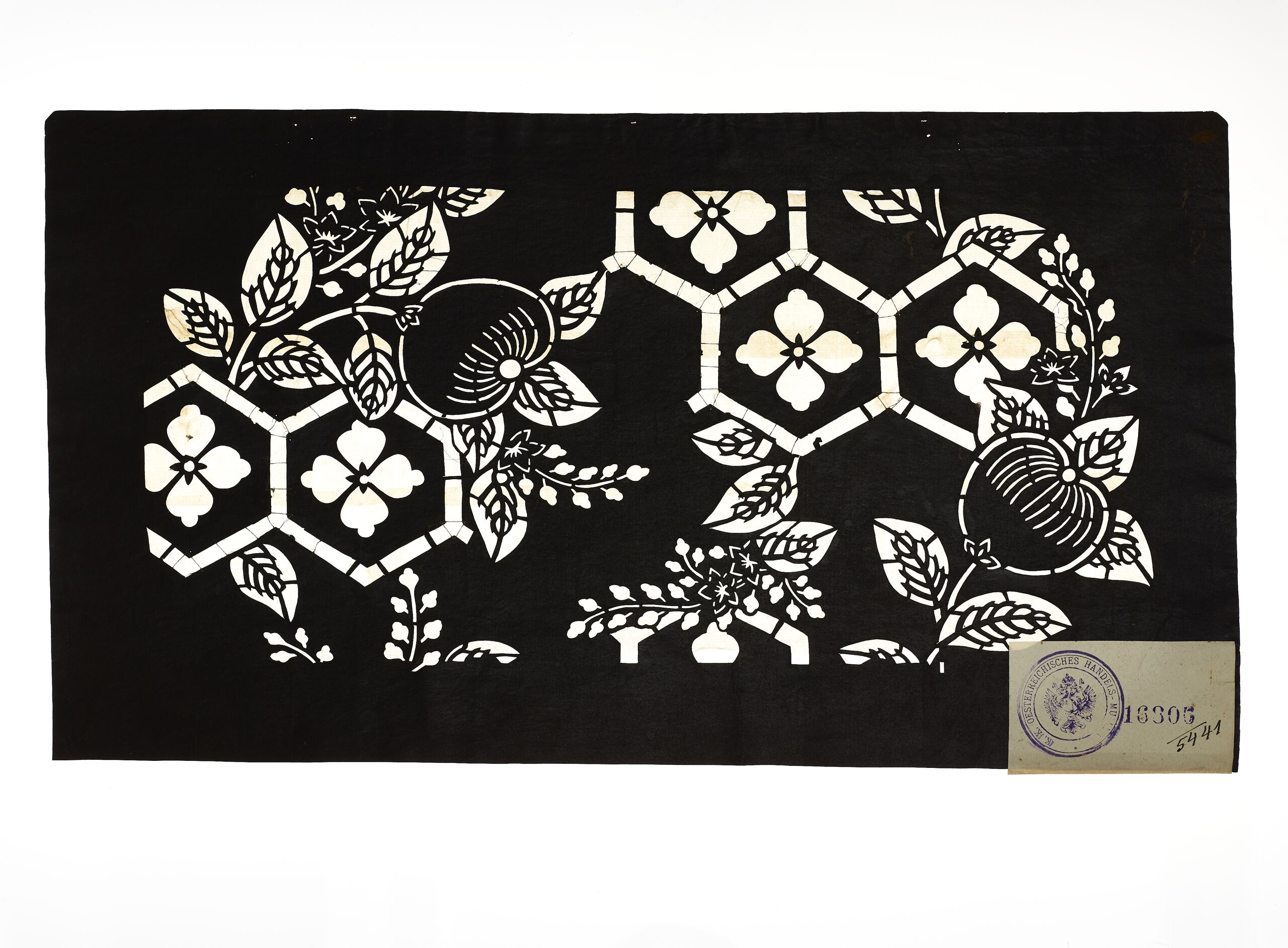
- Part of a set. Plant pattern (shokubutsu monyō 植物文様), surface pattern (waritsuke monyō 割付文様): tachibana oranges (tachibana 橘) with blossoms and parts of hexagon surface pattern (yabure kikkō 破れ亀甲; "shredded" kikkō)
Collection
Period | Style | School
Material | Technique
Measurements
- height: 23.2 cm
- width: 41.4 cm
- 1 Muster - height: 16.4 cm
- 1 Muster - width: 35 cm
Inventory number
- OR 3925-5441
Acquisition
- assumption , 1907
Department
- Asia Collection
Description
-
"Dyed ground" (jizomari 地染).
The tachibana orange (tachibana 橘) is considered a symbol of long life and prosperity in Japan. It is one of the few auspicious patterns (kisshō monyō 吉祥文 様) that originated in Japan and not in China.
Kikkō tsunagi 亀甲繋ぎ (connected tortoise shells/hexagons): a geometric pattern of hexagons, that was already found in Sassanid art and is said to have come to Japan via China and Korea during the Nara period (710-794). Because of the resemblance to the turtle shell shield, it is called kikko 亀甲. It counts as an auspicious pattern (kisshō monyō 吉祥文様) and since the Heian period (794-1185, also 794-1192) also as a 'courtly pattern' (yūsoku monyō 有職文様).
-
stencil (katagami 型紙), Part of a set. Plant pattern (shokubutsu monyō 植物文様), surface pattern (waritsuke monyō 割付文様): tachibana oranges (tachibana 橘) with blossoms and parts of hexagon surface pattern (yabure kikkō 破れ亀甲; "shredded" kikkō) , Anonym, MAK Inv.nr. OR 3925-5441
-
https://sammlung.mak.at/en/collect/part-of-a-set-plant-pattern-shokubutsu-monyo-植物文様-surface-pattern-waritsuke-monyo-割付文様-tachibana-oranges-tachibana-橘-wi_341602
Last update
- 20.08.2026
Related via
Artist
Artist
Location
Material