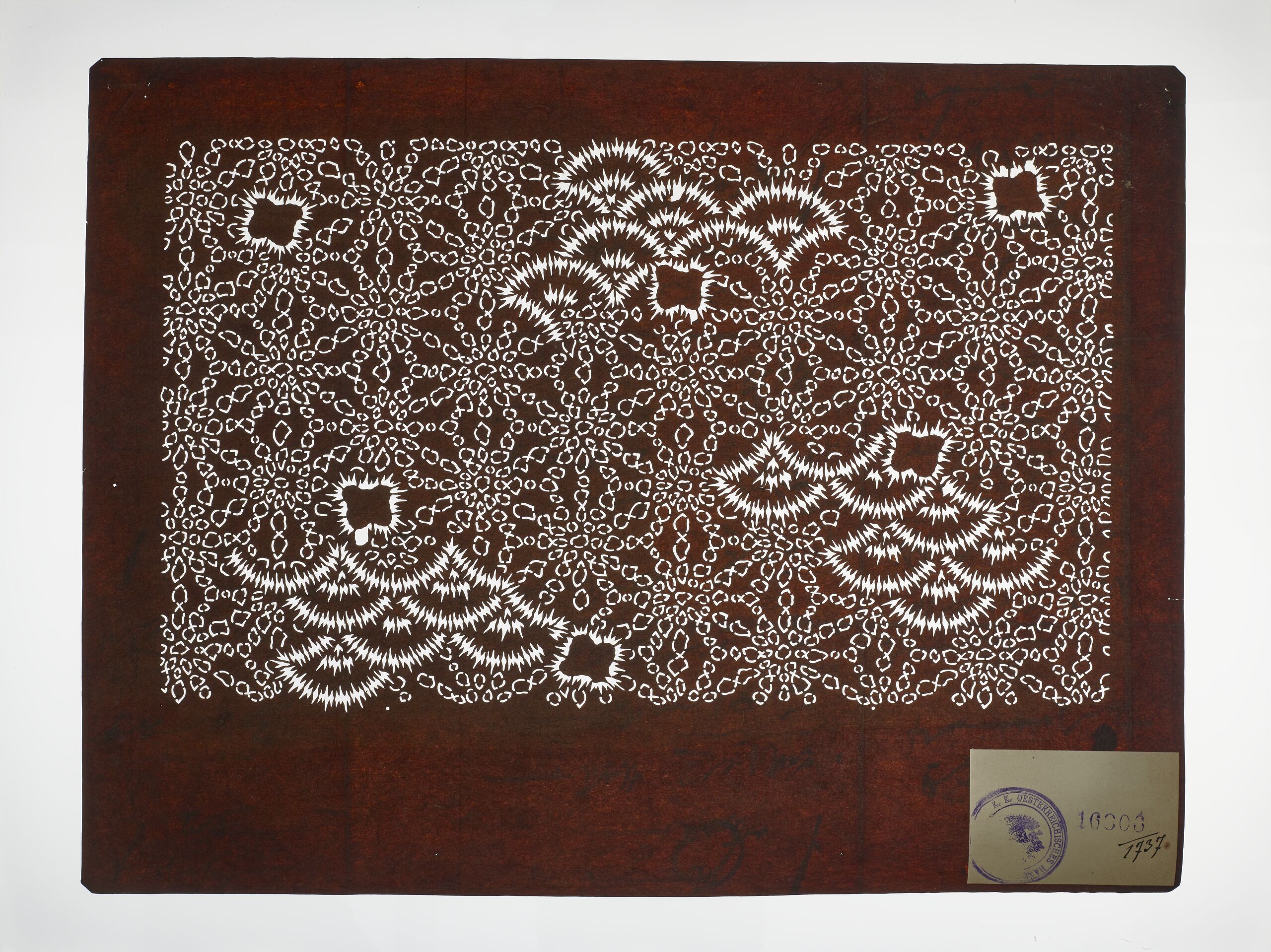
Title
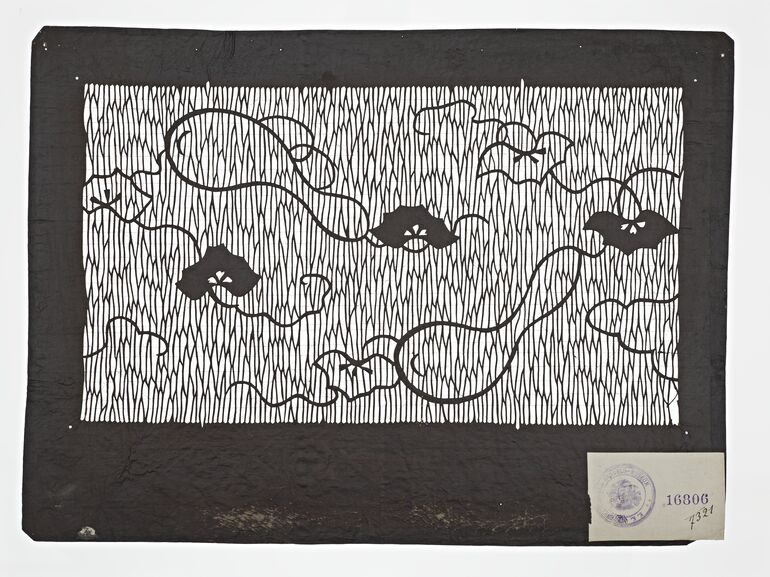
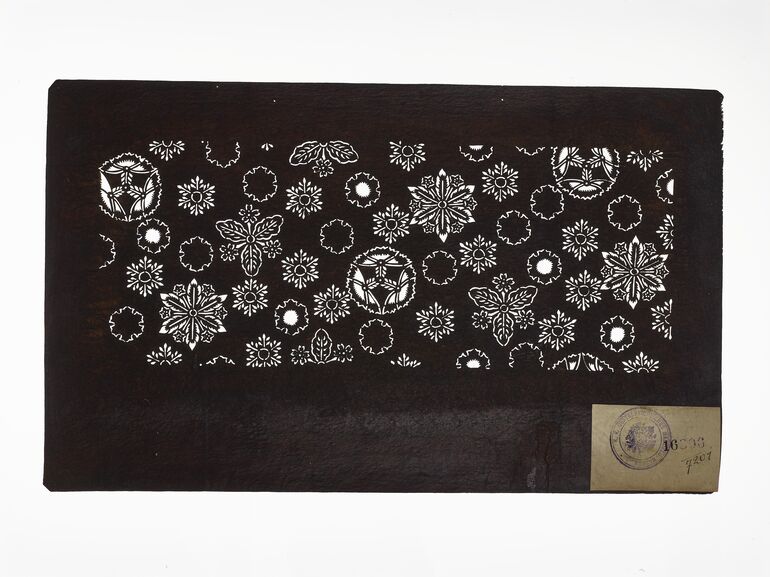
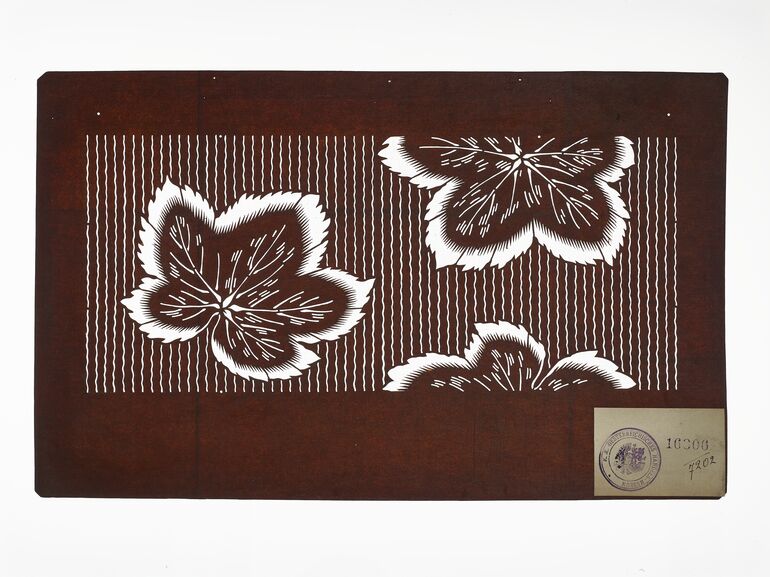
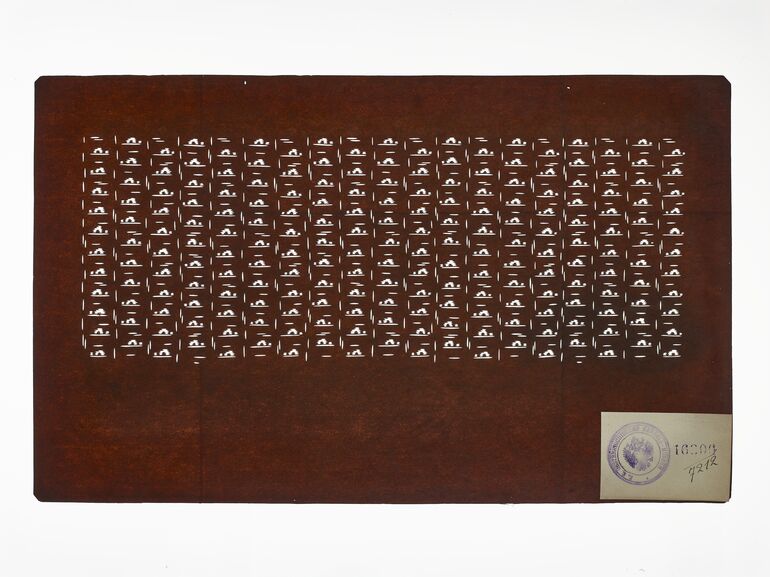
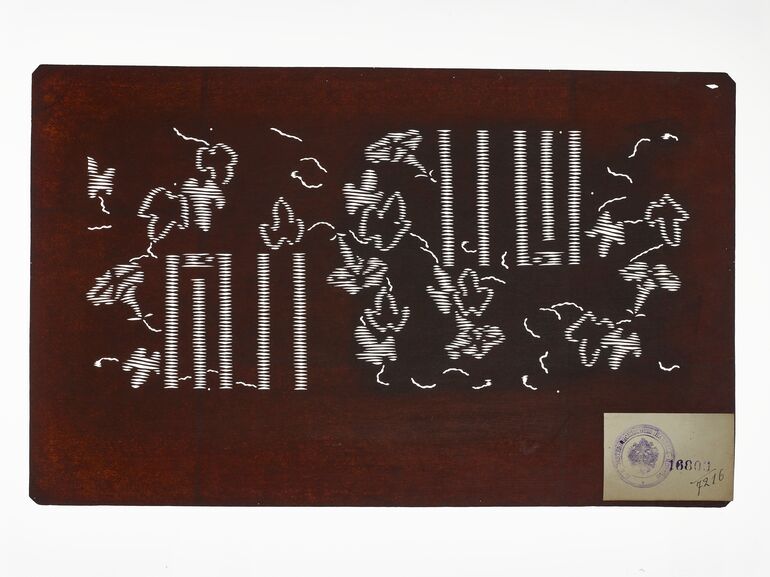
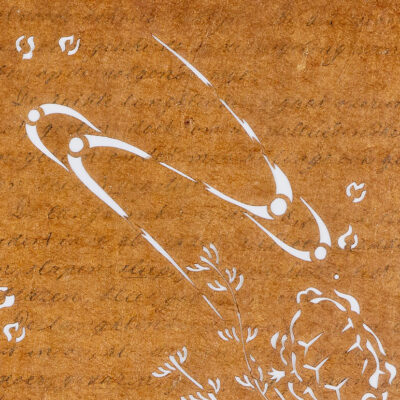
- Part of a set. Surface pattern (waritsuke monyō 割付文様), nature pattern (shizen monyō 自然文様), animal pattern (dōbutsu monyō 動物文様): asa no ha 麻の葉 (hemp leaf), seigaiha 青海波 (blue ocean waves) and plovers
Collection
Period | Style | School
Material | Technique
Measurements
- height: 31.1 cm
- width: 40.8 cm
- 1 Muster - height: 21 cm
- 1 Muster - width: 35.2 cm
Inventory number
- OR 3925-1737
Acquisition
- assumption , 1907
Department
- Asia Collection
Description
-
"Dyed ground" (jizomari 地染), "canceling-out stencil" (keshigata 消型).
Seigaiha 青海波 („blue ocean waves): a pattern that can be found in many regions of the world. In Japan it can be found on Haniwa robes from the Kofun period (approx. 300-538). But only since the Kamakura period (1185-1333) has the pattern been associated with water (e.g. Koseto jugs). The name seigaiha 青海波is said to go back to a title of a Gagaku dance.
The plovers symbolise success as well as the safety and well-being of the home.
They are often depicted flying over waves. This motif is intended to evoke the certainty that “even the roughest waves can be overcome together”.
Asa no ha 麻の葉 (hemp leaves): a hexagonal pattern called asa no ha 麻の葉 because it resembles the hemp leaves. A hemp plant is robust and grows straight up. Therefore, the pattern is said to have been preferred for the clothes of the newborns. It is not only found on kimonos, but also on obi, under kimonos and small pouches.
-
stencil (katagami 型紙), Part of a set. Surface pattern (waritsuke monyō 割付文様), nature pattern (shizen monyō 自然文様), animal pattern (dōbutsu monyō 動物文様): asa no ha 麻の葉 (hemp leaf), seigaiha 青海波 (blue ocean waves) and plovers, Anonym, MAK Inv.nr. OR 3925-1737
-
https://sammlung.mak.at/en/collect/part-of-a-set-surface-pattern-waritsuke-monyo-割付文様-nature-pattern-shizen-monyo-自然文様-animal-pattern-dobutsu-monyo-動_319676
Last update
- 25.04.2026
Related via
Artist
Artist
Location
Material