Title
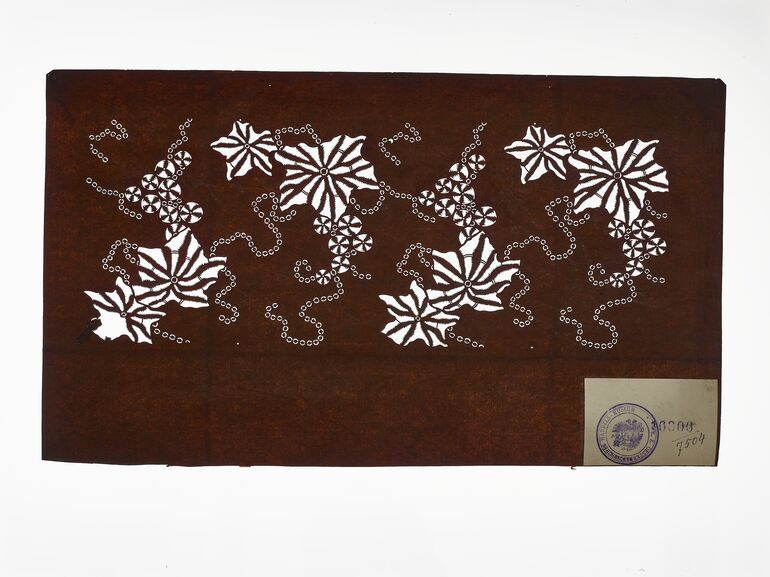
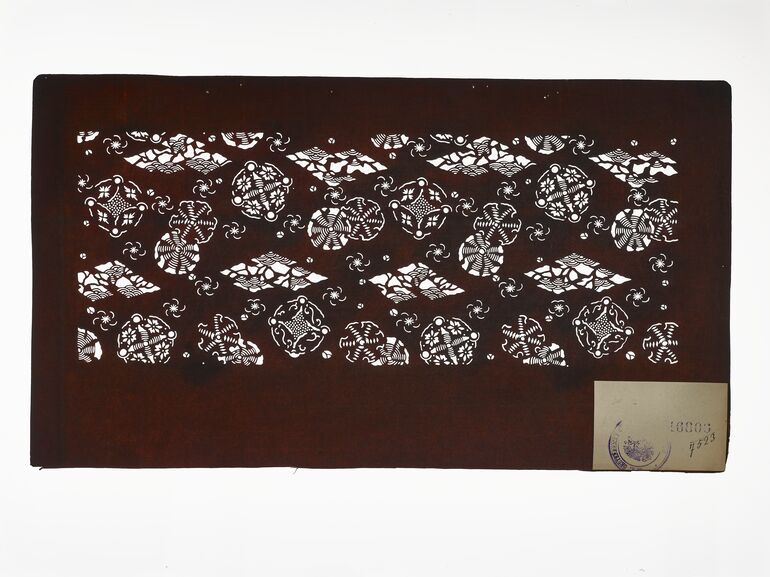
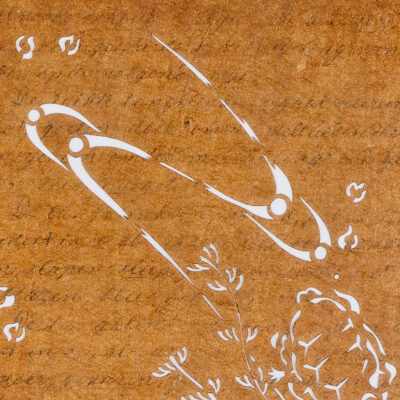
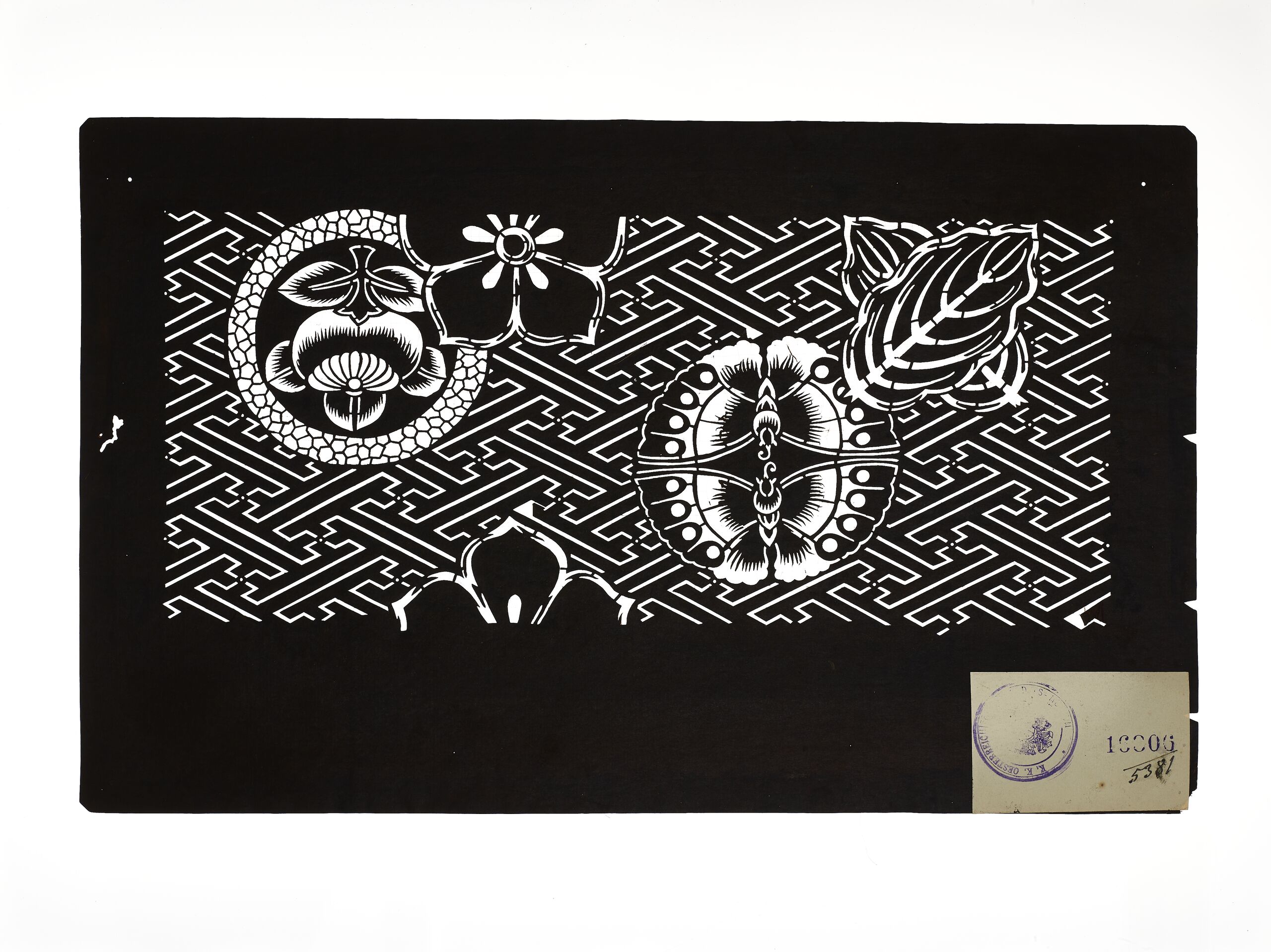
- Plant pattern (shokubutsu monyō 植物文様), animal pattern (dōbutsu monyō 動物文様), surface pattern (waritsuke monyō 割付文様): tachibana orange (tachibana 橘) in a circle, blossoms, leaves and opposite pair of butterflies (mukai chō 向い蝶) on sayagata 紗綾形
Collection
Period | Style | School
Material | Technique
Measurements
- height: 25.3 cm
- width: 40.7 cm
- 1 Muster - height: 15.2 cm
- 1 Muster - width: 34.5 cm
Inventory number
- OR 3925-5381
Acquisition
- assumption , 1907
Department
- Asia Collection
Description
-
"Dyed ground" (jizomari 地染).
The tachibana orange (tachibana 橘) is considered a symbol of long life and prosperity in Japan. It is one of the few auspicious patterns (kisshō monyō 吉祥文 様) that originated in Japan and not in China.
The butterflies (chō 蝶), which undergo unusual shape change during their lives, are considered a symbol of immortality. Since it is said that butterflies spend their entire lives with the same partner, they also represent marital harmony, so they are often used as motifs on wedding kimonos.
Sayagata 紗綾形: pattern of interlocking swastika (manji 万字/卍).
-
stencil (katagami 型紙), Plant pattern (shokubutsu monyō 植物文様), animal pattern (dōbutsu monyō 動物文様), surface pattern (waritsuke monyō 割付文様): tachibana orange (tachibana 橘) in a circle, blossoms, leaves and opposite pair of butterflies (mukai chō 向い蝶) on sayagata 紗綾形, Anonym, MAK Inv.nr. OR 3925-5381
-
https://sammlung.mak.at/en/collect/plant-pattern-shokubutsu-monyo-植物文様-animal-pattern-dobutsu-monyo-動物文様-surface-pattern-waritsuke-monyo-割付文_341511
Last update
- 25.04.2026
Related via
Artist
Artist
Location
Material