Title
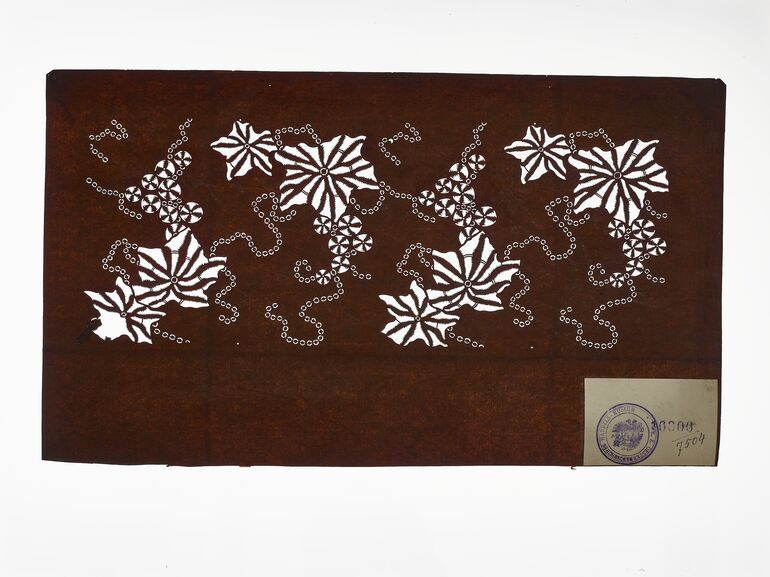
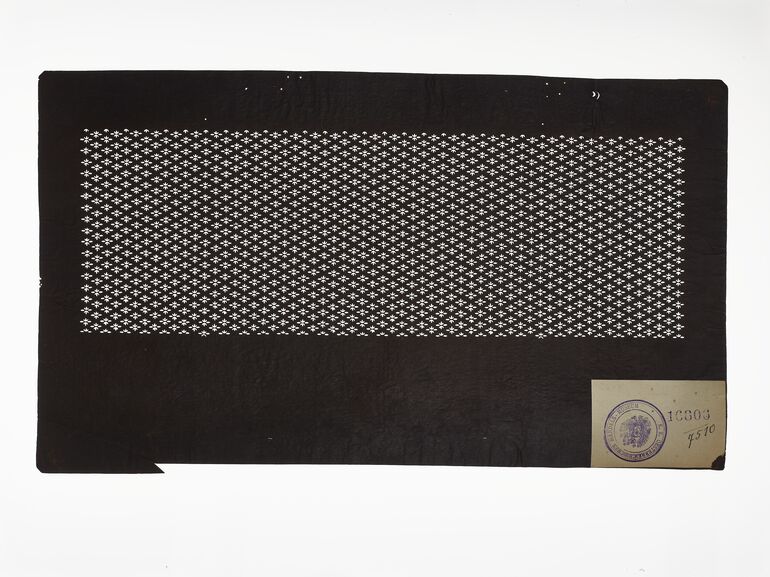
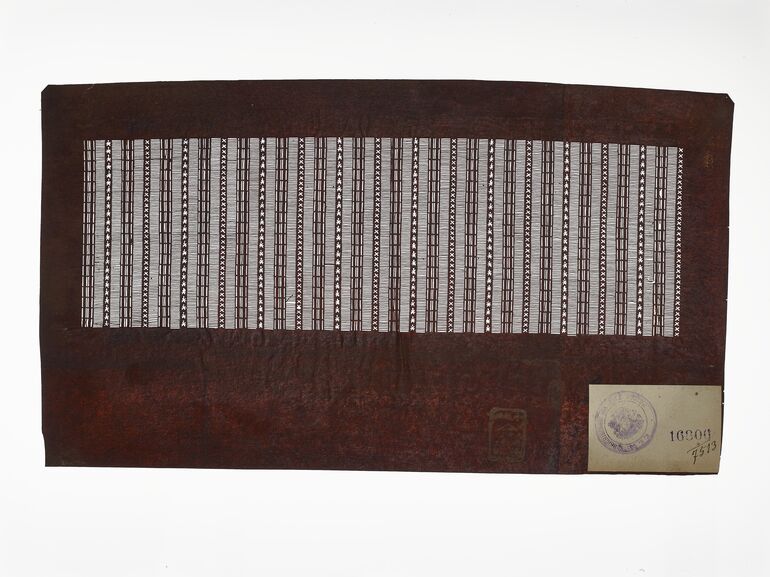
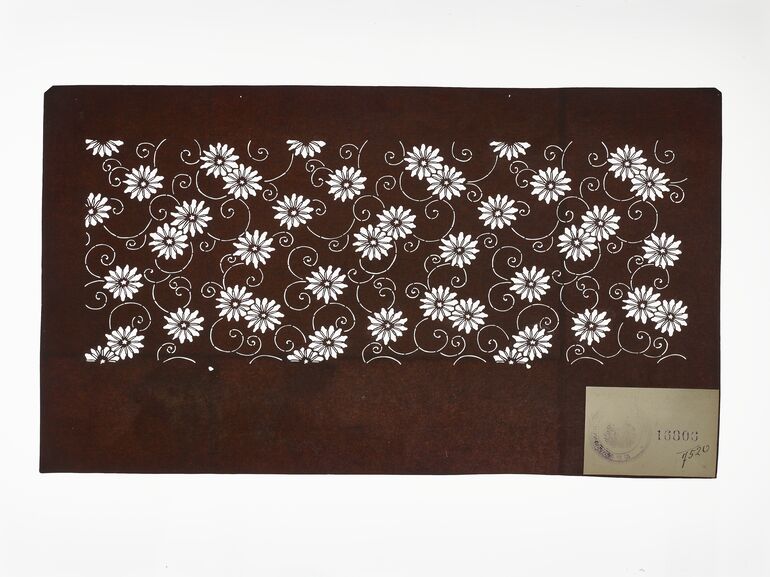
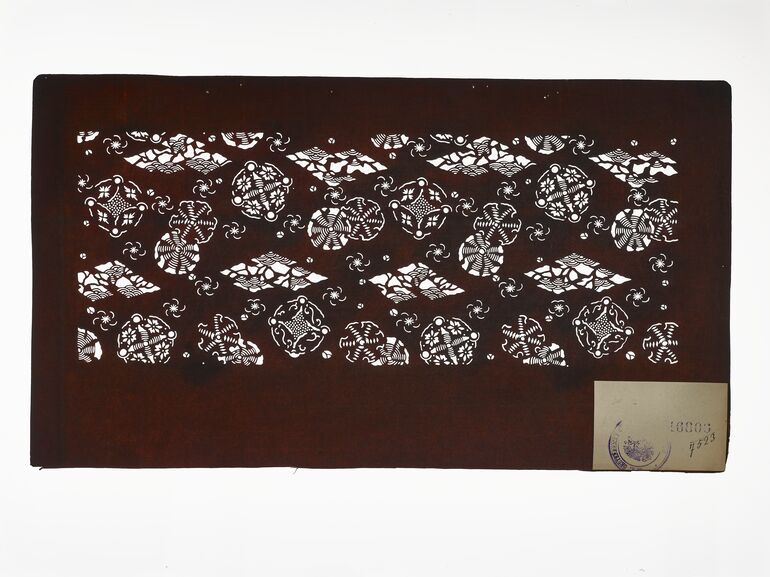
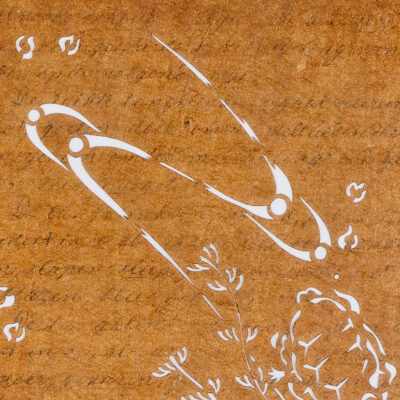
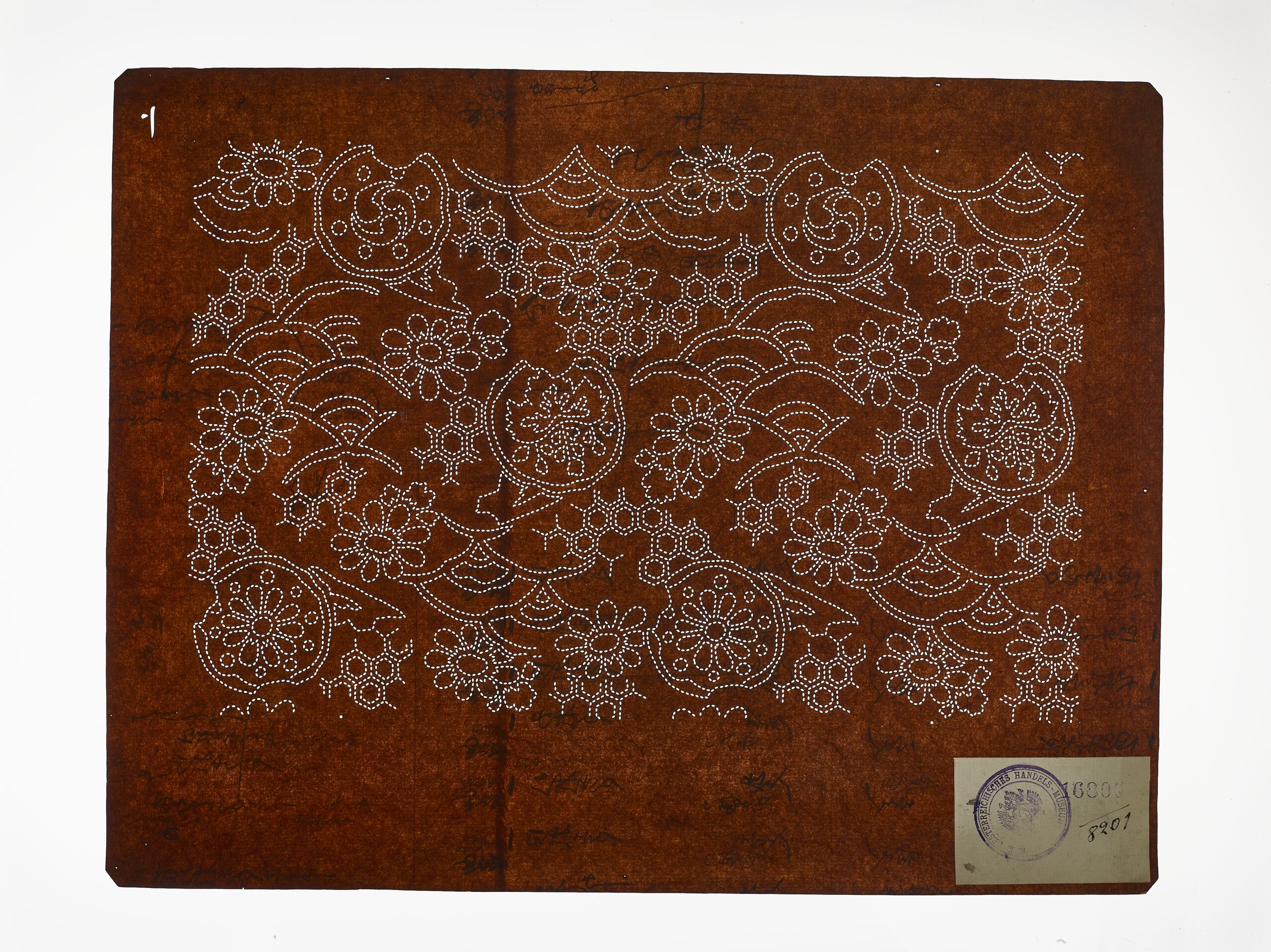
- Plant pattern (shokubutsu monyō 植物文様), pattern with objects (kibutsu monyō 器物文様), nature pattern (shizen monyō 自然文様), surface pattern (waritsuke monyō 割付文様): flowers, seigaiha 青海波 (blue ocean waves), yabure kikkō 破れ亀甲 ("shredded" kikkō) and 'round roof-edge tiles' (noki marugawara 軒丸瓦) with paulownia, chrysanthemum and mitsudomoe 三つ巴 (triple tomoe)
Collection
Period | Style | School
Material | Technique
Measurements
- height: 31.8 cm
- width: 41 cm
- pattern - height: 22.3 cm
- pattern - width: 34.5 cm
Inventory number
- OR 3925-8201
Acquisition
- assumption , 1907
Department
- Asia Collection
Description
-
"Dyed ground" (jizomari 地染).
Seigaiha 青海波 („blue ocean waves): a pattern that can be found in many regions of the world. In Japan it can be found on Haniwa robes from the Kofun period (approx. 300-538). But only since the Kamakura period (1185-1333) has the pattern been associated with water (e.g. Koseto jugs). The name seigaiha 青海波is said to go back to a title of a Gagaku dance.
Kikkō tsunagi 亀甲繋ぎ (connected tortoiseshells/hexagons): a geometric pattern of hexagons, that was already found in Sassanid art and is said to have come to Japan via China and Korea during the Nara period (710-794). Because of the resemblance to the turtle shell shield, it is called kikko 亀甲. It counts as an auspicious pattern (kisshō monyō 吉祥文様) and since the Heian period (794-1185, also 794-1192) also as a 'courtly pattern' (yūsoku monyō 有職文様).
The chrysanthemum (kiku 菊) symbolizes longevity, which dates back to a Chinese legend. The Yellow River once originated in a chrysanthemum meadow, and a villager who drank from the spring achieved a long life. In Japan, the motif first appears in the Kokin-wakashū 古今和歌集 (early 10th century), while the Man’yōshū 万葉集 from the 8th century lists 157 plant species but does not contain a single poem about chrysanthemums. It is therefore assumed that the flower was first introduced to Japan from China at the end of the 8th or beginning of the 9th century.
The paulownia motif (kiri 桐) symbolizes purity, happiness, and prosperity. Because a Chinese legend supposedly says that the phoenix only ensconces on a paulownia, it also symbolizes high status and was used as the 'private' crest of the imperial family. After the Meiji Restoration, the paulownia became the emblem of the Japanese government as the "5-7 Paulownia" (go-shichi (no) kiri 五七桐).
-
stencil (katagami 型紙), Plant pattern (shokubutsu monyō 植物文様), pattern with objects (kibutsu monyō 器物文様), nature pattern (shizen monyō 自然文様), surface pattern (waritsuke monyō 割付文様): flowers, seigaiha 青海波 (blue ocean waves), yabure kikkō 破れ亀甲 ("shredded" kikkō) and 'round roof-edge tiles' (noki marugawara 軒丸瓦) with paulownia, chrysanthemum and mitsudomoe 三つ巴 (triple tomoe), Anonym, MAK Inv.nr. OR 3925-8201
-
https://sammlung.mak.at/en/collect/plant-pattern-shokubutsu-monyo-植物文様-pattern-with-objects-kibutsu-monyo-器物文様-nature-pattern-shizen-monyo-自然_319856
Last update
- 07.09.2026
Related via
Artist
Artist
Location
Material