Title
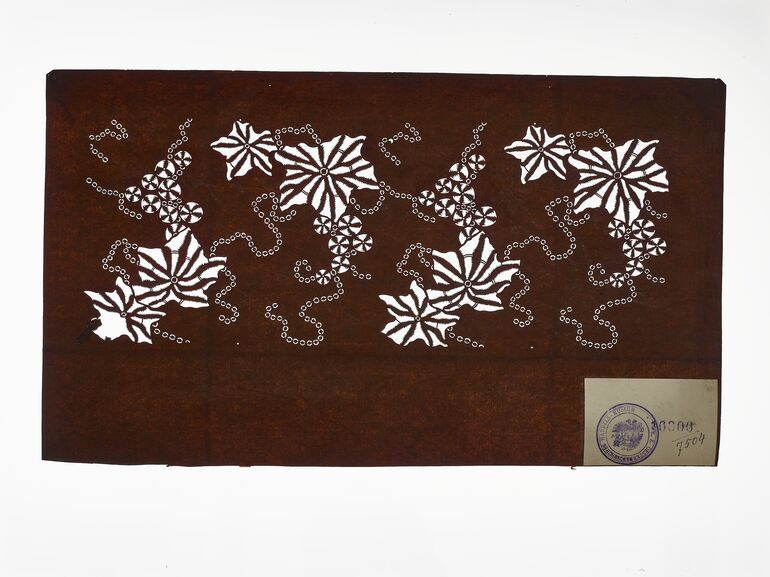
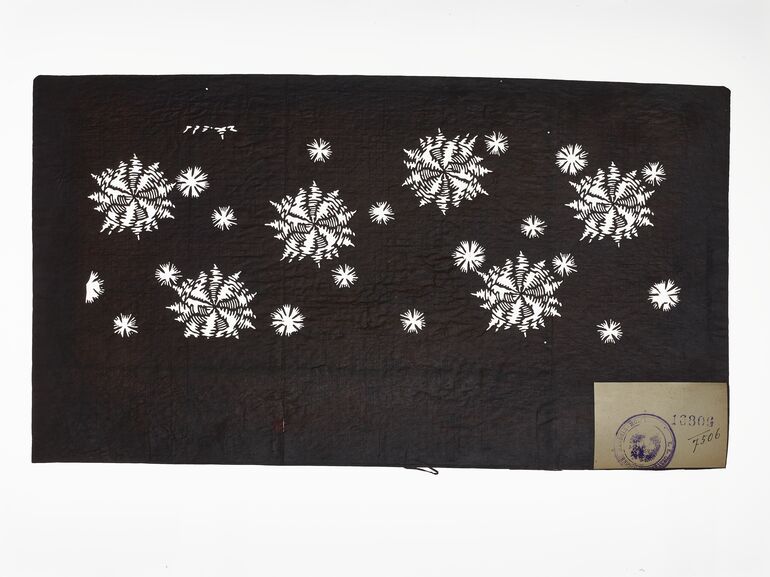
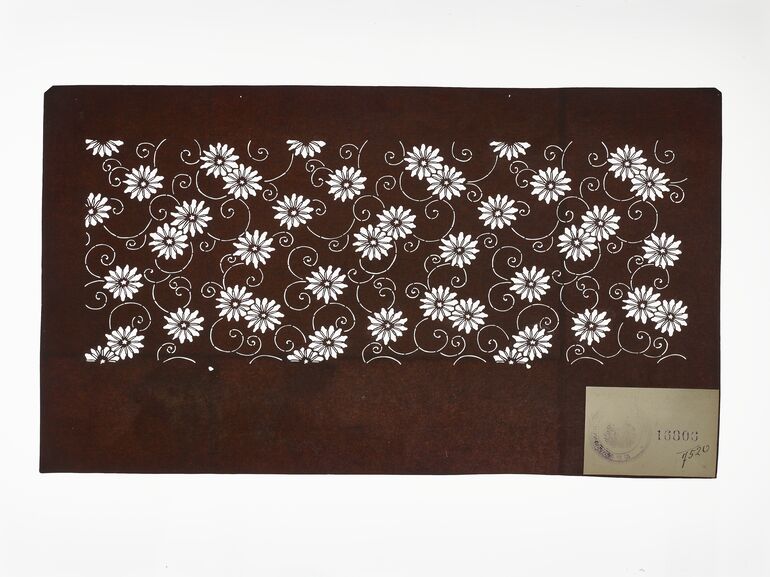
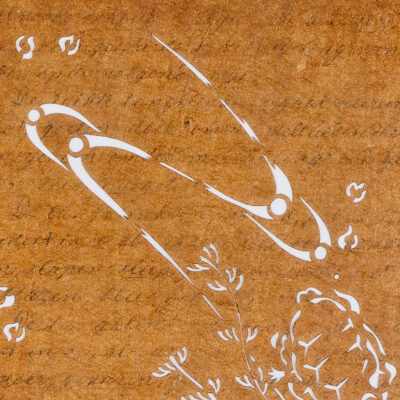
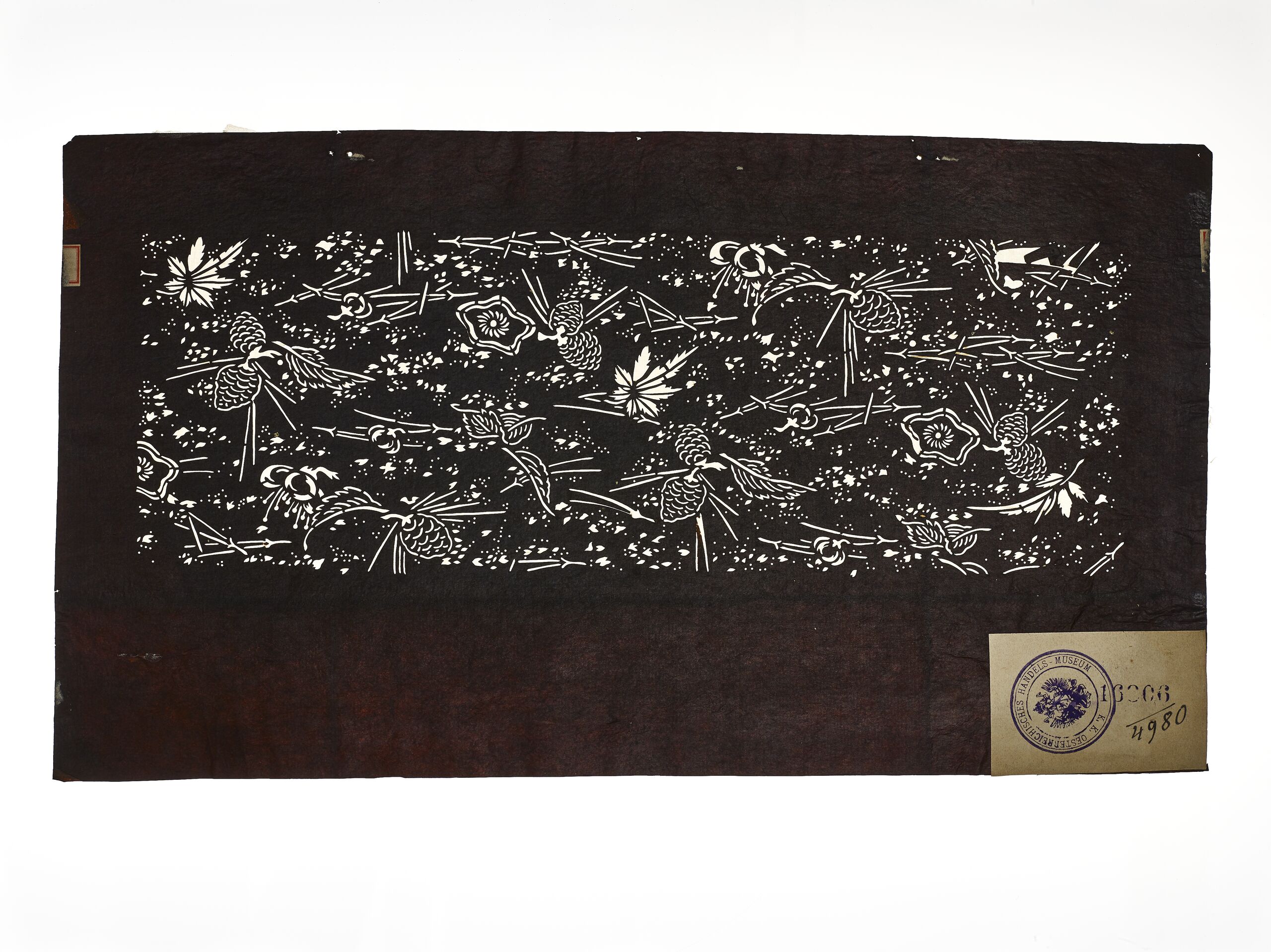
- Plant pattern (shokubutsu monyō 植物文様), surface pattern (waritsuke monyō 割付文様), scattered pattern (chirashi monyō 散らし文様): "blown" (fukiyose 吹き寄せ) plum blossoms, pine needles, leaves, maple leaves, pine cones and arare あられ (hailstones; dots)
Collection
Period | Style | School
Material | Technique
Measurements
- height: 23.1 cm
- width: 41.2 cm
- 1 Muster - height: 12.1 cm
- 1 Muster - width: 35.4 cm
Inventory number
- OR 3925-4980
Acquisition
- assumption , 1907
Department
- Asia Collection
Description
-
"Dyed ground" (jizomari 地染).
The blossom of the plum (BAI/ume 梅) is a symbol of the beginning of spring, as it begins to bloom in the cold season. The plum blossom pattern is auspicious and represents longevity, endurance and prosperity of the descendants.
Pine needles (matsuba 松葉) usually grow in pairs and are held together at the base by a needle sheath. The motif of pairs of needles below the pine tree is considered a symbol of marital love and harmony.
The maple leaf (kaede 楓, also: momiji 紅葉) is considered a symbol of a long and successful life because it changes color depending on the season. Especially in autumn, the foliage shines in the most beautiful colors. Maple leaves are already sung about in the oldest poetry (Man'yōshū 万葉集, Kokin Wakashū 古今和歌集), and maple leaf motifs on robes are described in the Heian period (Makura-no Sōshi 枕草子, Eiga Monogatari 栄花物語). Even banquets "to admire discolored maple leaves" are said to have been held from the second half of the Heian period onwards.
-
stencil (katagami 型紙), Plant pattern (shokubutsu monyō 植物文様), surface pattern (waritsuke monyō 割付文様), scattered pattern (chirashi monyō 散らし文様): "blown" (fukiyose 吹き寄せ) plum blossoms, pine needles, leaves, maple leaves, pine cones and arare あられ (hailstones; dots), Anonym, MAK Inv.nr. OR 3925-4980
-
https://sammlung.mak.at/en/collect/plant-pattern-shokubutsu-monyo-植物文様-surface-pattern-waritsuke-monyo-割付文様-scattered-pattern-chirashi-monyo-散ら_339699
Last update
- 12.10.2026
Related via
Artist
Artist
Location
Material