Title
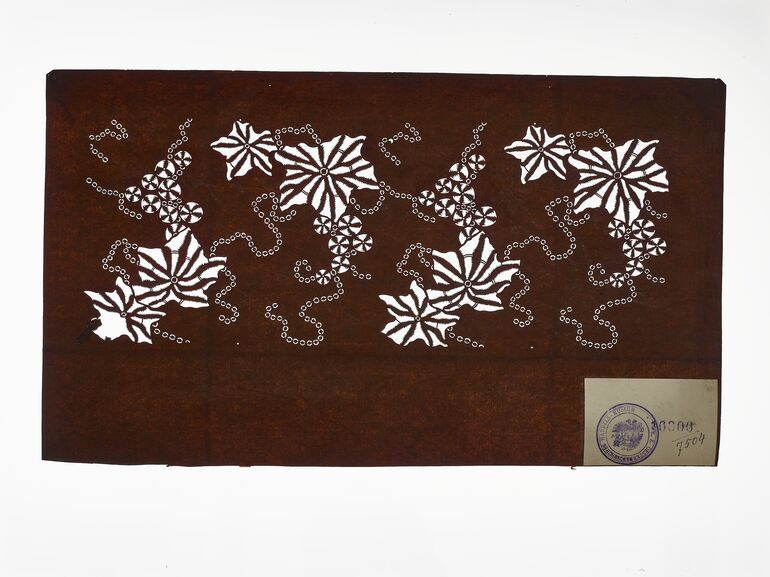
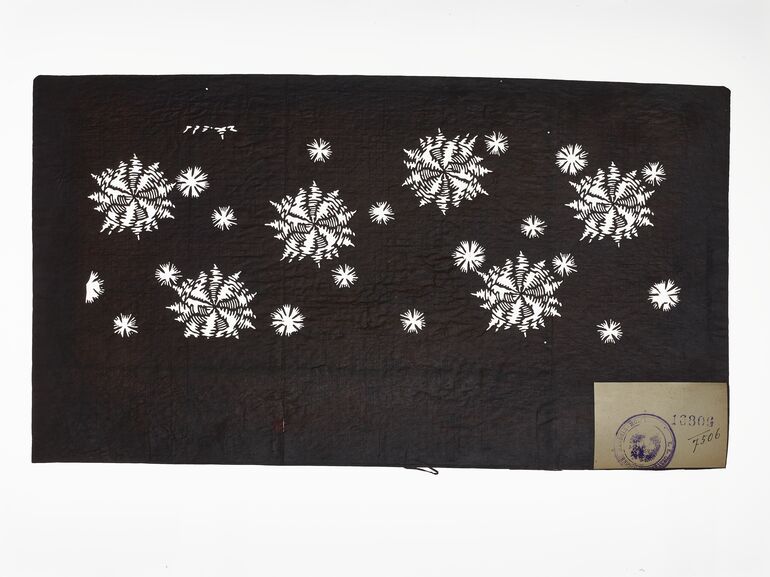
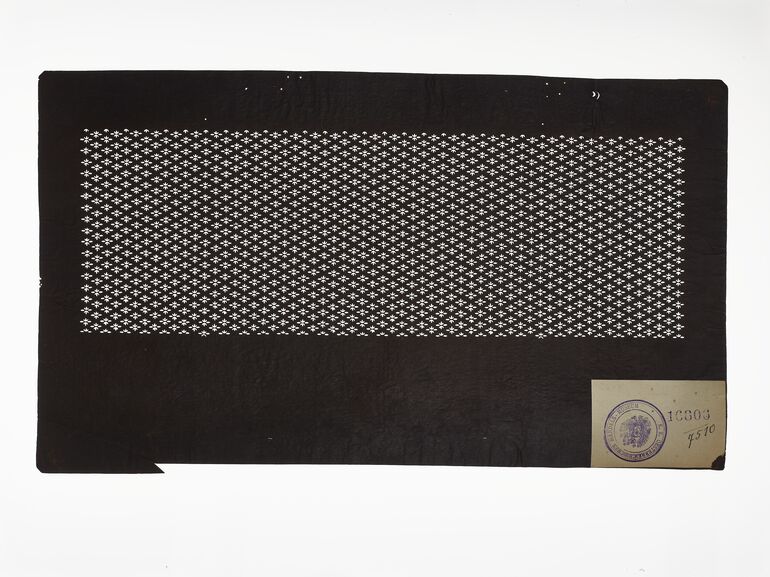
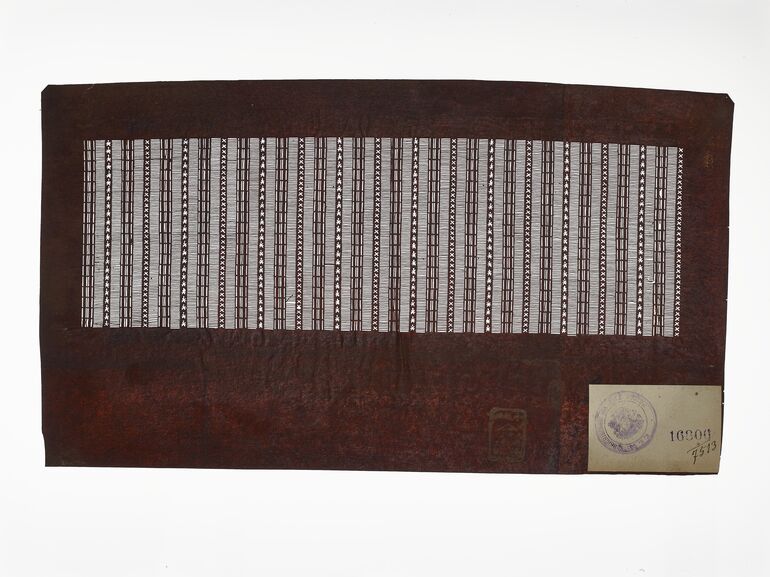
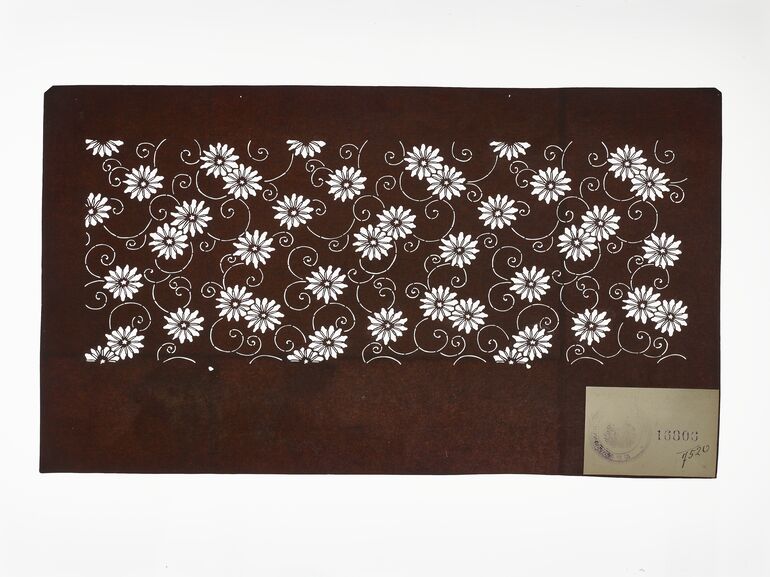
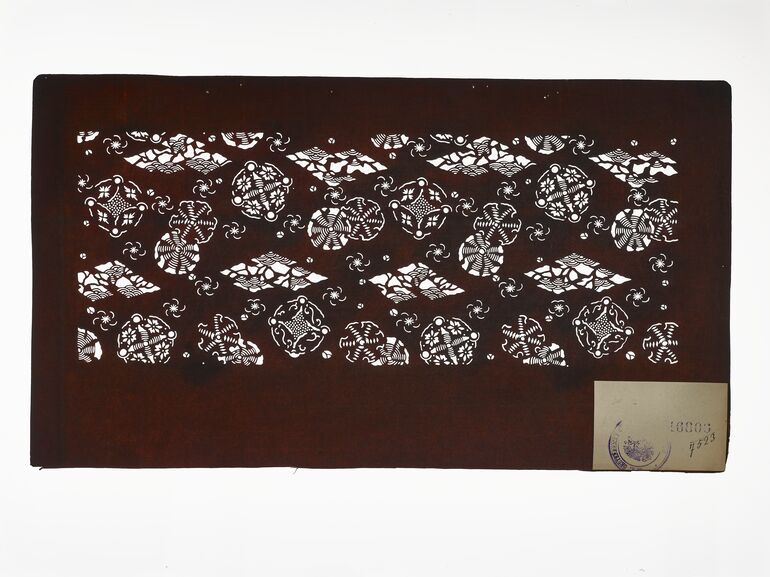
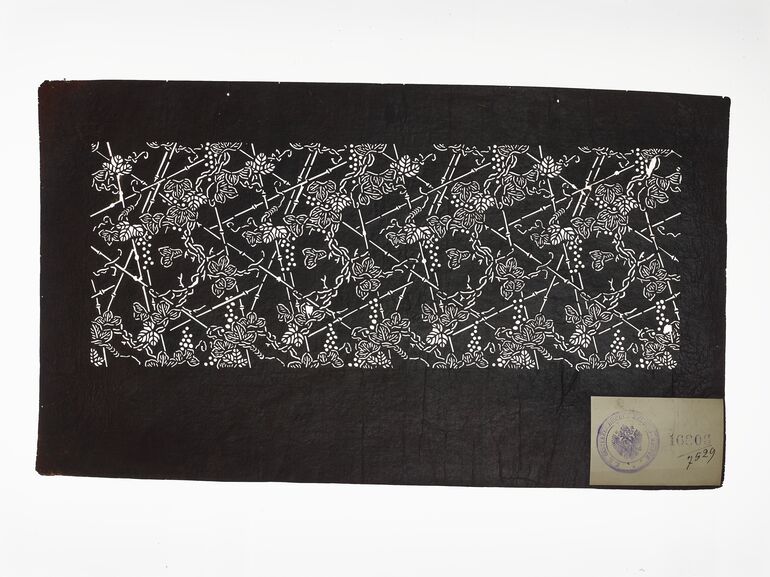
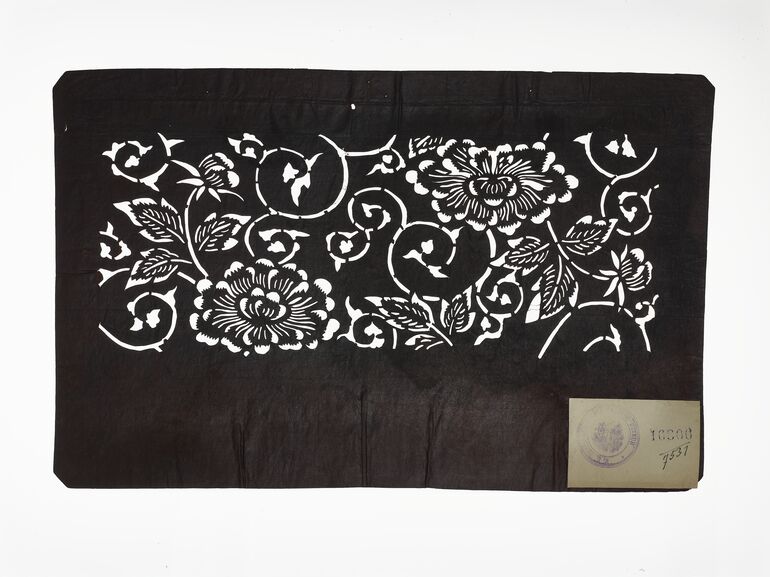
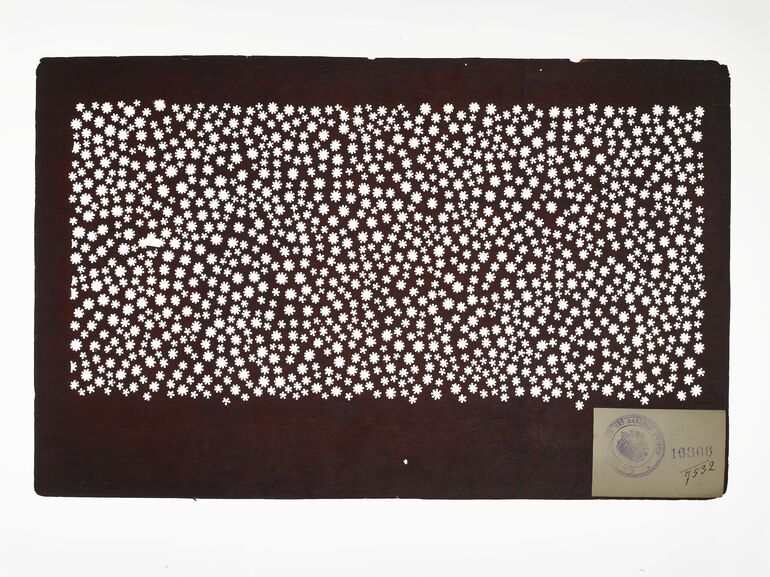
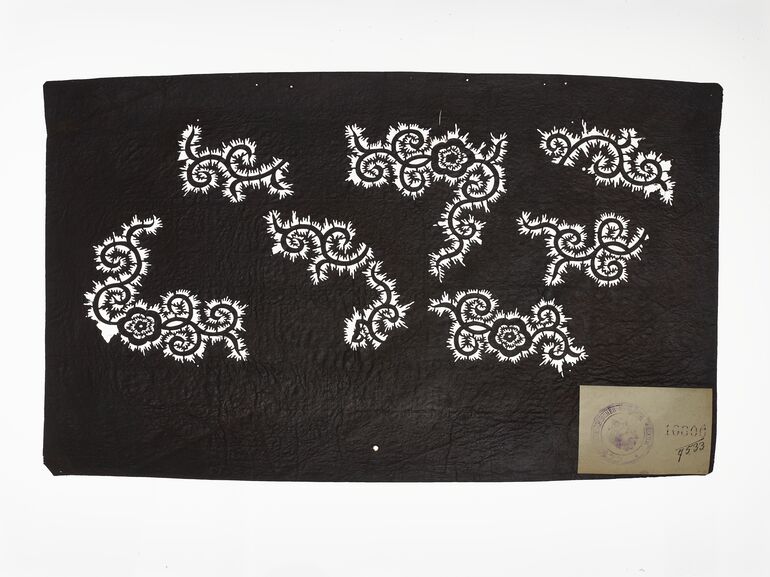
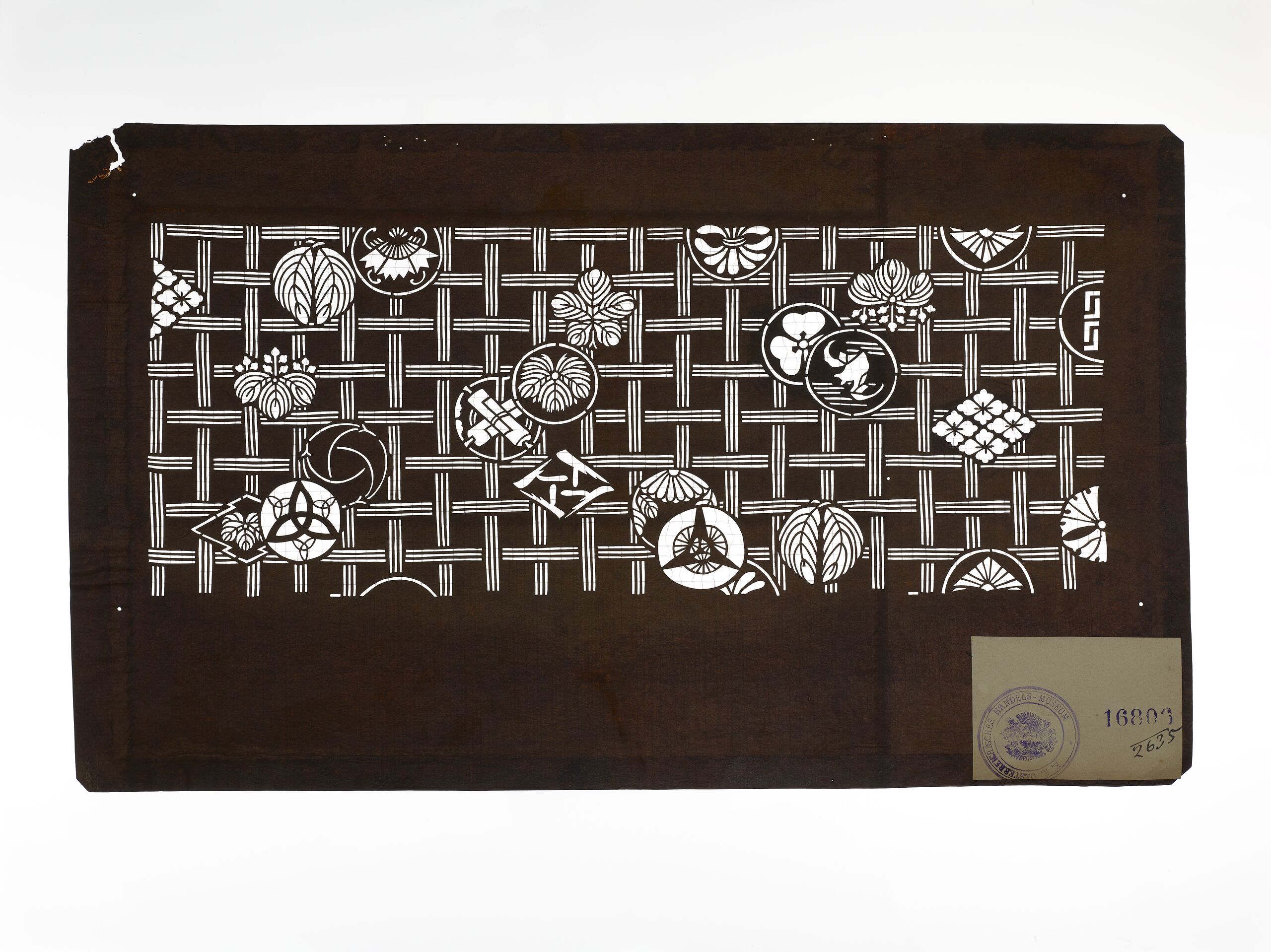
- Part of a set. Surface pattern (waritsuke monyō 割付文様), plant pattern (shokubutsu monyō 植物文様), pattern with objects (kibutsu monyō 器物文様), animal pattern (dōbutsu monyō 動物文様): grid, plants and family crests
Collection
Period | Style | School
Material | Technique
Measurements
- height: 24.4 cm
- width: 40.7 cm
- 1 Muster - height: 13.5 cm
- 1 Muster - width: 34.8 cm
Inventory number
- OR 3925-2635
Acquisition
- assumption , 1907
Department
- Asia Collection
Description
-
"White ground" (jishiro 地白), "main stencil" (omogata 主型). Plants, e.g.: leaves, paulownias, circle of pine needles and of chrysanthemums. Circles with e.g.: leaf, fan, bundles of paper stripes (tabanenoshi 束ね熨斗), bat, chō noshi 蝶熨斗, tsutsumamori 筒守. I no ji hishi イの字菱 (also ibishi イ菱; diamonds composed of i イ (Japanese syllabary)) and diamonds of flowers.
The paulownia motif (kiri 桐) symbolizes purity, happiness, and prosperity. Because a Chinese legend supposedly says that the phoenix only ensconces on a paulownia, it also symbolizes high status and was used as the 'private' crest of the imperial family. After the Meiji Restoration, the paulownia became the emblem of the Japanese government as the "5-7 Paulownia" (go-shichi (no) kiri 五七桐).
Pine needles (matsuba 松葉) usually grow in pairs and are held together at the base by a needle sheath. The motif of pairs of needles below the pine tree is considered a symbol of marital love and harmony.
The chrysanthemum (kiku 菊) symbolizes longevity, which dates back to a Chinese legend. The Yellow River once originated in a chrysanthemum meadow, and a villager who drank from the spring achieved a long life. In Japan, the motif first appears in the Kokin-wakashū 古今和歌集 (early 10th century), while the Man’yōshū 万葉集 from the 8th century lists 157 plant species but does not contain a single poem about chrysanthemums. It is therefore assumed that the flower was first introduced to Japan from China at the end of the 8th or beginning of the 9th century.
In ancient China, the word "bat" could also mean "to turn into happiness", so this positive connotation was also transferred to the bat in Japan. Kabuki actor Ichikawa Danjūrō 市川團十郎 used the auspicious bat motif as one of his trademarks.
Chō noshi 蝶熨斗: a ceremonial "folding paper" in the shape of a butterfly.
Tsutsumamori 筒守: caskets for picture scrolls, often lying crossed over each other, also knwon as gion mamori 祇園守.
-
stencil (katagami 型紙), Part of a set. Surface pattern (waritsuke monyō 割付文様), plant pattern (shokubutsu monyō 植物文様), pattern with objects (kibutsu monyō 器物文様), animal pattern (dōbutsu monyō 動物文様): grid, plants and family crests, Anonym, MAK Inv.nr. OR 3925-2635
-
https://sammlung.mak.at/en/collect/part-of-a-set-surface-pattern-waritsuke-monyo-割付文様-plant-pattern-shokubutsu-monyo-植物文様-pattern-with-objects-kibutsu-monyo_333581
Last update
- 28.09.2026
Related via
Artist
Artist
Location
Material