Title
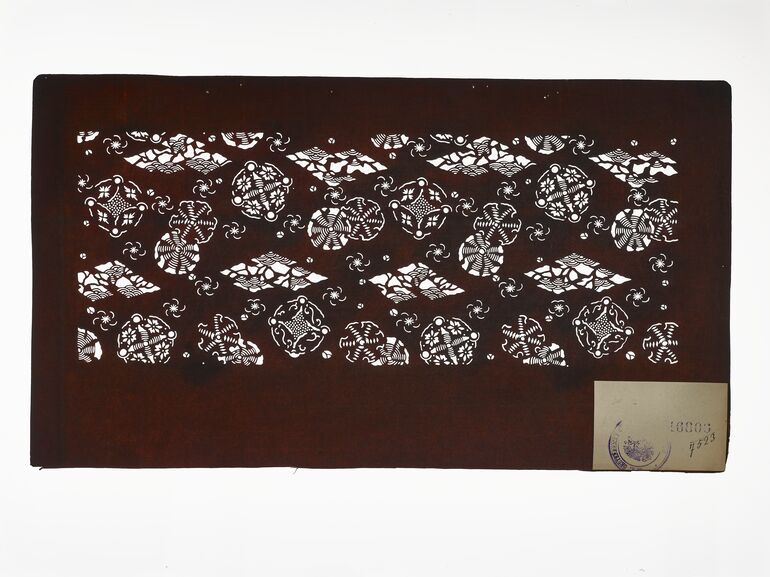
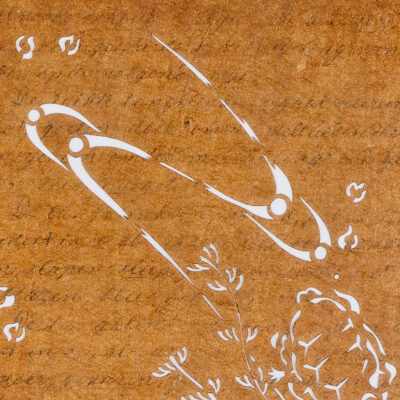
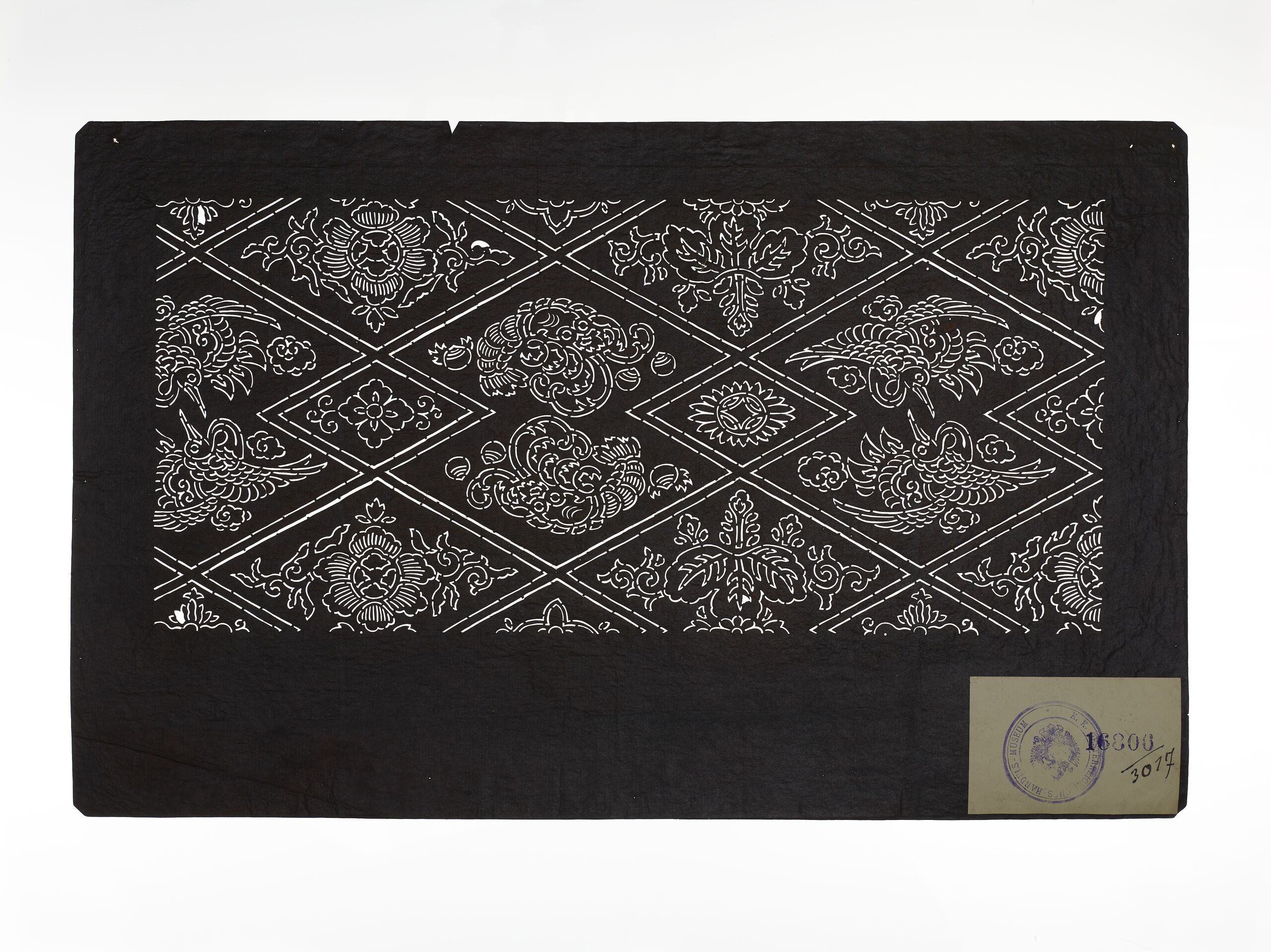
- Part of a set. Surface pattern (waritsuke monyō 割付文様), plant pattern (shokubutsu monyō 植物文様), animal pattern (dōbutsu monyō 動物文様), nature pattern (shizen monyō 自然文様): lattice of overlapping rhombuses with cranes and clouds, with lobsters and wish-fulfilling jewels (hōju 宝珠) and with floral motifs (e.g. peony, paulownia)
Collection
Period | Style | School
Material | Technique
Measurements
- height: 25.4 cm
- width: 40.7 cm
- 1 Muster - height: 15.8 cm
- 1 Muster - width: 34.5 cm
Inventory number
- OR 3925-3017
Acquisition
- assumption , 1907
Department
- Asia Collection
Description
-
"Dyed ground" (jizomari 地染), "main stencil" (omogata 主型). Clouds: reishigumo 霊芝雲 (auspicious clouds in the shape of a reishi mushroom).
The crane (tsuru 鶴) is considered a being that “connects heaven and earth” because its call is high and can be heard far into the sky. Since most cranes remain monogamous for life, they symbolize eternal love and loyalty. The crane motif is auspicious and represents longevity and marital harmony. It is often used for celebratory occasions and is especially common on wedding attire.
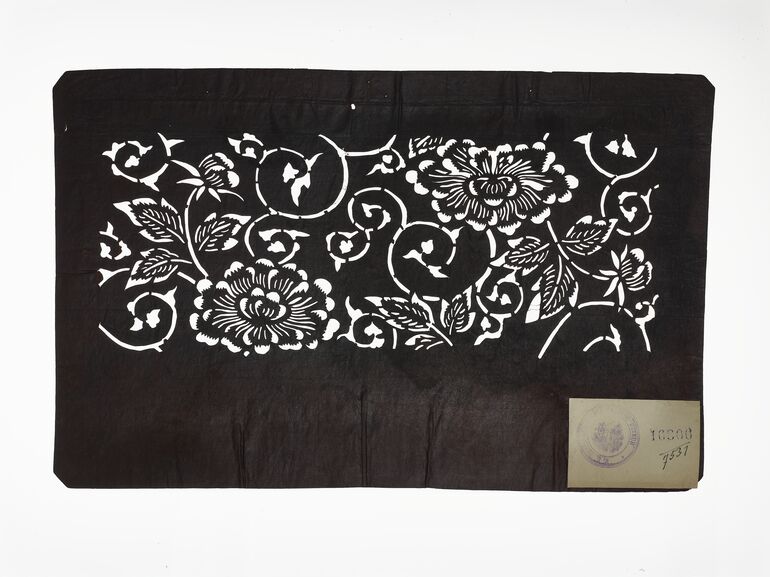
Peonies symbolise wealth and beauty. Because of their magnificent blossom with many petals, they are often used as a motif for handicrafts. Red peonies were even said to be able ensure longevity and immortality when drunk as an herbal decoction.
The paulownia motif (kiri 桐) symbolizes purity, happiness, and prosperity. Because a Chinese legend supposedly says that the phoenix only ensconces on a paulownia, it also symbolizes high status and was used as the 'private' crest of the imperial family. After the Meiji Restoration, the paulownia became the emblem of the Japanese government as the "5-7 Paulownia" (go-shichi (no) kiri 五七桐).
-
stencil (katagami 型紙), Part of a set. Surface pattern (waritsuke monyō 割付文様), plant pattern (shokubutsu monyō 植物文様), animal pattern (dōbutsu monyō 動物文様), nature pattern (shizen monyō 自然文様): lattice of overlapping rhombuses with cranes and clouds, with lobsters and wish-fulfilling jewels (hōju 宝珠) and with floral motifs (e.g. peony, paulownia), Anonym, MAK Inv.nr. OR 3925-3017
-
https://sammlung.mak.at/en/collect/part-of-a-set-surface-pattern-waritsuke-monyo-割付文様-plant-pattern-shokubutsu-monyo-植物文様-animal-pattern-dobutsu-monyo-動_333839
Last update
- 01.09.2026
Related via
Artist
Artist
Location
Material