Title
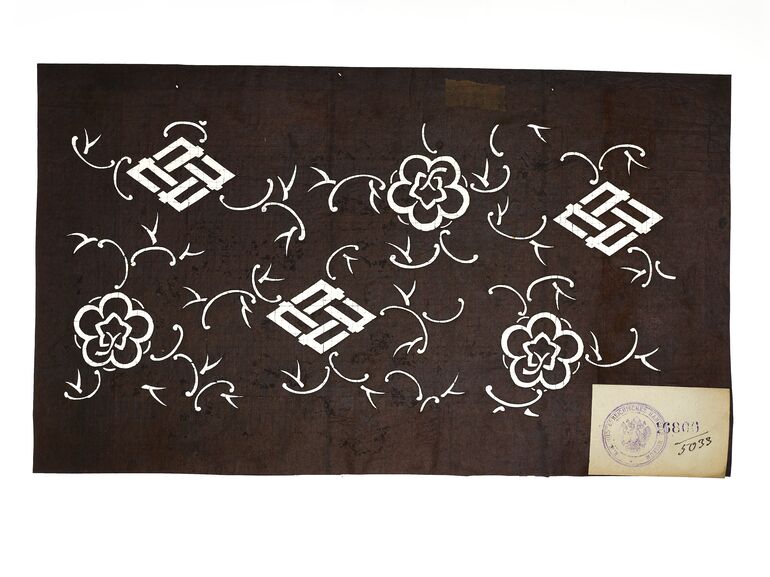
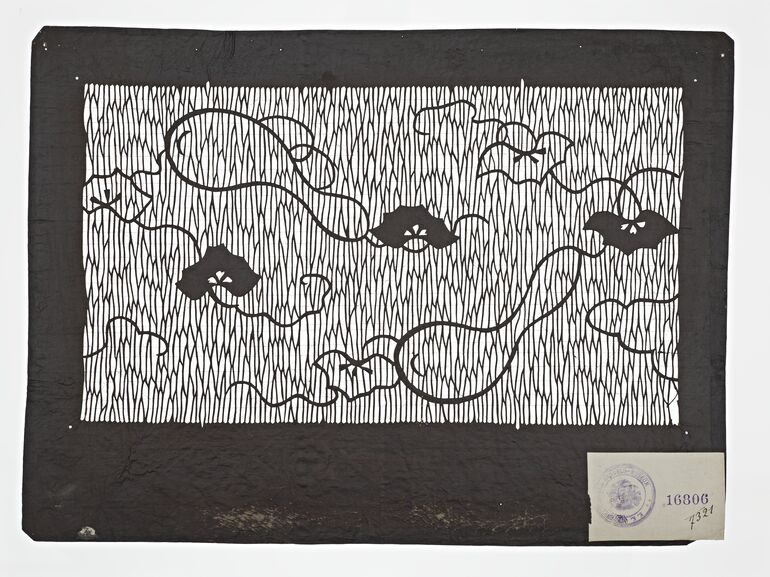
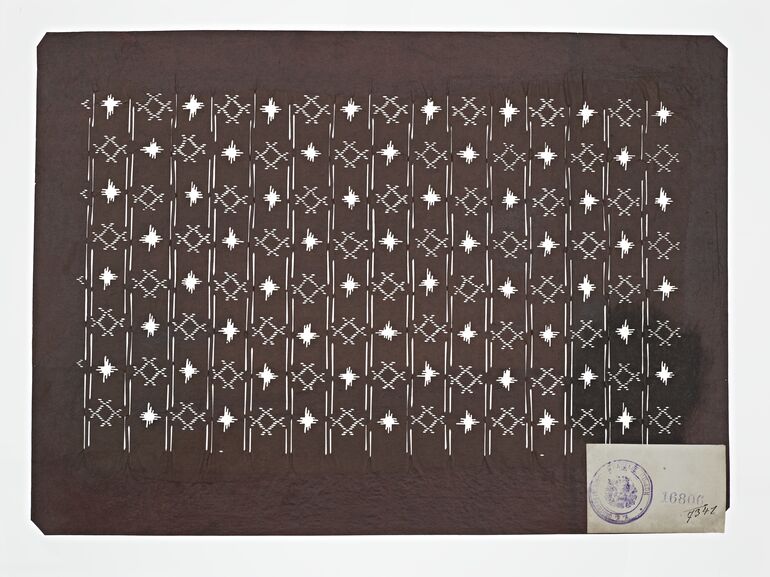
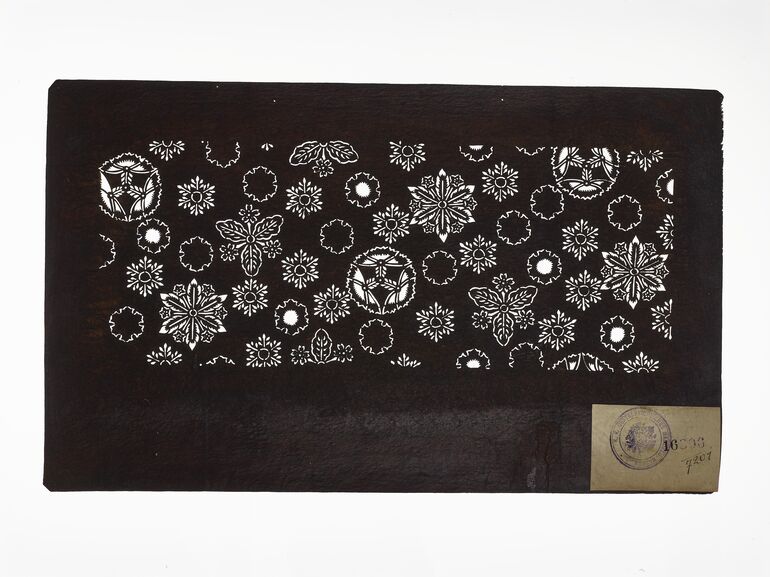
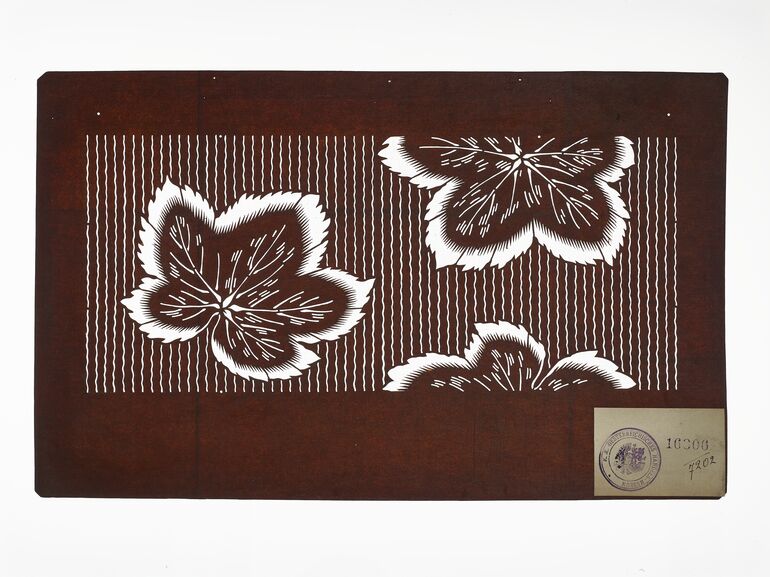
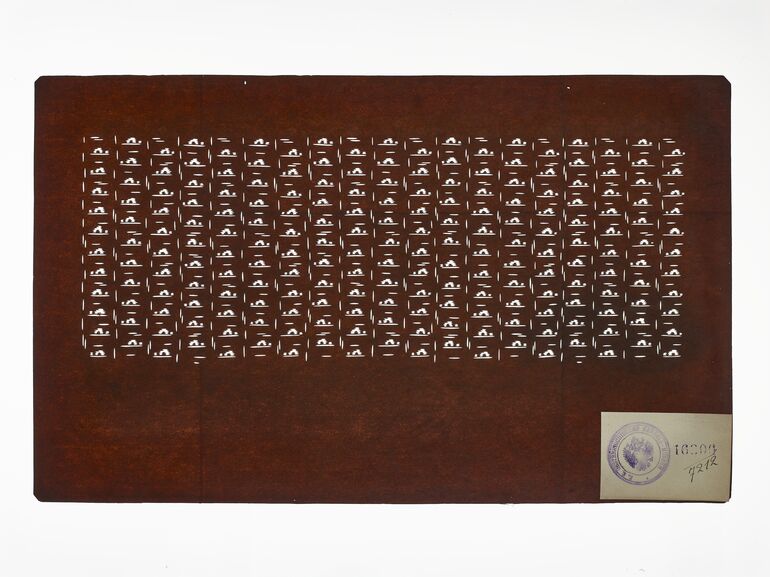
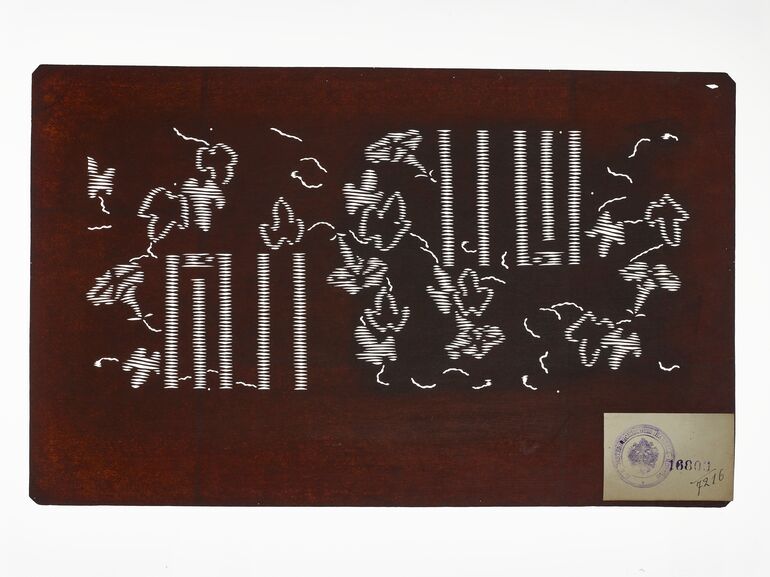
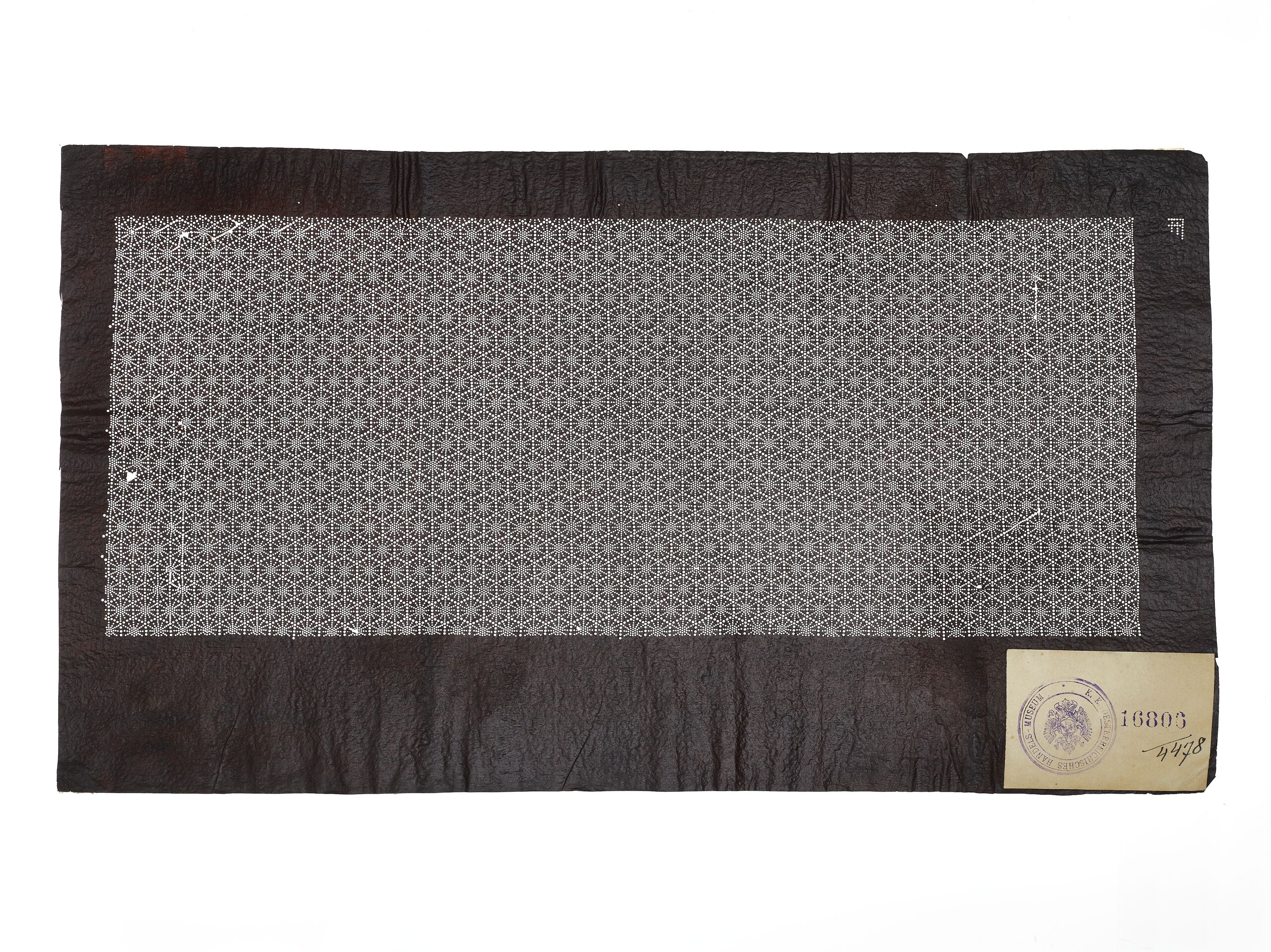
- Komon 小紋. Surface pattern (waritsuke monyō 割付文様): kikkō tsunagi 亀甲繋ぎ (connected tortoiseshells/hexagons) with radial lines
Collection
Period | Style | School
Material | Technique
Measurements
- height: 24.4 cm
- width: 43.2 cm
- 1 Muster - height: 15.7 cm
- 1 Muster - width: 38.8 cm
Inventory number
- OR 3925-4478
Acquisition
- assumption , 1907
Department
- Asia Collection
Description
-
"Dyed ground" (jizomari 地染).
Kikkō tsunagi 亀甲繋ぎ (connected tortoiseshells/hexagons):
a geometric pattern of hexagons, that was already found in Sassanid art and is said to have come to Japan via China and Korea during the Nara period (710-794). Because of the resemblance to the turtle shell shield, it is called kikko 亀甲. It counts as an auspicious pattern (kisshō monyō 吉祥文様) and since the Heian period (794-1185, also 794-1192) also as a 'courtly pattern' (yūsoku monyō 有職文様).
Stencils for komon 小 紋 ("fine pattern") are mostly made in the drill cutting
-
stencil (katagami 型紙), Komon 小紋. Surface pattern (waritsuke monyō 割付文様): kikkō tsunagi 亀甲繋ぎ (connected tortoiseshells/hexagons) with radial lines, Anonym, MAK Inv.nr. OR 3925-4478
-
https://sammlung.mak.at/en/collect/komon-小紋-surface-pattern-waritsuke-monyo-割付文様-kikko-tsunagi-亀甲繋ぎ-connected-tortoiseshells-hexagons-with-radial-lin_337720
Last update
- 12.10.2026
Related via
Artist
Artist
Location
Material