Title
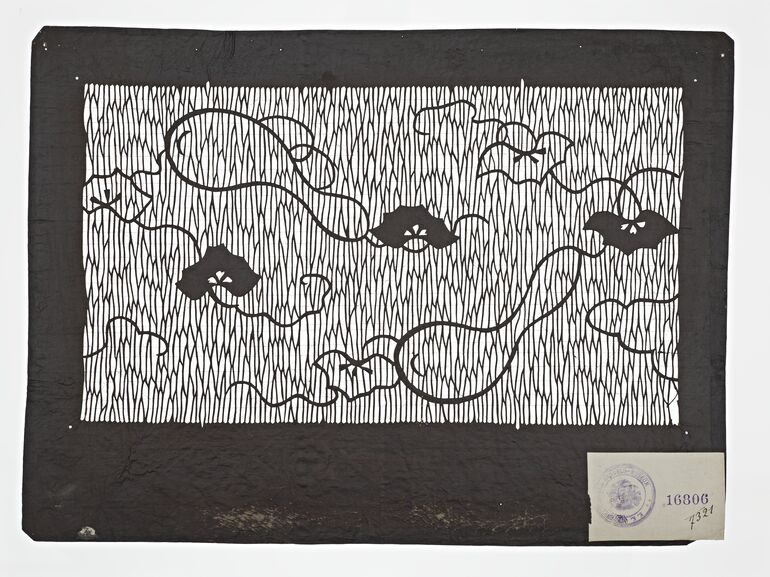
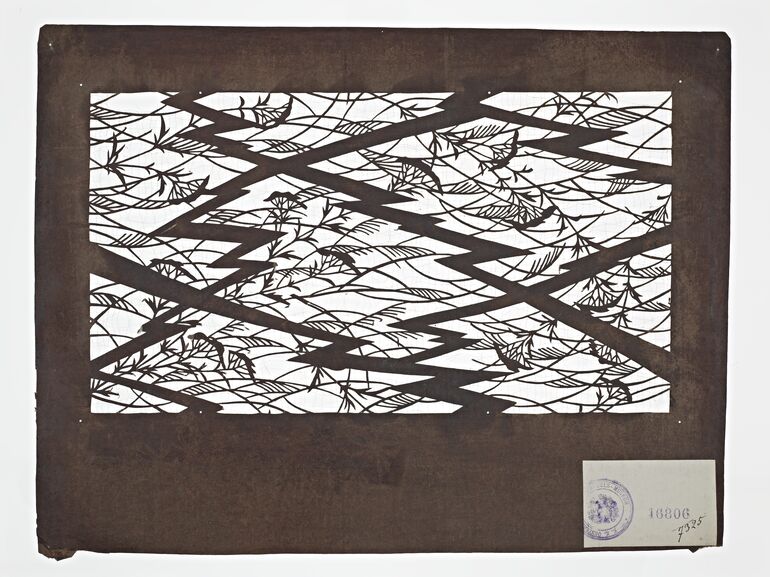
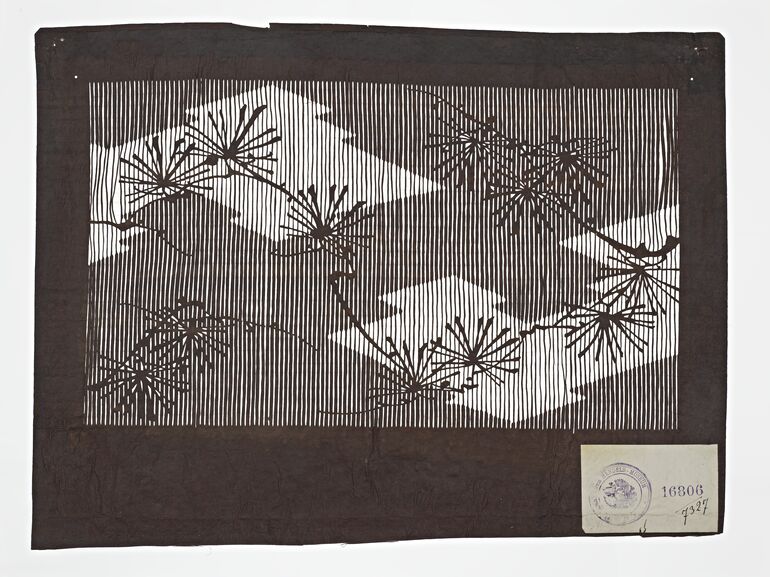
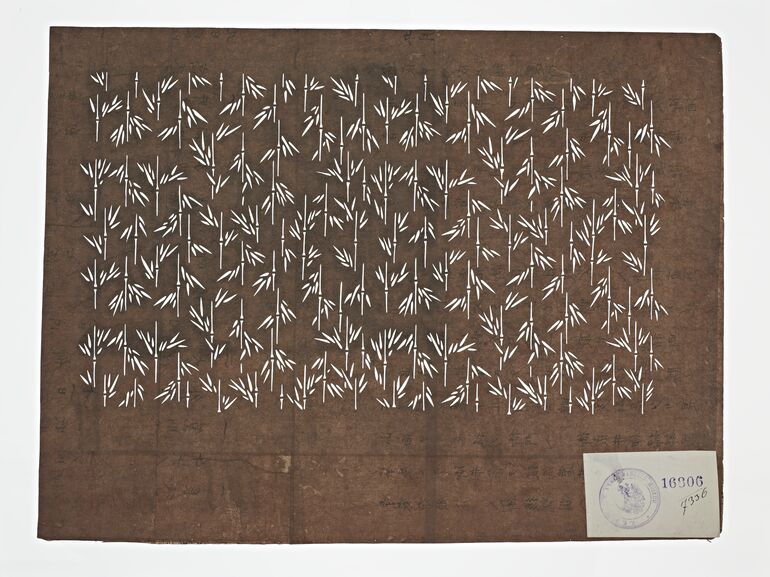
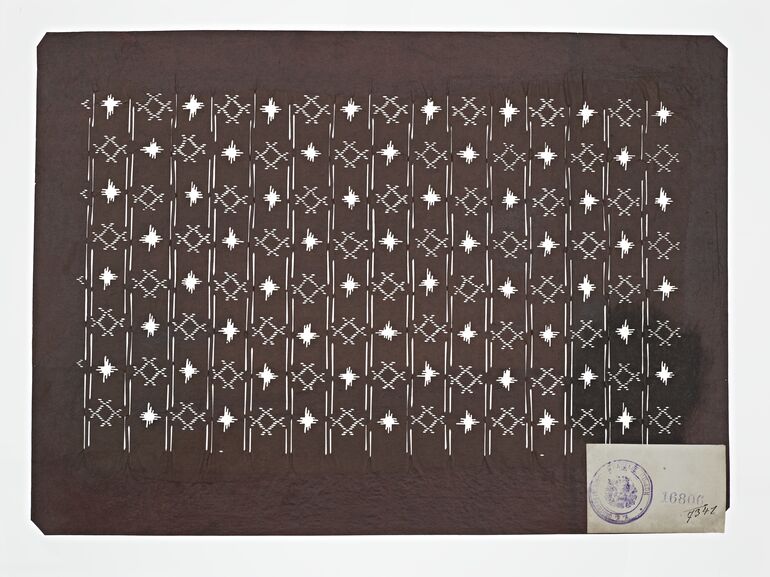
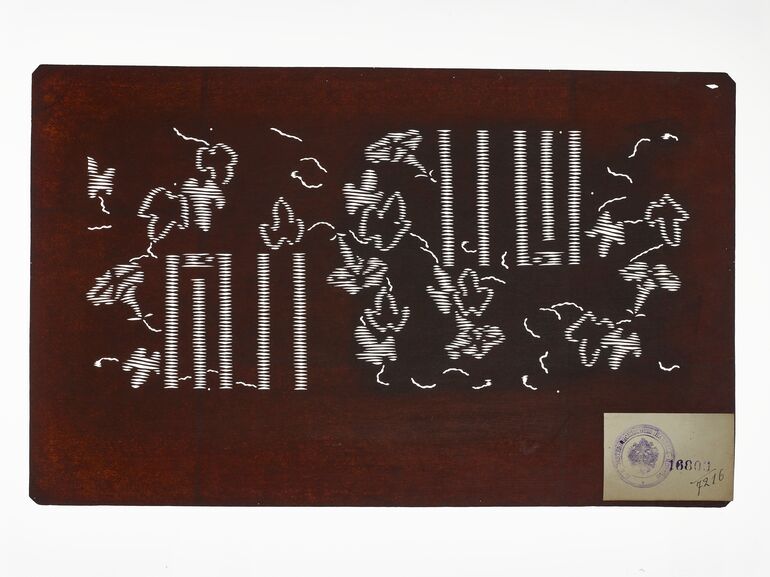
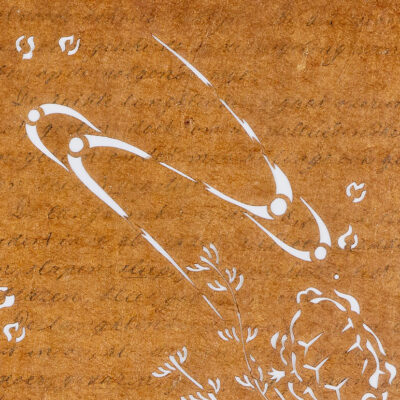
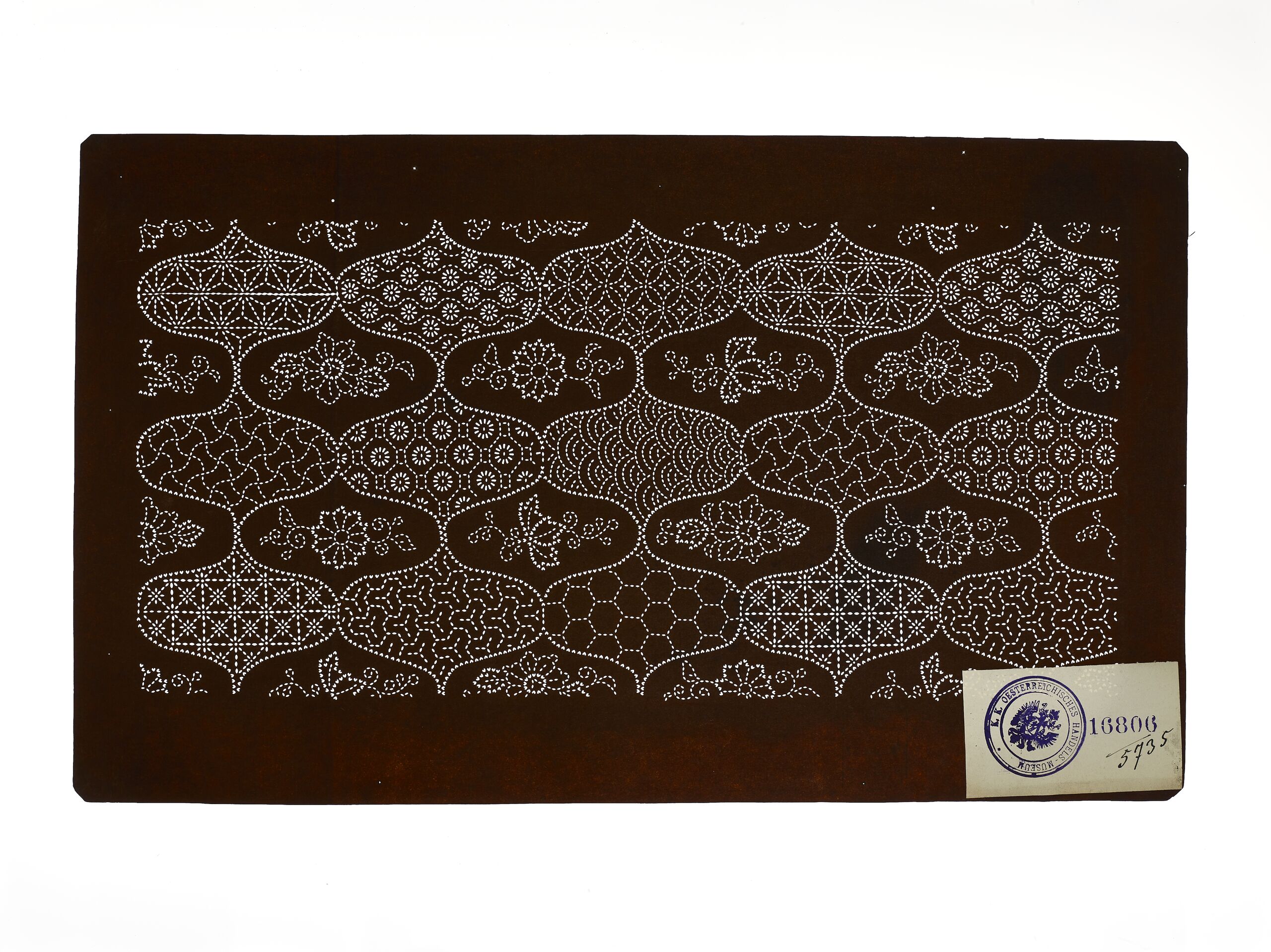
- Surface pattern (waritsuke monyō 割付文様), plant pattern (shokubutsu monyō 植物文様): mesh (amime 網目) with surface pattern and with flowers with tendrils
Collection
Period | Style | School
Material | Technique
Measurements
- height: 24.2 cm
- width: 40.7 cm
- pattern - height: 17.4 cm
- pattern - width: 36 cm
Inventory number
- OR 3925-5735
Acquisition
- assumption , 1907
Department
- Asia Collection
Description
-
"Dyed ground" (jizomari 地染).
Mesh surface pattern: hemp leaves (asa no ha 麻の葉) with horizontal lines; fundō tsunagi 分銅繋ぎ (net pattern in the shape of fundō 分銅 (Jap. weight)); grid and diagonal grid with flowers; rising steam (tatewaku 立涌) with chrysanthemums; octagon and rectangle combination (shokkō monyō 蜀江文様, named after the Chinese Shokkō brocade) with chrysanthemums; bishamon kikkō 毘沙門亀甲; interlaced circles (shippō tsunagi 七宝繋ぎ) with flowers; seigaiha 青海波 (blue ocean waves); kikkō tsunagi 亀甲繋ぎ (connected tortoiseshells/hexagons).
Asa no ha 麻の葉 (hemp leaves): a hexagonal pattern called asa no ha 麻の葉 because it resembles the hemp leaves. A hemp plant is robust and grows straight up. Therefore, the pattern is said to have been preferred for the clothes of the newborns. It is not only found on kimonos, but also on obi, under kimonos and small pouches.
Fundō tsunagi 分銅繋ぎ (net pattern in the shape of fundō 分銅 (Jap. weight)): due to the unusual shape of the fundō, which is composed to a net pattern form, the pattern fundō tsunagi 分銅繋ぎ is said to have been quite popular.
Tatewaku-/tachiwaki 立涌 pattern: a kind of "courtly" pattern (yūsoku monyō 有職文様).
Bishamon kikkō 毘沙門亀甲: a surface pattern of three composite kikkō (mitsumori kikkō 三盛亀甲 = „triple“ kikkō). Since Bishamon-ten 毘沙門天, god of fortune and guardian, is often depicted in an armor with this pattern (as in Tōdaiji 東大寺, Nara), this surface pattern is commonly called bishamon kikko.
Shippō tsunagi 七宝分繋ぎ („seven Treasures“; interlaced circles): an auspicious pattern (kisshō monyō 吉祥文様) with circles of equal size, placed and connected in an overlapping manner. The circle represents perfection. It is uncertain whether this pattern can be associated with the "Seven Treasures" of Buddhism. Perhaps because human relationships and connections are just as valuable as the “Seven Treasures”.
Kikkō tsunagi 亀甲繋ぎ (connected tortoise shells/hexagons): a geometric pattern of hexagons, that was already found in Sassanid art and is said to have come to Japan via China and Korea during the Nara period (710-794). Because of the resemblance to the turtle shell shield, it is called kikko 亀甲. It counts as an auspicious pattern (kisshō monyō 吉祥文様) and since the Heian period (794-1185, also 794-1192) also as a 'courtly pattern' (yūsoku monyō 有職文様).
-
stencil (katagami 型紙), Surface pattern (waritsuke monyō 割付文様), plant pattern (shokubutsu monyō 植物文様): mesh (amime 網目) with surface pattern and with flowers with tendrils , Anonym, MAK Inv.nr. OR 3925-5735
-
https://sammlung.mak.at/en/collect/surface-pattern-waritsuke-monyo-割付文様-plant-pattern-shokubutsu-monyo-植物文様-mesh-amime-網目-with-surface-pattern-and_347216
Last update
- 25.04.2026
Related via
Artist
Artist
Location
Material