Title
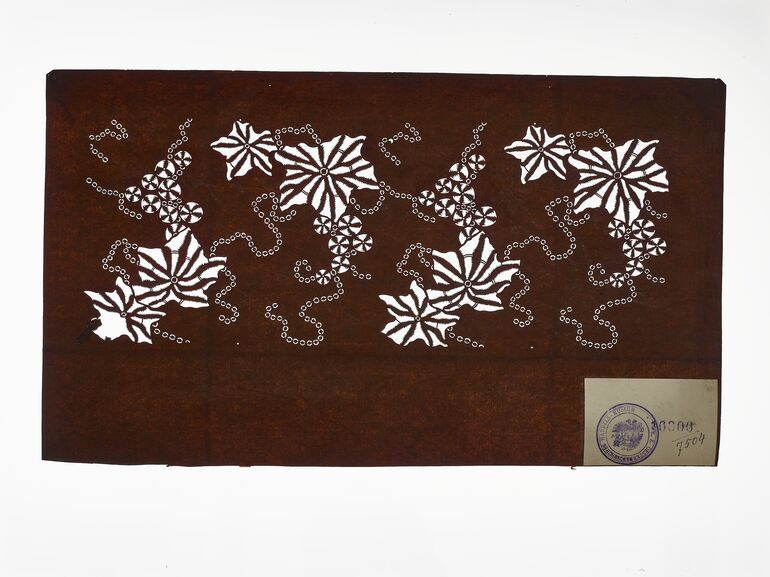
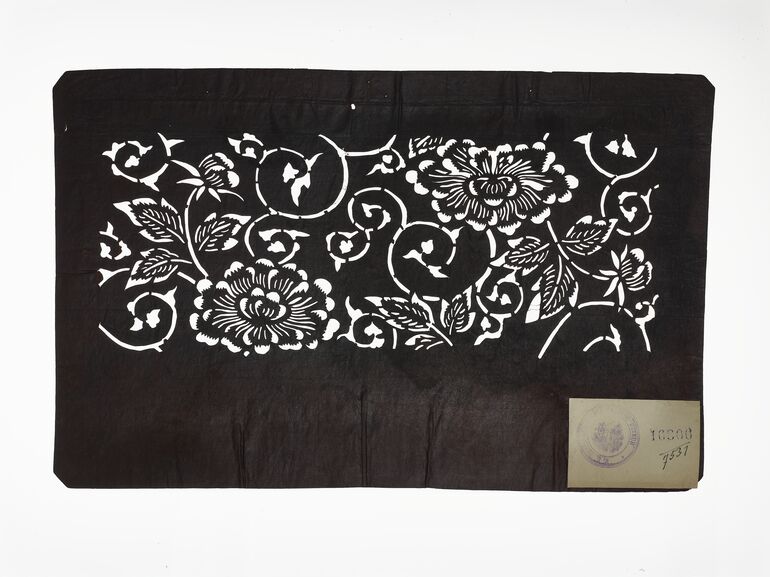
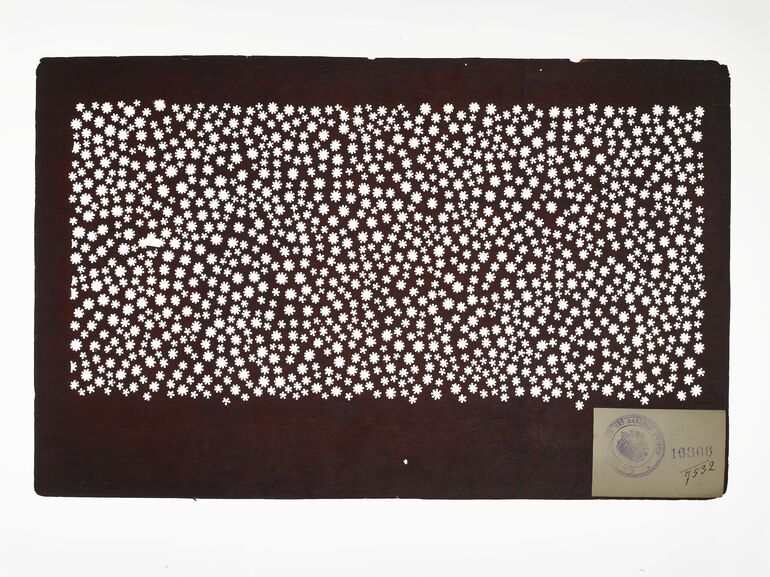
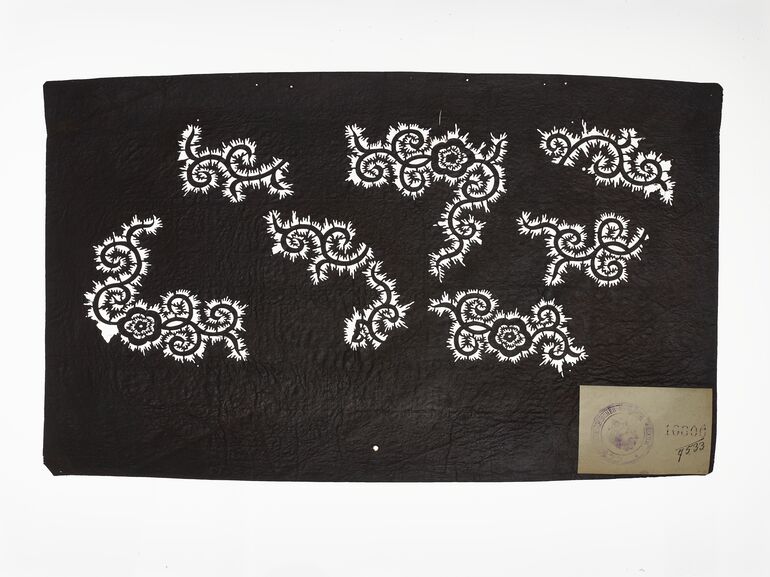
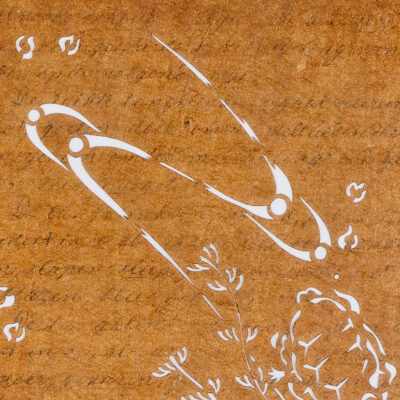
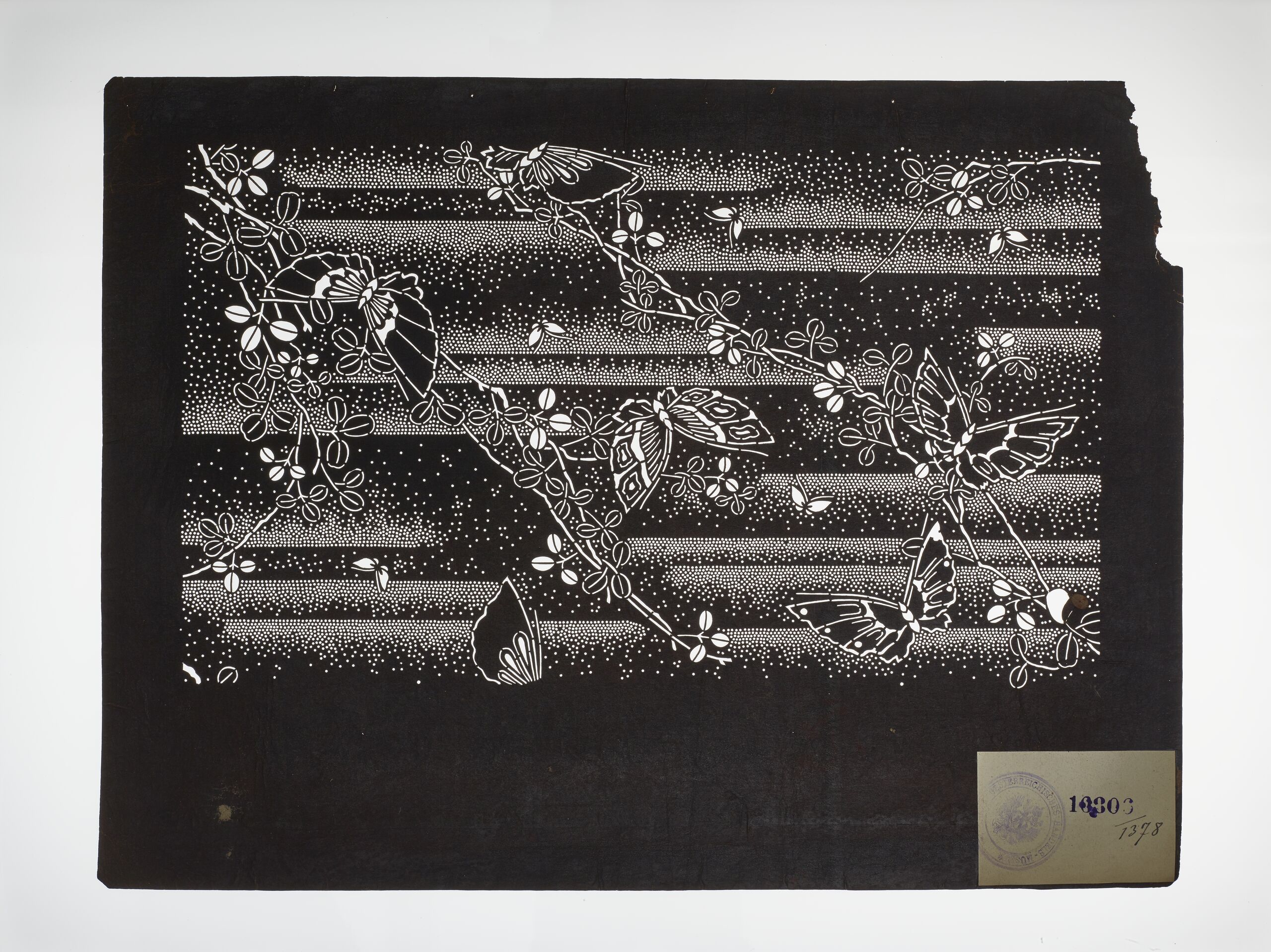
- Animal pattern (dōbutsu monyō 動物文様), surface pattern (waritsuke monyō 割付文様), plant pattern (shokubutsu monyō 植物文様), autumn grass (akikusa 秋草): butterflies and Japanese clovers on arare あられ (hailstones; dots)
Collection
Period | Style | School
Material | Technique
Measurements
- height: 31 cm
- width: 41.4 cm
- 1 Muster - height: 20.7 cm
- 1 Muster - width: 35.2 cm
Inventory number
- OR 3925-1378
Acquisition
- assumption , 1907
Department
- Asia Collection
Description
-
"Dyed ground" (jizomari 地染).
The butterflies (chō 蝶), which undergo unusual shape change during their lives, are considered a symbol of immortality. Since it is said that butterflies spend their entire lives with the same partner, they also represent marital harmony, so they are often used as motifs on wedding kimonos.
The flowers of the Japanese clover (hagi 萩) hang from flexible branches that sway in the slightest breeze, delighting people. As the plant bears many flowers, it is considered a symbol of prosperity. Japanese clover is also said to be the most frequently mentioned plant in the Manyōshū 万葉集 (“Collection of Ten Thousand Leaves”, 8th century). It is one of the “seven autumn grasses” (aki no nanakusa 秋の七草) and has been used as a decorative element since the Heian period (794 - 1192).
-
stencil (katagami 型紙), Animal pattern (dōbutsu monyō 動物文様), surface pattern (waritsuke monyō 割付文様), plant pattern (shokubutsu monyō 植物文様), autumn grass (akikusa 秋草): butterflies and Japanese clovers on arare あられ (hailstones; dots), Anonym, MAK Inv.nr. OR 3925-1378
-
https://sammlung.mak.at/en/collect/animal-pattern-dobutsu-monyo-動物文様-surface-pattern-waritsuke-monyo-割付文様-plant-pattern-shokubutsu-monyo-植物文_318020
Last update
- 25.04.2026
Related via
Artist
Artist
Location
Material