Title
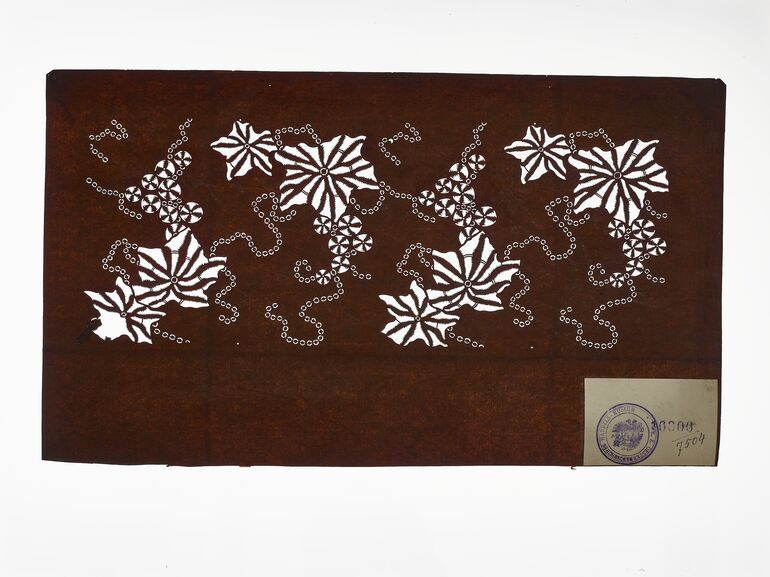
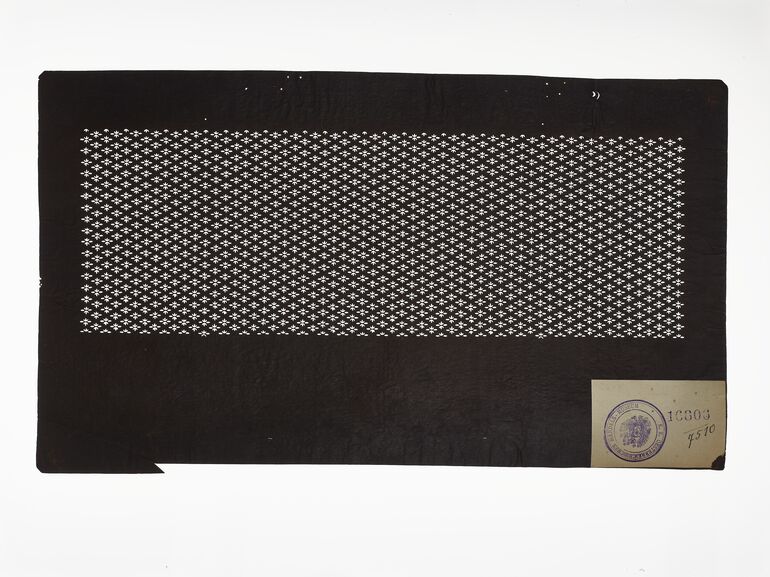
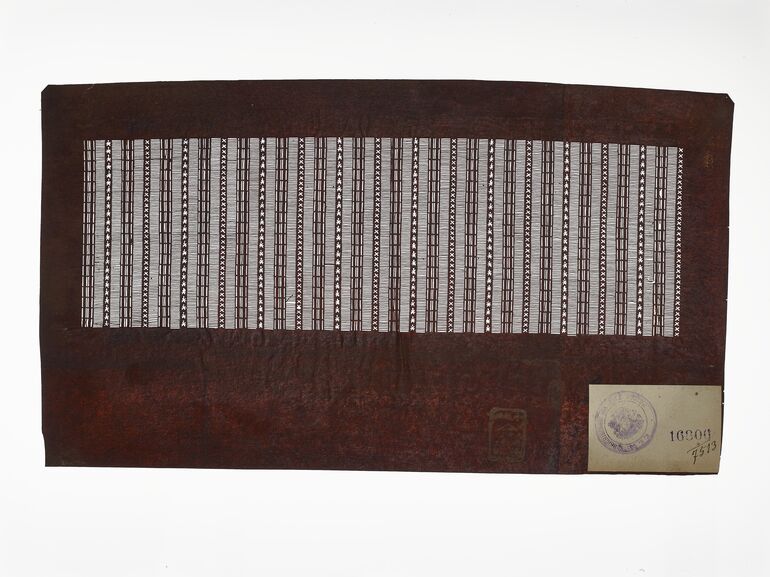
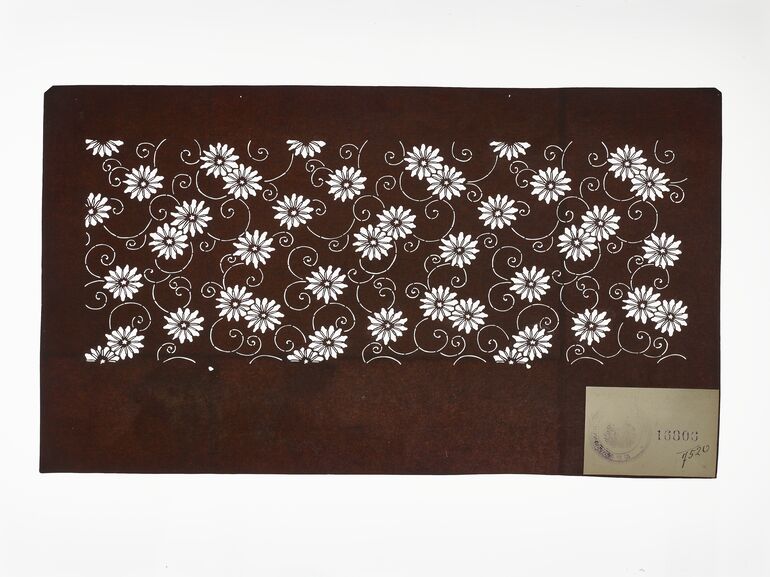
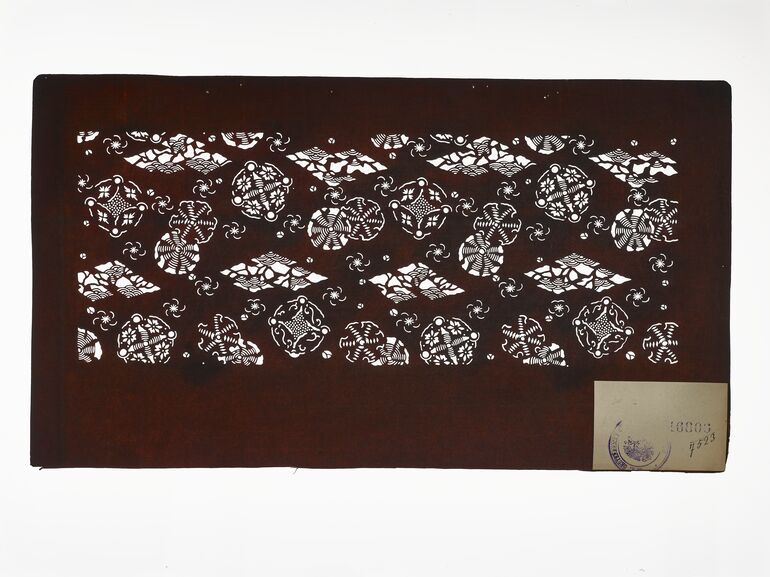
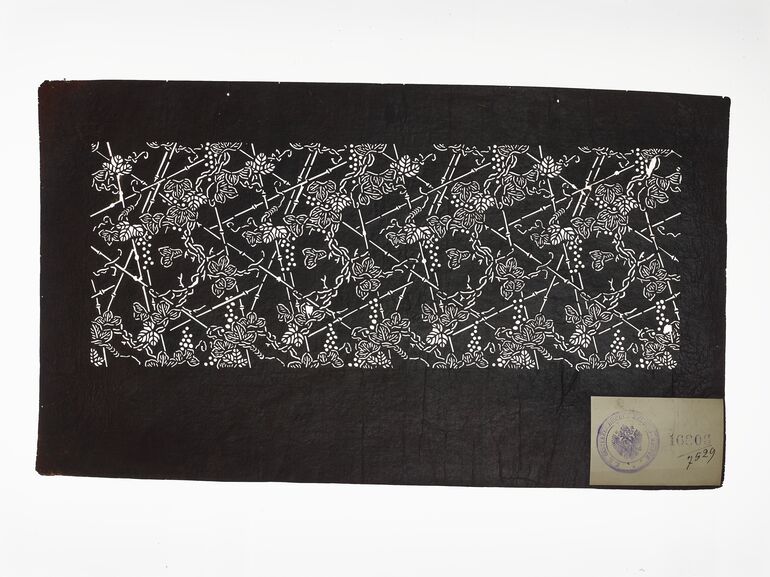
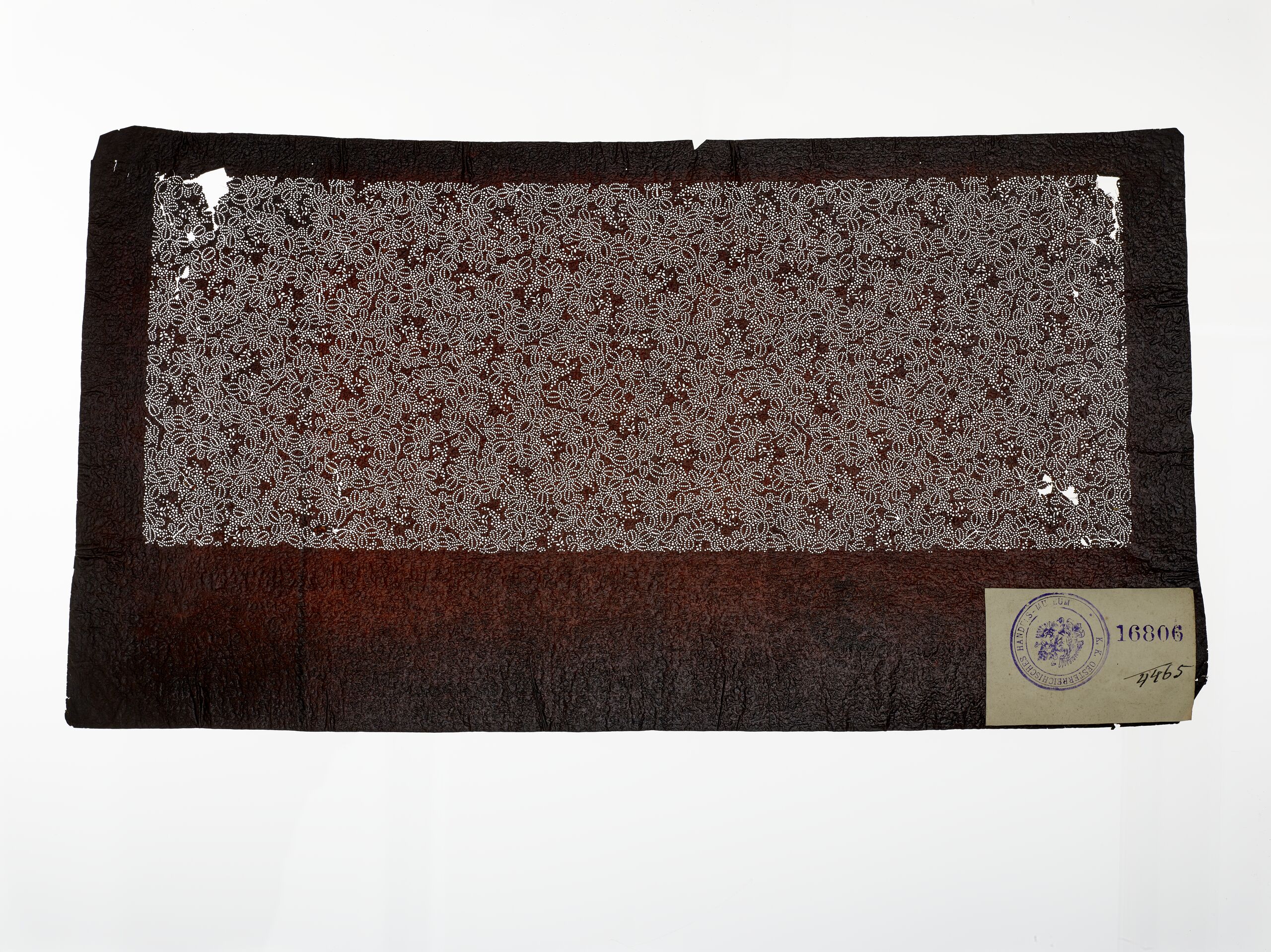
- Plant pattern (shokubutsu monyō 植物文様), animal pattern (dōbutsu monyō 動物文様), surface pattern (waritsuke monyō 割付文様): Japanese clovers, butterflies and daishō arare 大小あられ (big and small hailstones; dots)
Collection
Period | Style | School
Material | Technique
Measurements
- height: 22.7 cm
- width: 42.7 cm
- 1 Muster - height: 14 cm
- 1 Muster - width: 37.1 cm
Inventory number
- OR 3925-4465
Acquisition
- assumption , 1907
Department
- Asia Collection
Description
-
"Dyed ground" (jizomari 地染).
The flowers of the Japanese clover (hagi 萩) hang from flexible branches that sway in the slightest breeze, delighting people. As the plant bears many flowers, it is considered a symbol of prosperity. Japanese clover is also said to be the most frequently mentioned plant in the Manyōshū 万葉集 (“Collection of Ten Thousand Leaves”, 8th century). It is one of the “seven autumn grasses” (aki no nanakusa 秋の七草) and has been used as a decorative element since the Heian period (794 - 1192).
The butterflies (chō 蝶), which undergo unusual shape change during their lives, are considered a symbol of immortality. Since it is said that butterflies spend their entire lives with the same partner, they also represent marital harmony, so they are often used as motifs on wedding kimonos.
-
stencil (katagami 型紙), Plant pattern (shokubutsu monyō 植物文様), animal pattern (dōbutsu monyō 動物文様), surface pattern (waritsuke monyō 割付文様): Japanese clovers, butterflies and daishō arare 大小あられ (big and small hailstones; dots), Anonym, MAK Inv.nr. OR 3925-4465
-
https://sammlung.mak.at/en/collect/plant-pattern-shokubutsu-monyo-植物文様-animal-pattern-dobutsu-monyo-動物文様-surface-pattern-waritsuke-monyo-割付文_337581
Last update
- 25.04.2026
Related via
Artist
Artist
Location
Material