Title
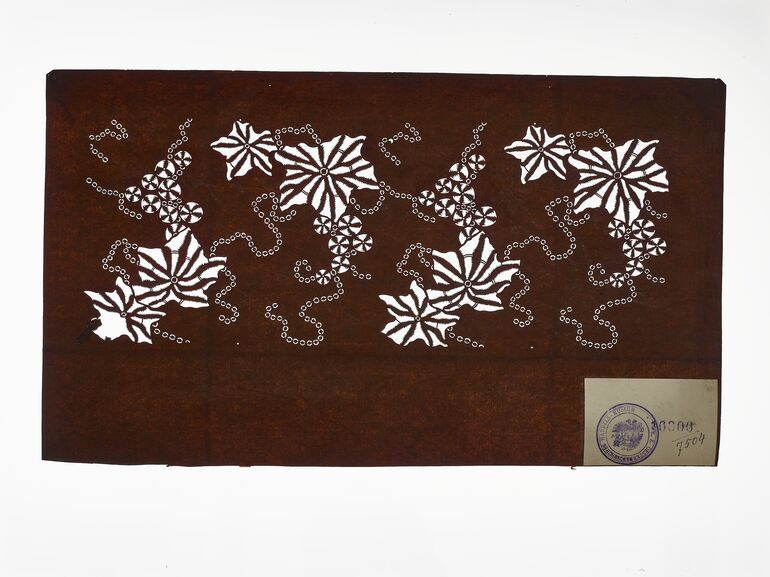
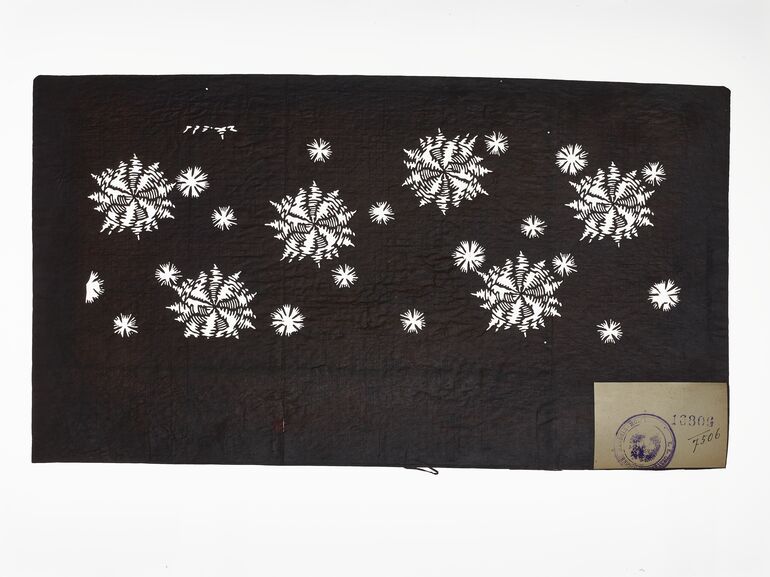
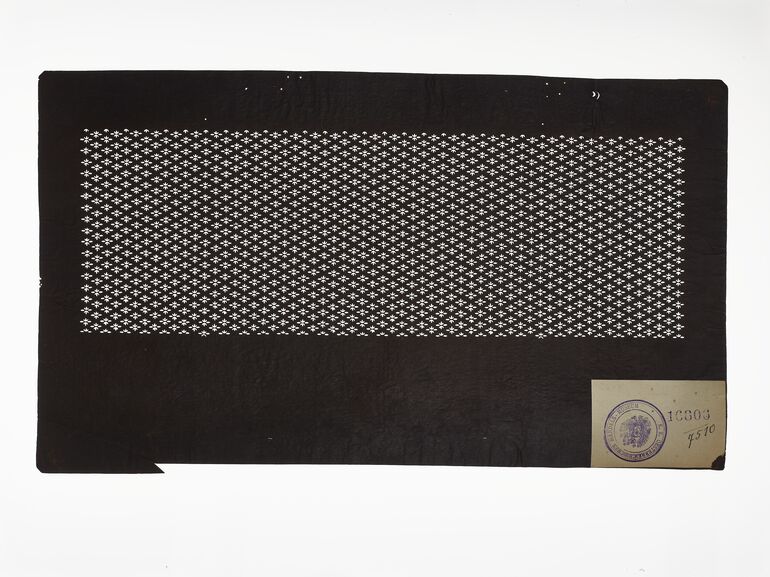
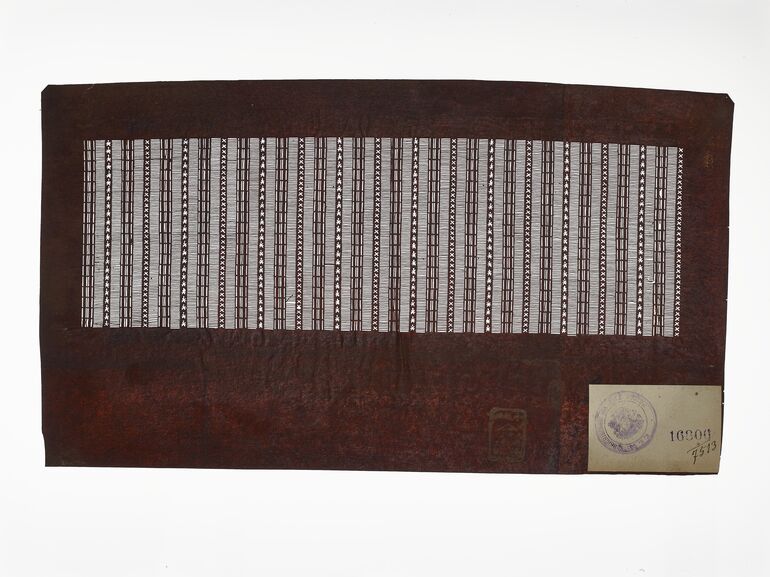
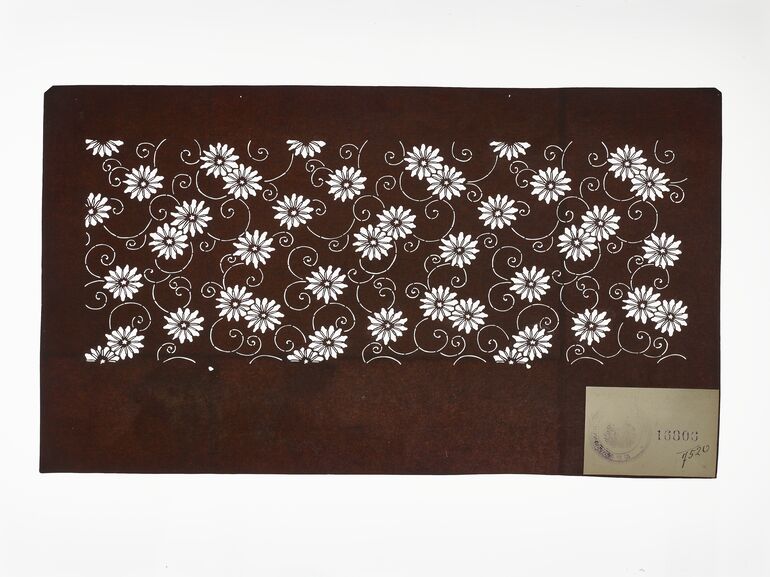
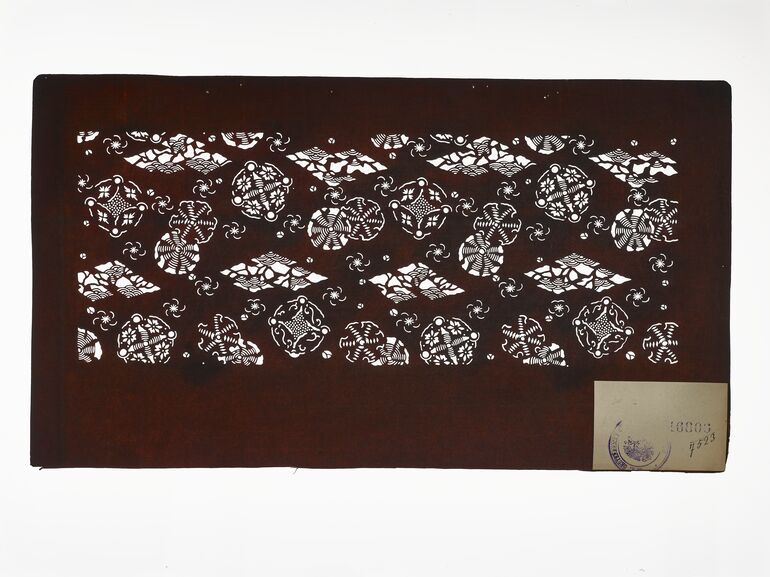
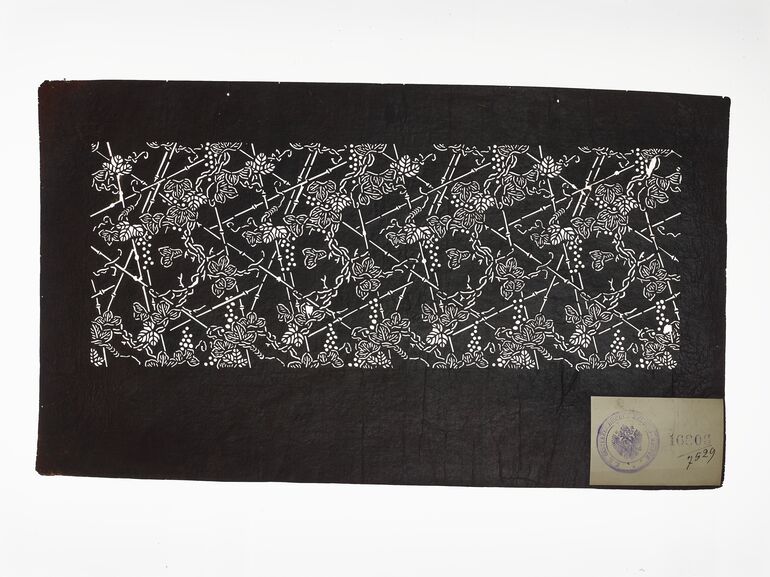
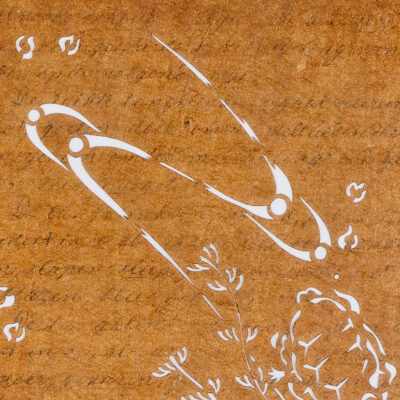
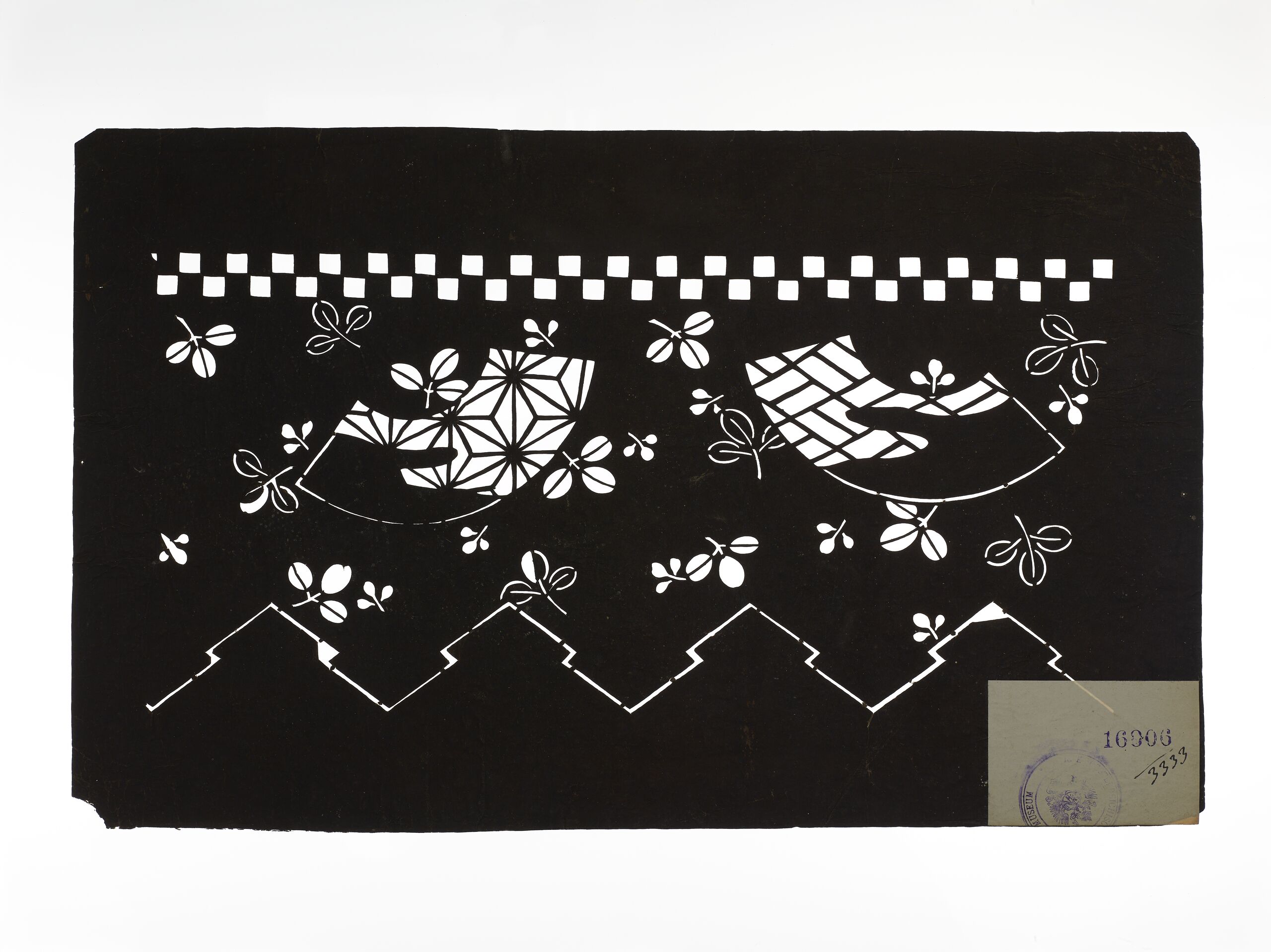
- Surface pattern (waritsuke monyō 割付文様), pattern with objects (kibutsu monyō 器物文様), plant pattern (shokubutsu monyō 植物文様), actor pattern (yakusha monyō 役者文様)/stripe pattern (shima monyō 縞文様): horizontal ichimatsu monyō 市松文様 stripe, hand fan sheets with alternating pattern of the character ni 二 (ni no ji kuzushi 二の字崩し) and asa no ha 麻の葉 (hemp leaf) pattern, Japanese clovers and part of connected matsukawabishi (matsukawabishi tsunagi 松皮菱繋ぎ)
Collection
Period | Style | School
Material | Technique
Measurements
- height: 25.6 cm
- width: 41 cm
- 1 Muster - height: 16.5 cm
- 1 Muster - width: 35 cm
Inventory number
- OR 3925-3333
Acquisition
- assumption , 1907
Department
- Asia Collection
Description
-
"Dyed ground" (jizomari 地染).
The checkerboard pattern ichimatsu monyō 市松文様, also ichimatsu kōshi 市松格子, is a ishidatami moyō 石畳模様 (= stone pavement pattern). The pattern is said to have come into fashion as "ichimatsu monyō" because the Kabuki actor Sanogawa Ichimatsu I. 初代佐野川市松 (1722-1762) had worn a hakama with a stone pavement pattern during a performance, which caused a sensation.
The flowers of the Japanese clover (hagi 萩) hang from flexible branches that sway in the slightest breeze, delighting people. As the plant bears many flowers, it is considered a symbol of prosperity. Japanese clover is also said to be the most frequently mentioned plant in the Manyōshū 万葉集 (“Collection of Ten Thousand Leaves”, 8th century). It is one of the “seven autumn grasses” (aki no nanakusa 秋の七草) and has been used as a decorative element since the Heian period (794 - 1192).
Matsukawabishi 松皮菱 pattern is a combination of 3 diamonds; matsukawa 松皮 = pine-bark, bishi/hishi 菱 = diamond.
-
stencil (katagami 型紙), Surface pattern (waritsuke monyō 割付文様), pattern with objects (kibutsu monyō 器物文様), plant pattern (shokubutsu monyō 植物文様), actor pattern (yakusha monyō 役者文様)/stripe pattern (shima monyō 縞文様): horizontal ichimatsu monyō 市松文様 stripe, hand fan sheets with alternating pattern of the character ni 二 (ni no ji kuzushi 二の字崩し) and asa no ha 麻の葉 (hemp leaf) pattern, Japanese clovers and part of connected matsukawabishi (matsukawabishi tsunagi 松皮菱繋ぎ), Anonym, MAK Inv.nr. OR 3925-3333
-
https://sammlung.mak.at/en/collect/surface-pattern-waritsuke-monyo-割付文様-pattern-with-objects-kibutsu-monyo-器物文様-plant-pattern-shokubutsu-monyo-植物_333974
Last update
- 02.11.2026
Related via
Artist
Artist
Location
Material