Title
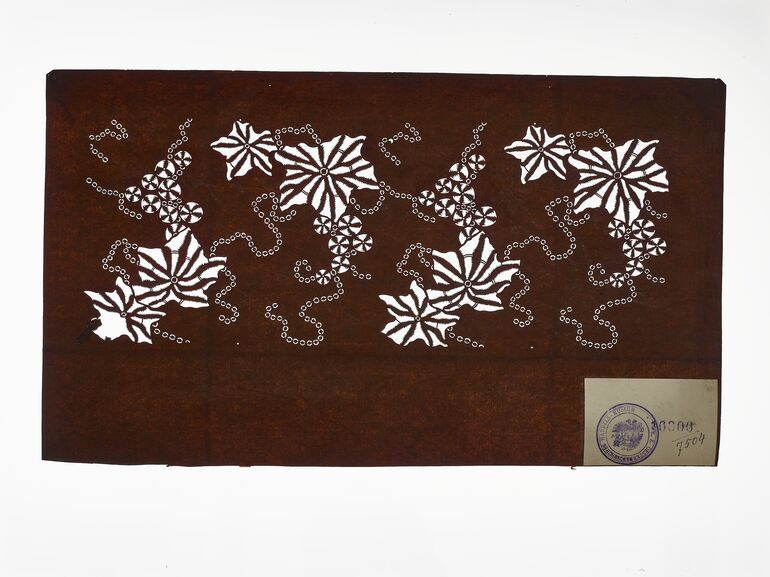
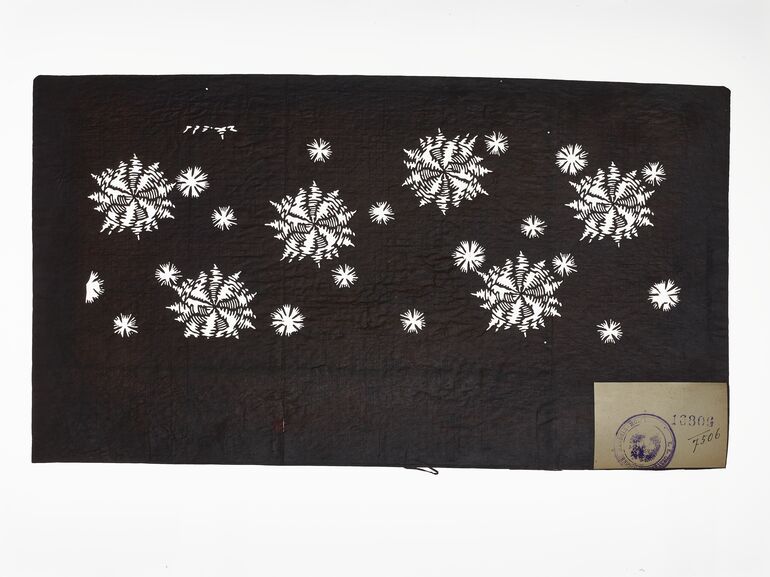
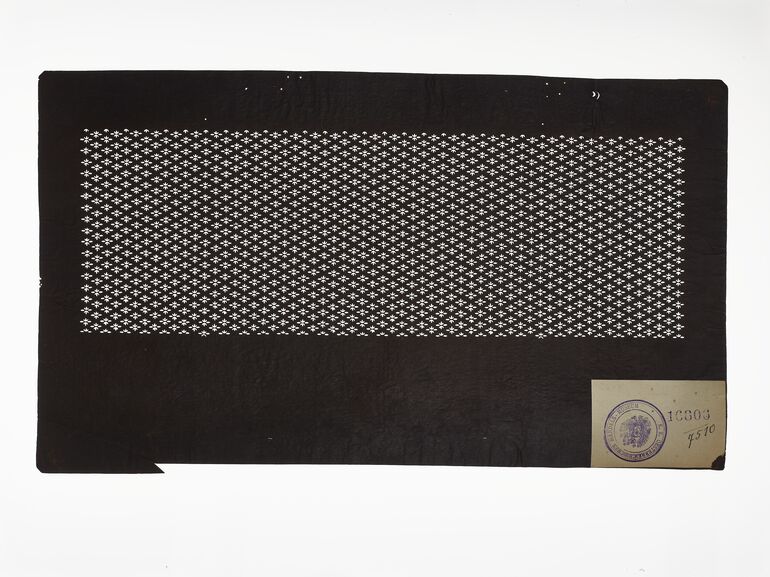
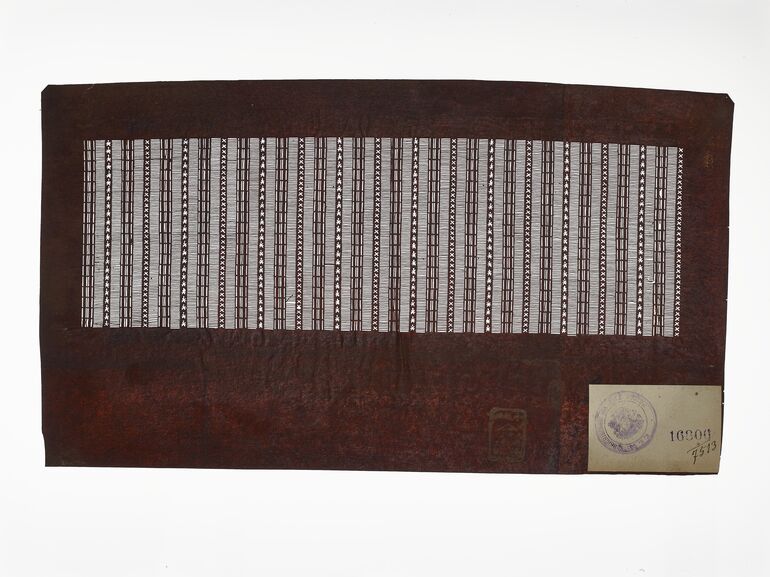
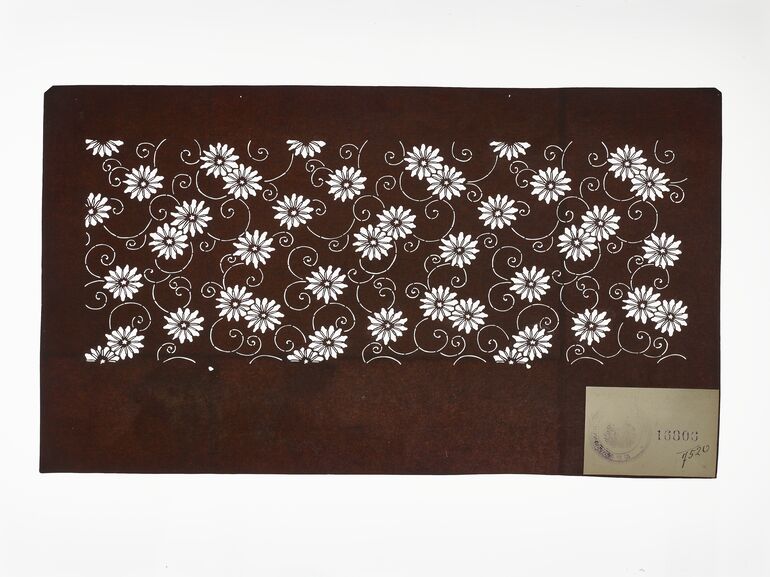
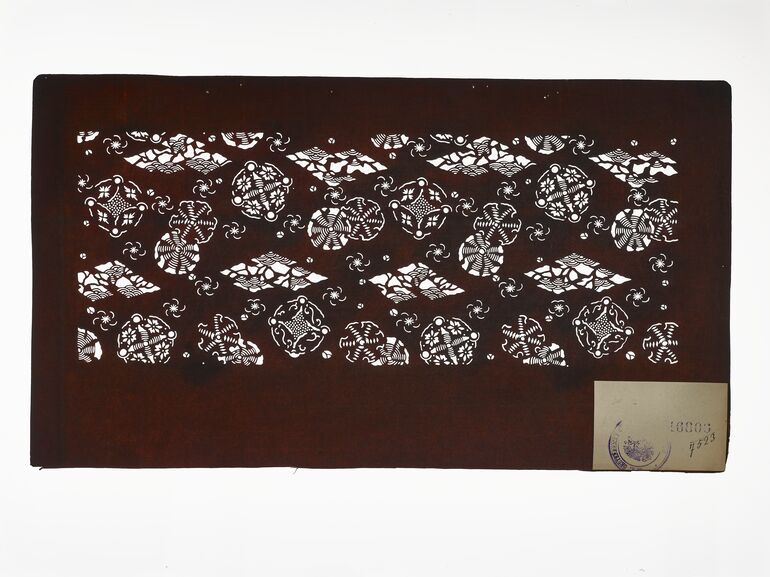
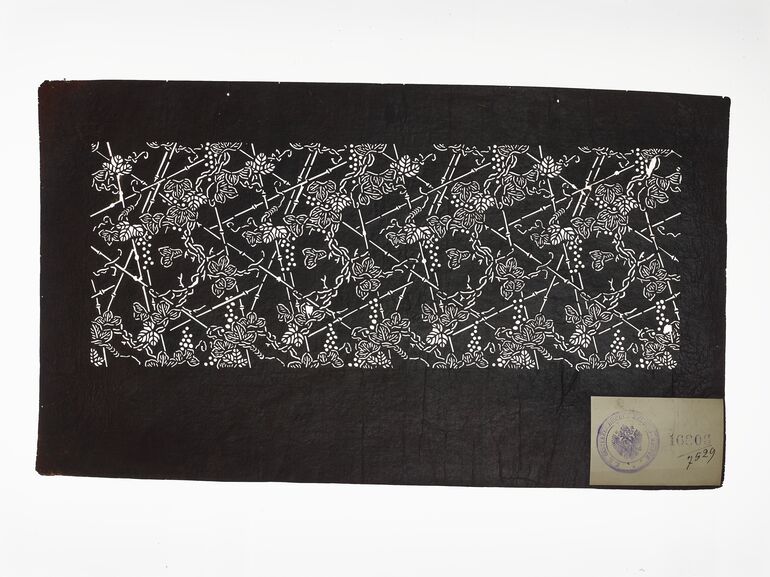
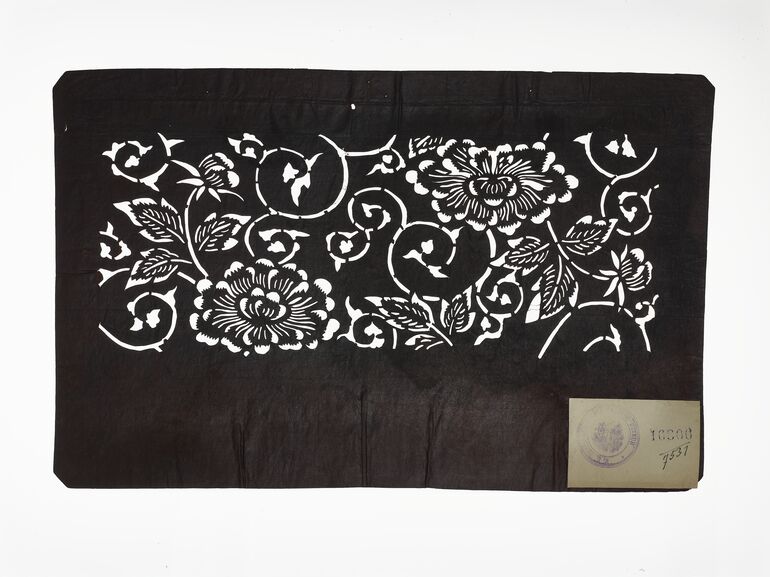
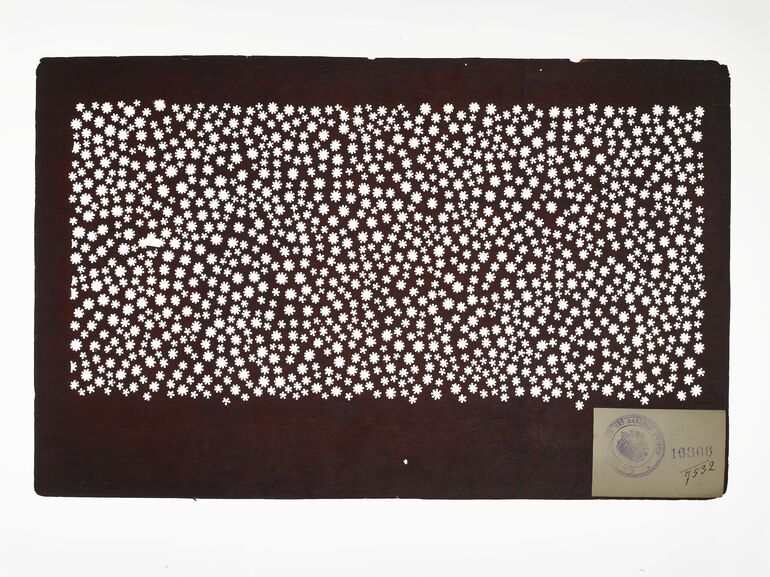
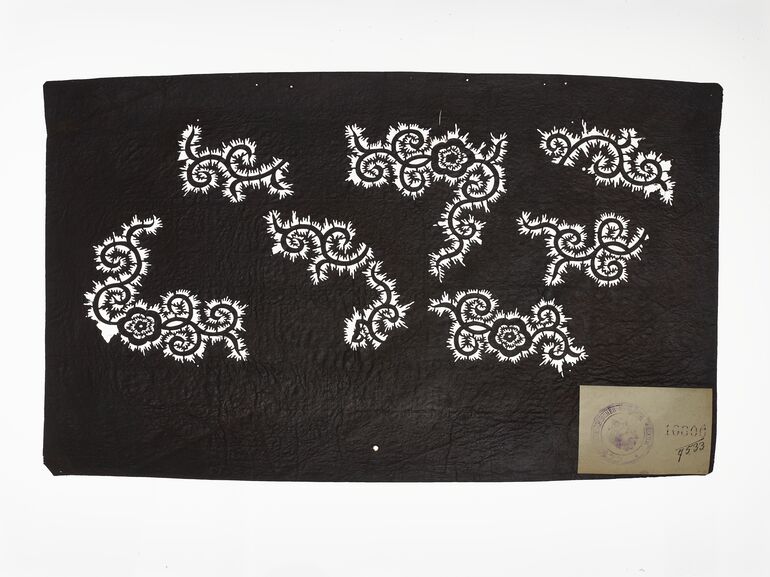
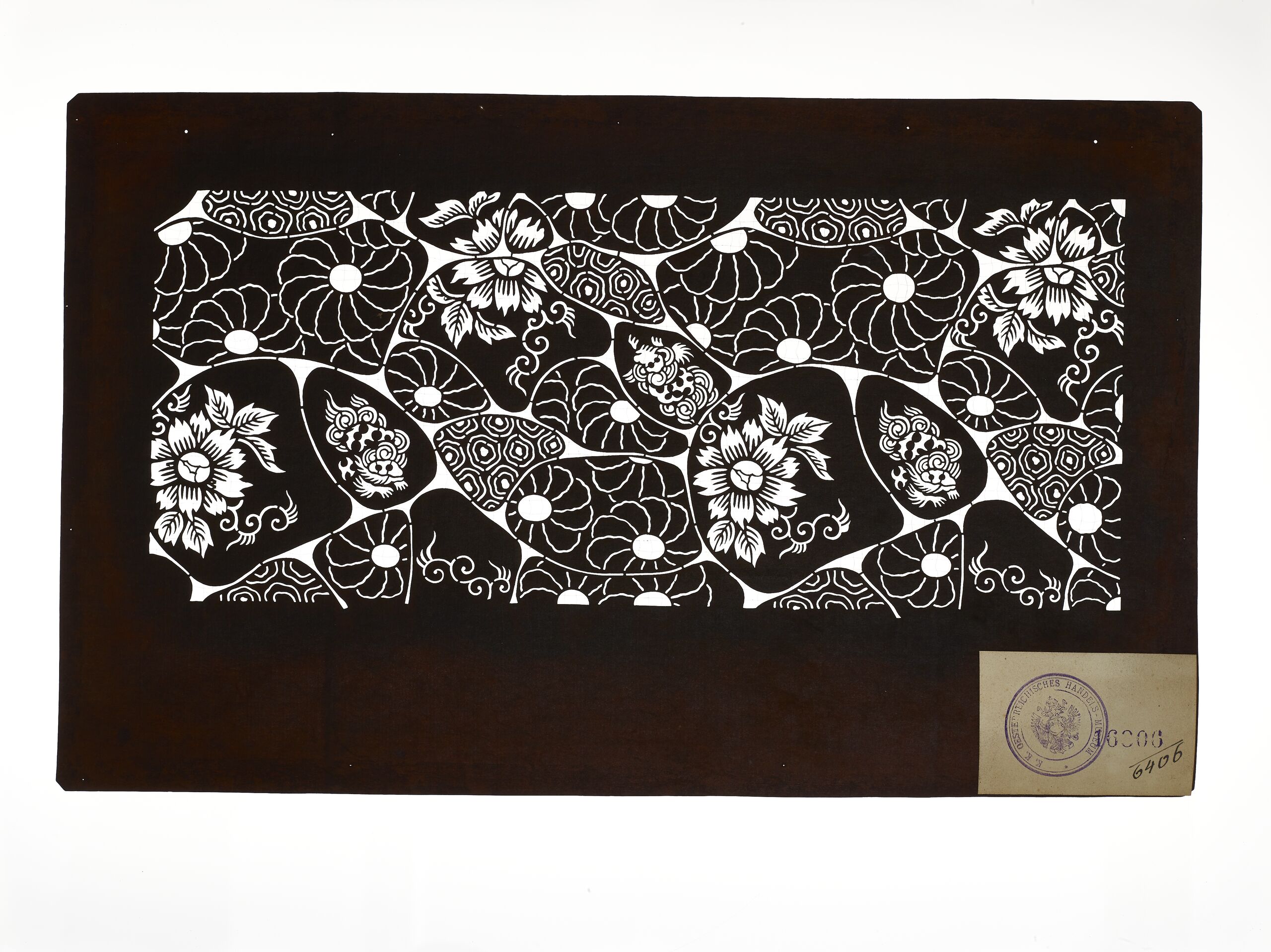
- Part of a set. Plant pattern (shokubutsu monyō 植物文様), surface pattern (waritsuke monyō 割付文様), animal pattern (dōbutsu monyō 動物文様): peonies with tendrils, "twisted" chrysanthemums (nejigiku ねじ菊), mythical creature(?) and surface pattern of a kind of concentric circles
Collection
Period | Style | School
Material | Technique
Measurements
- height: 25.2 cm
- width: 40.9 cm
- pattern - height: 14.7 cm
- pattern - width: 34.9 cm
Inventory number
- OR 3925-6406
Acquisition
- assumption , 1907
Department
- Asia Collection
Description
-
"Main stencil" (omogata 主型).
Peonies symbolise wealth and beauty. Because of their magnificent blossom with many petals, they are often used as a motif for handicrafts. Red peonies were even said to be able ensure longevity and immortality when drunk as an herbal decoction.
The chrysanthemum (kiku 菊) symbolizes longevity, which dates back to a Chinese legend. The Yellow River once originated in a chrysanthemum meadow, and a villager who drank from the spring achieved a long life. In Japan, the motif first appears in the Kokin-wakashū 古今和歌集 (early 10th century), while the Man’yōshū 万葉集 from the 8th century lists 157 plant species but does not contain a single poem about chrysanthemums. It is therefore assumed that the flower was first introduced to Japan from China at the end of the 8th or beginning of the 9th century.
-
stencil (katagami 型紙), Part of a set. Plant pattern (shokubutsu monyō 植物文様), surface pattern (waritsuke monyō 割付文様), animal pattern (dōbutsu monyō 動物文様): peonies with tendrils, "twisted" chrysanthemums (nejigiku ねじ菊), mythical creature(?) and surface pattern of a kind of concentric circles, Anonym, MAK Inv.nr. OR 3925-6406
-
https://sammlung.mak.at/en/collect/part-of-a-set-plant-pattern-shokubutsu-monyo-植物文様-surface-pattern-waritsuke-monyo-割付文様-animal-pattern-dobutsu-monyo-動_348759
Last update
- 25.04.2026
Related via
Artist
Artist
Location
Material