Title
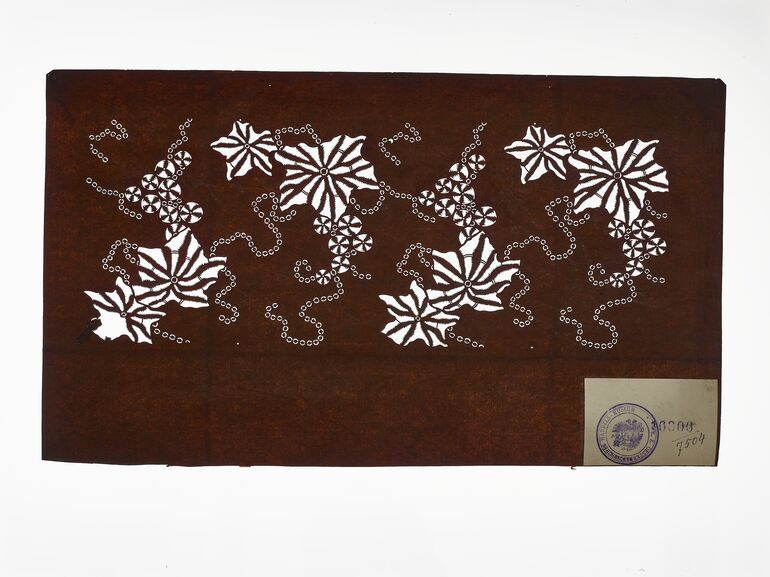
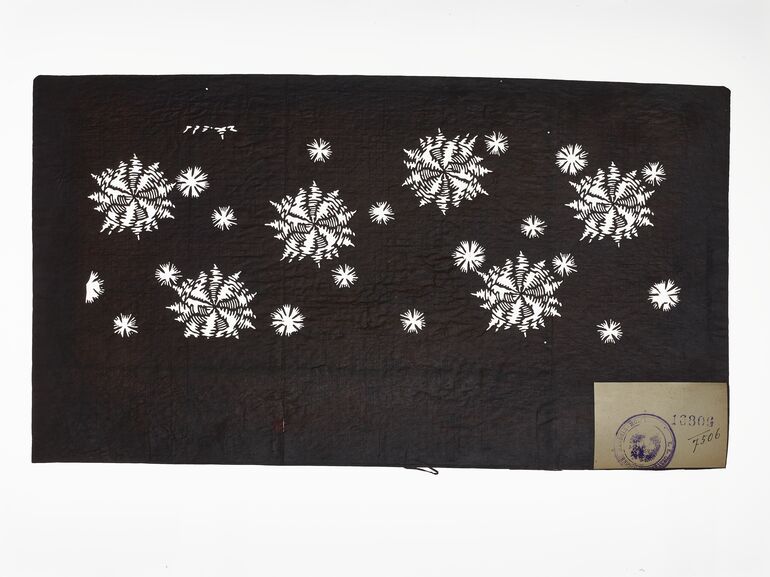
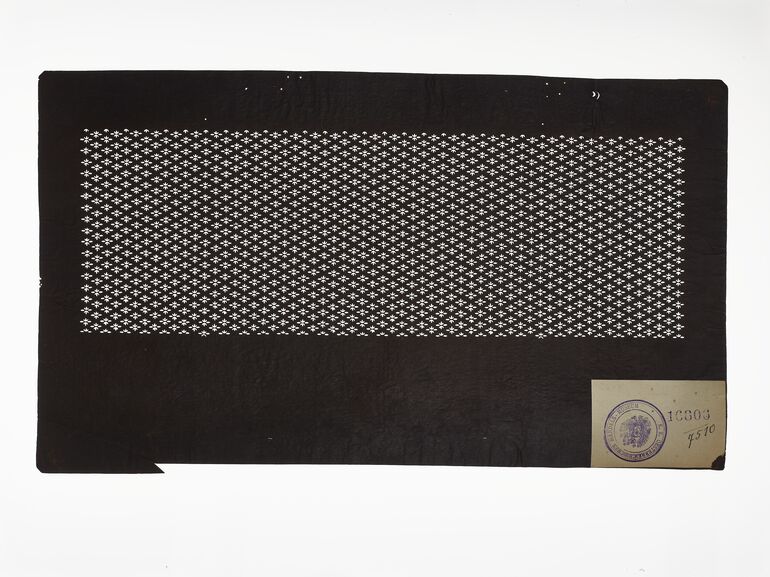
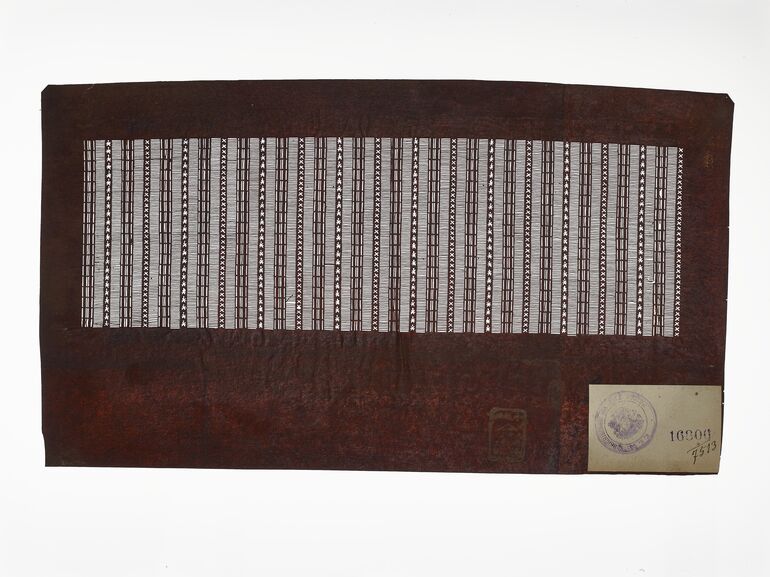
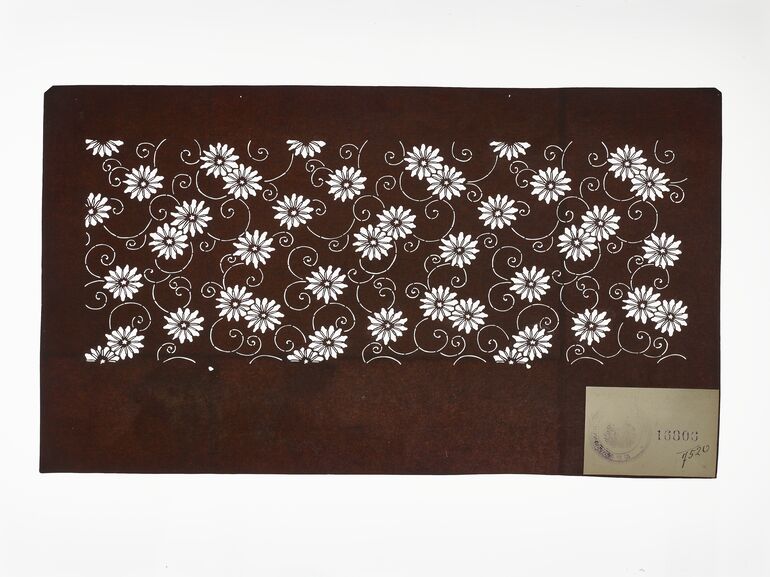
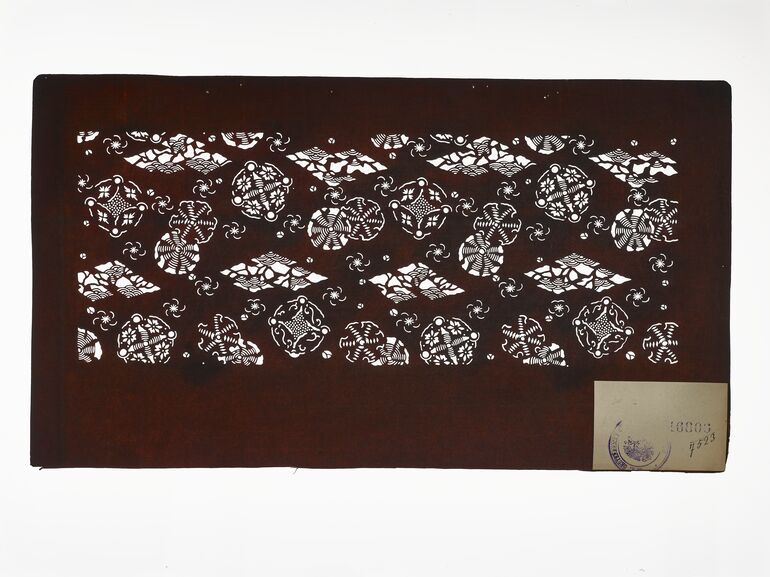
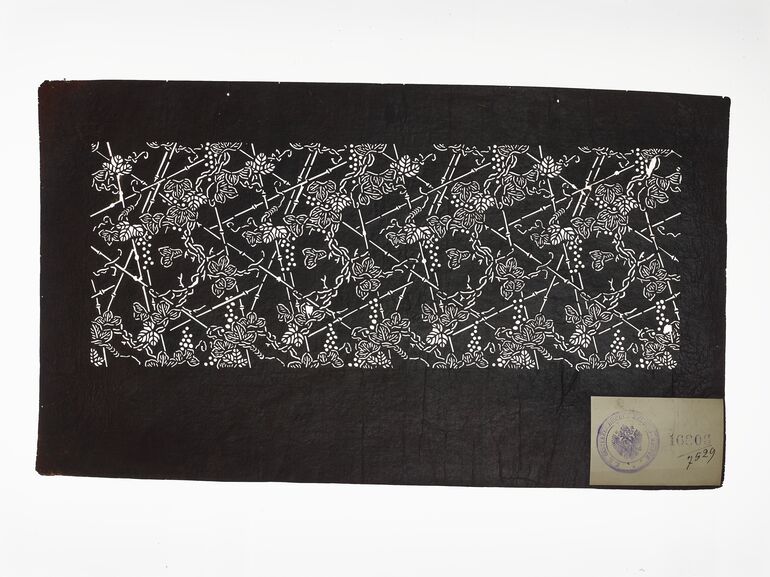
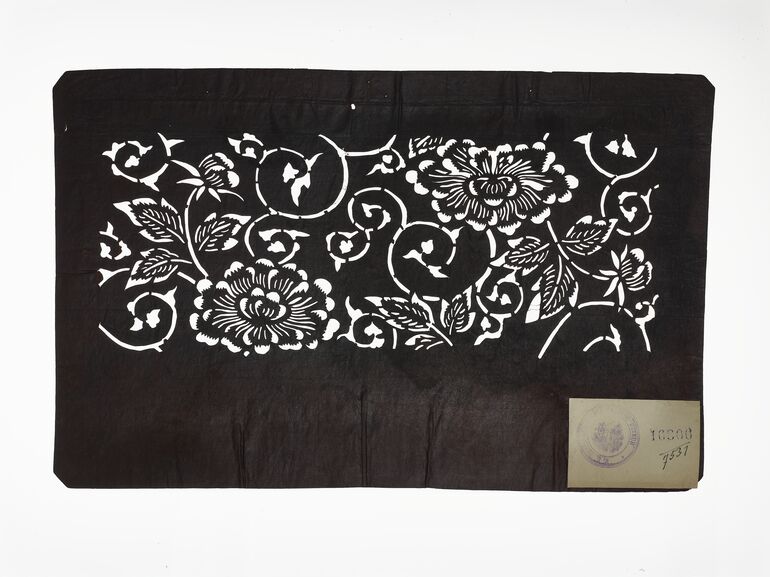
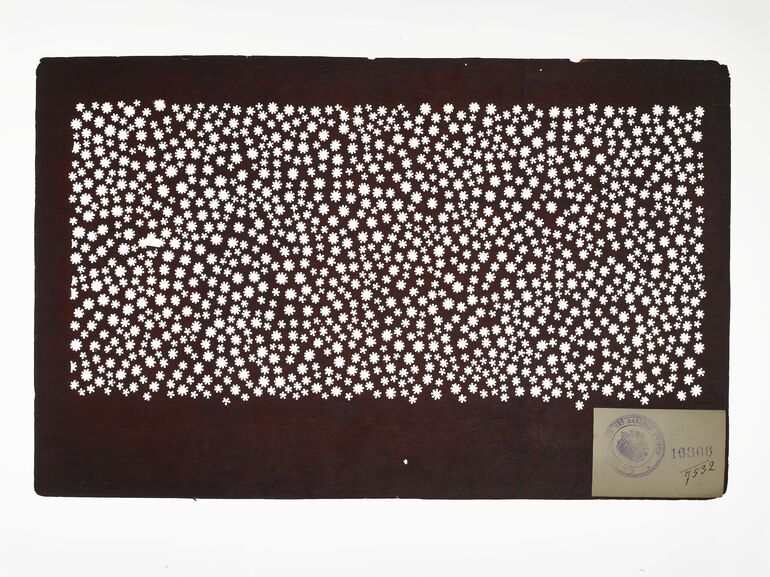
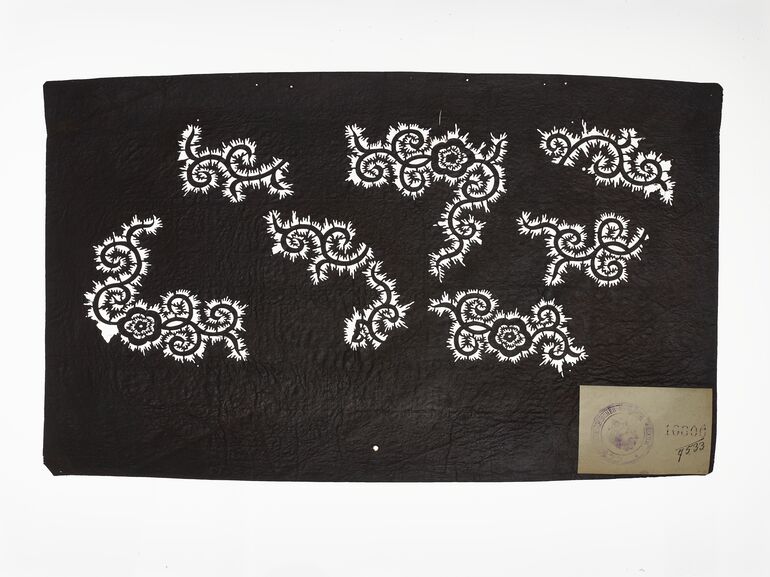
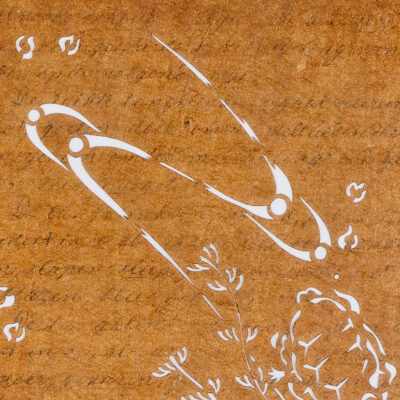
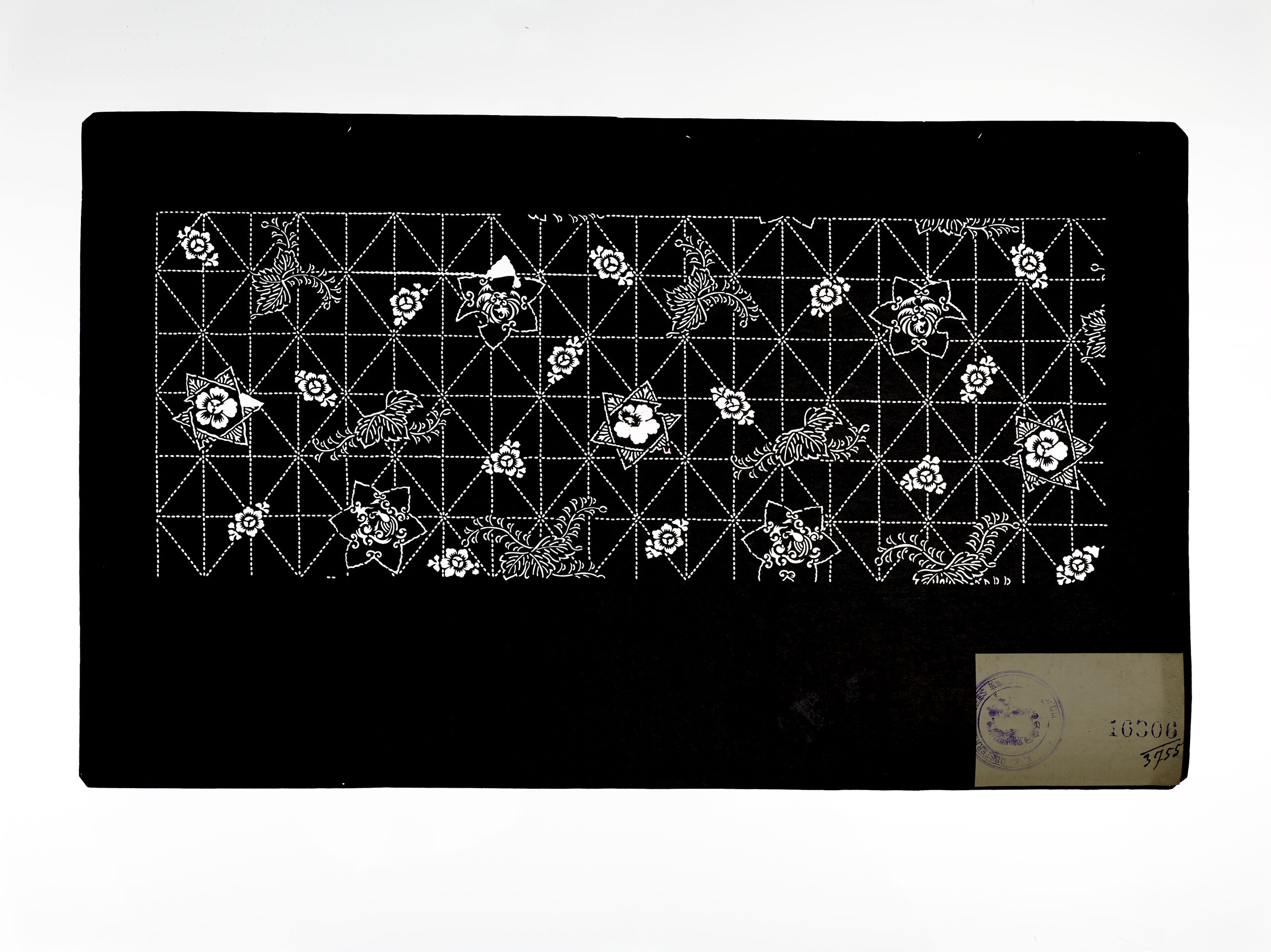
- Part of a set. Surface pattern (waritsuke monyō 割付文様), plant pattern (shokubutsu monyō 植物文様), animal pattern (dōbutsu monyō 動物文様): diamond lattice on lattice, peonies, paulownia, flowers with phoenix and dragon, star-like shapes with peony and shōbugawa 菖蒲革 ("calamus" leather)
Collection
Period | Style | School
Material | Technique
Measurements
- height: 24.9 cm
- width: 40.8 cm
- 1 Muster - height: 13.4 cm
- 1 Muster - width: 35 cm
Inventory number
- OR 3925-3755
Acquisition
- assumption , 1907
Department
- Asia Collection
Description
-
"Dyed ground" (jizomari 地染). Diamond lattice and lattice: with dashed lines.
Shōbu 菖蒲 (= calamus) can mean according to the sound “military” or “martial”. Therefore, the armors made of tanned deerskin was often decorated with the shōbu motif. This motif is also used as a fabric pattern called shōbugawa monyō 菖蒲革文様 ("calamus"-leather pattern).
Peonies symbolise wealth and beauty. Because of their magnificent blossom with many petals, they are often used as a motif for handicrafts. Red peonies were even said to be able ensure longevity and immortality when drunk as an herbal decoction.
The paulownia motif (kiri 桐) symbolizes purity, happiness, and prosperity. Because a Chinese legend supposedly says that the phoenix only ensconces on a paulownia, it also symbolizes high status and was used as the 'private' crest of the imperial family. After the Meiji Restoration, the paulownia became the emblem of the Japanese government as the "5-7 Paulownia" (go-shichi (no) kiri 五七桐).
The Chinese phoenix is a mythical creature with plumage in five colours, combining the characteristics of the qilin, deer, snake, fish, turtle, swallow and chicken. As a divine being who only appears in times of peace and prosperity, he has become a symbol of good fortune in various Asian cultures throughout history. The phoenix motif was likely introduced to Japan during the Asuka period (7th century). It represents happiness, peace, and prosperity, as well as marital harmony and immortality.
-
stencil (katagami 型紙), Part of a set. Surface pattern (waritsuke monyō 割付文様), plant pattern (shokubutsu monyō 植物文様), animal pattern (dōbutsu monyō 動物文様): diamond lattice on lattice, peonies, paulownia, flowers with phoenix and dragon, star-like shapes with peony and shōbugawa 菖蒲革 ("calamus" leather), Anonym, MAK Inv.nr. OR 3925-3755
-
https://sammlung.mak.at/en/collect/part-of-a-set-surface-pattern-waritsuke-monyo-割付文様-plant-pattern-shokubutsu-monyo-植物文様-animal-pattern-dobutsu-monyo-動_334918
Last update
- 25.04.2026
Related via
Artist
Artist
Location
Material