Meisen Kimonos
Album curated by: Lara Steinhäußer, 2026
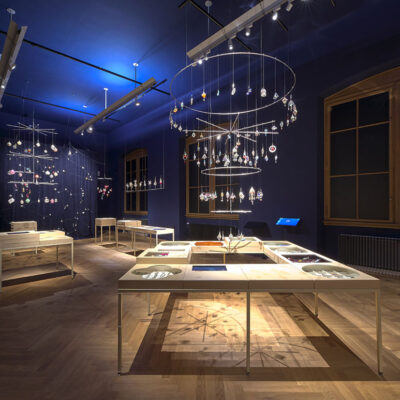
In 2024, the MAK received a collection of 28 Meisen kimonos and 31 haori as a donation from Danish collector Henriette Friis. They were presented to the public in an exhibition at the MAK DESIGN LAB in 2025.
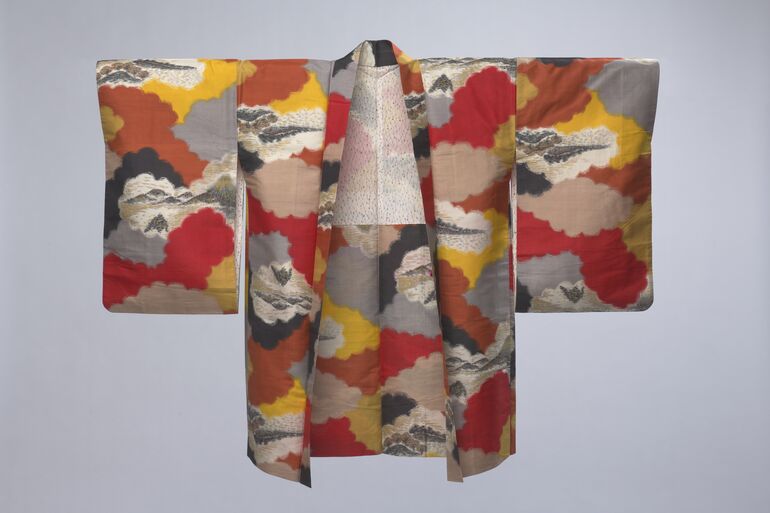
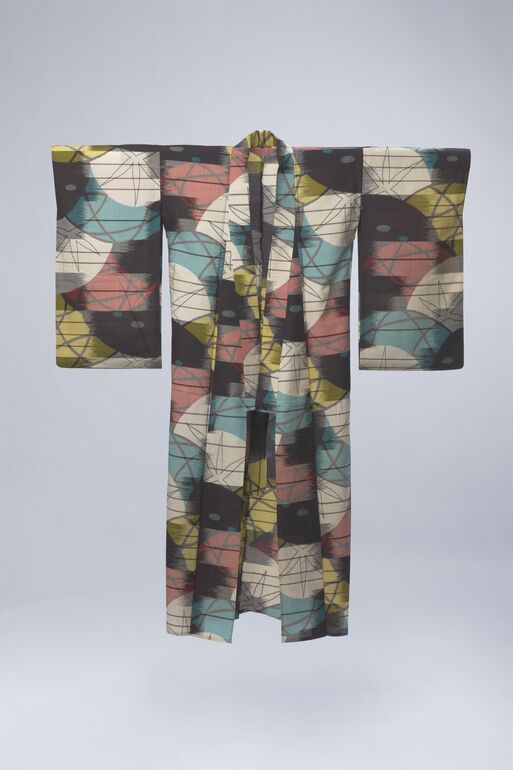
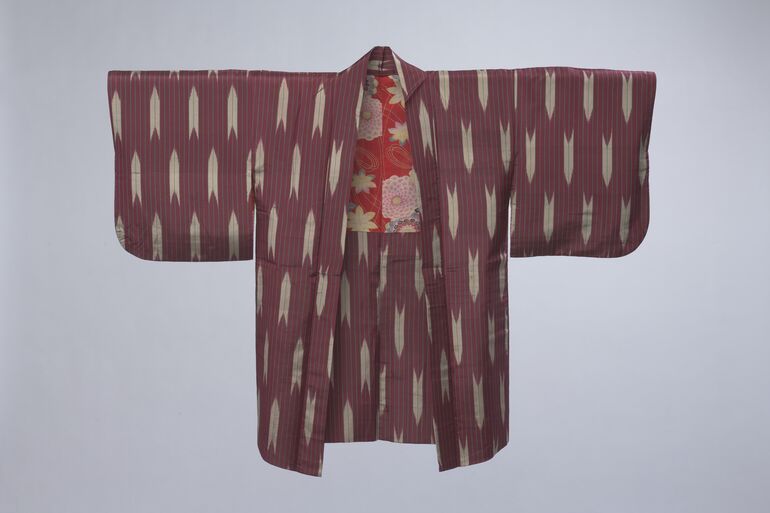
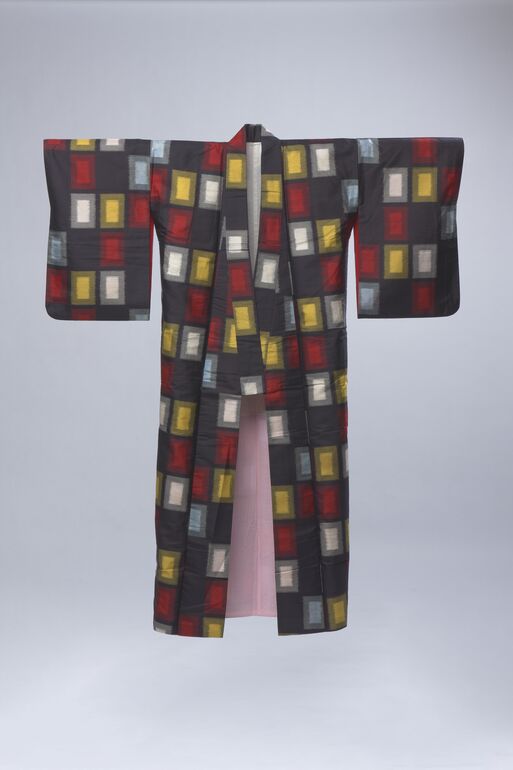
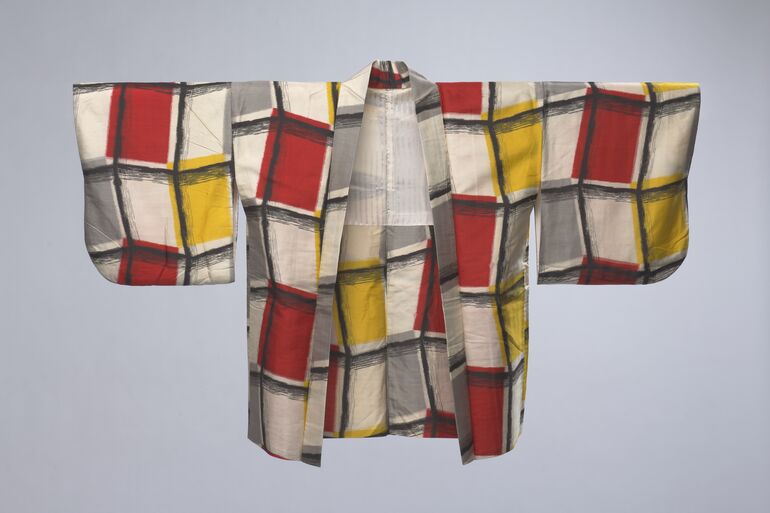
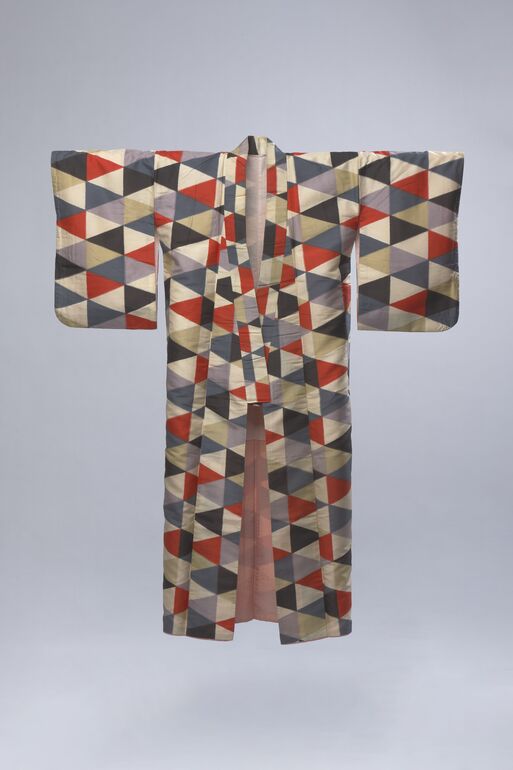
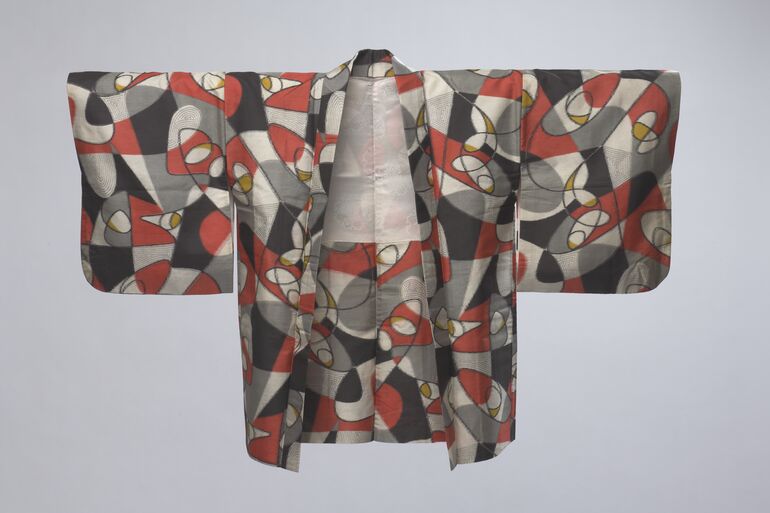
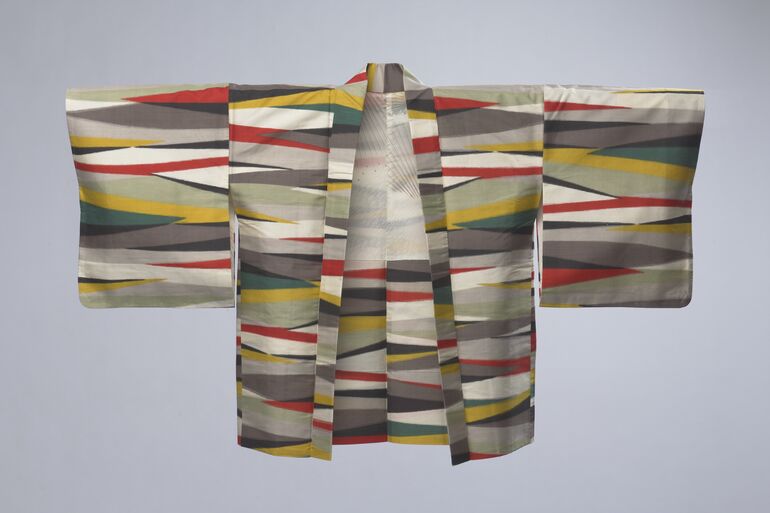
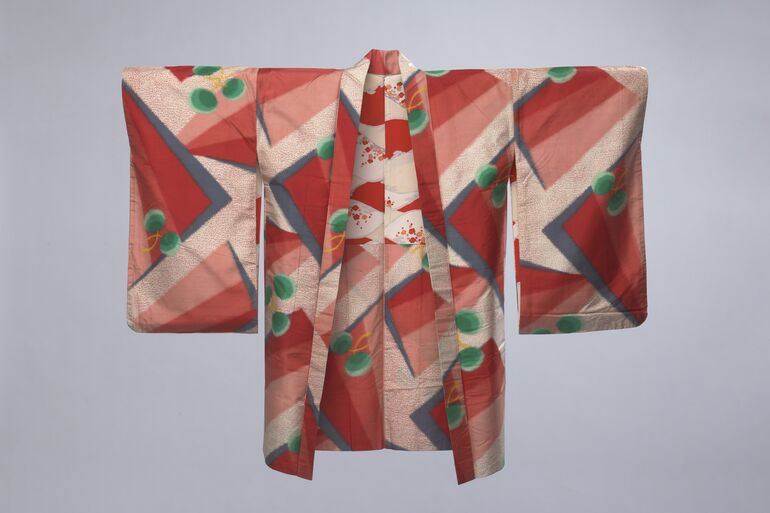
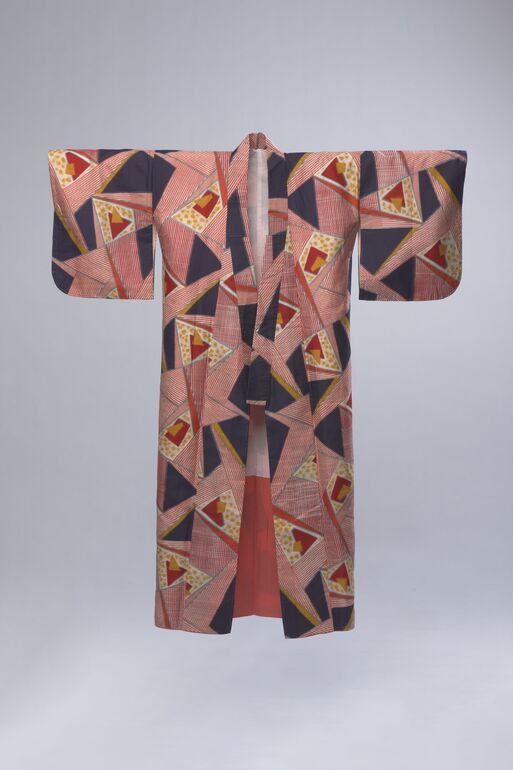
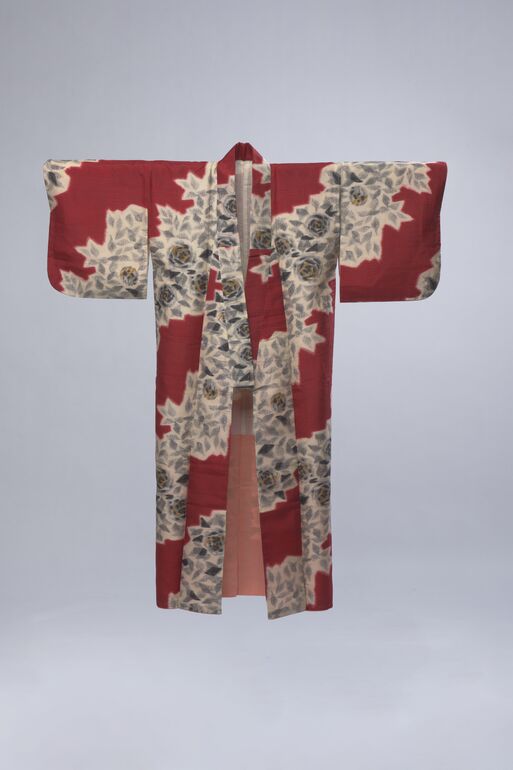
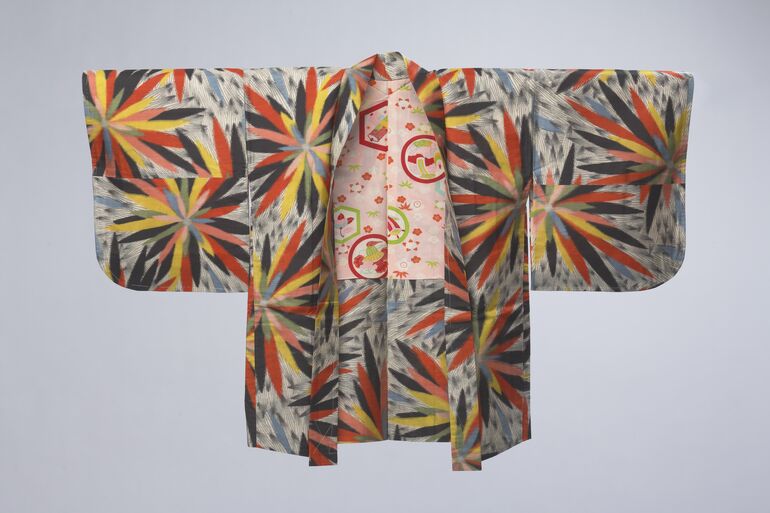
All of these brightly patterned Japanese garments date from the 20th century. They were worn primarily by women and produced in Japan from the 1920s to the 1950s. The use of machine-spun and machine-woven schappe silk printed with aniline dyes made silk clothing affordable for a wider population. Although their production involved labor-intensive stencil printing that imitated the artfully dyed traditional kasuri or ikat textiles, the garments were readily available off the rack in department stores.
Many of the motifs drew on the traditional Japanese canon of forms, but their enlargement, which was unusual at the beginning of the 20th century, and their use as all-over patterns on the textiles gave them a distinctly modern appearance. The patterns of Meisen kimonos also frequently reflected the cultural interactions between Japan and Europe, as motifs from European and American art and applied arts movements were adapted in their designs. At the same time, Japonism had already been an important source of inspiration for the arts in the West in the preceding decades, as examples from the Wiener Werkstätte also demonstrate.
While wearing Western clothing had already become daily business for Japanese men in the 1920s, women were still much more strongly associated with the preservation of tradition. The patterned Meisen kimonos offered them an ideal way to present themselves simultaneously as modern and traditional.