Title
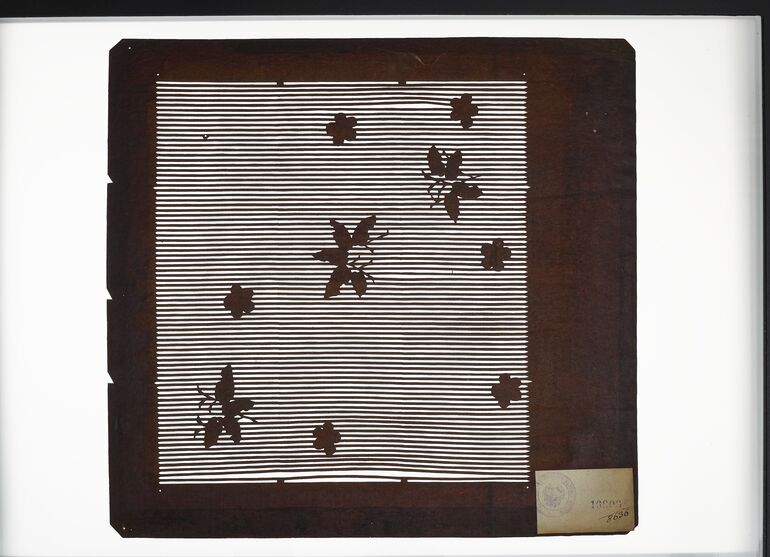
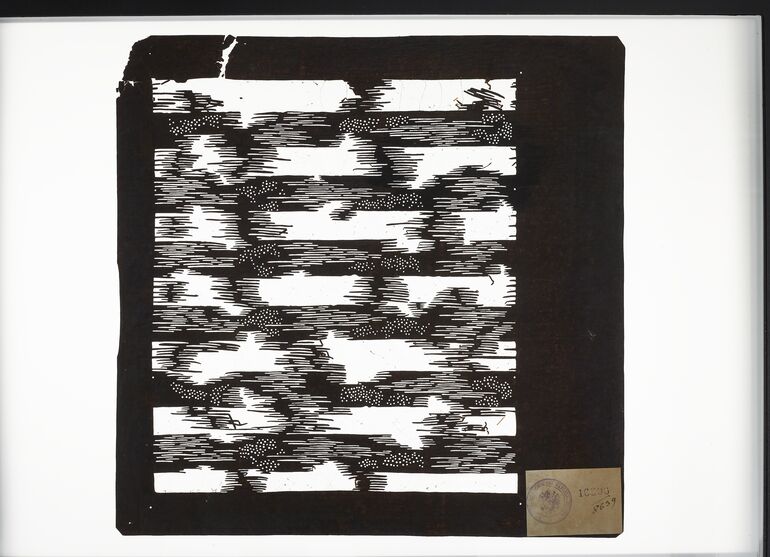
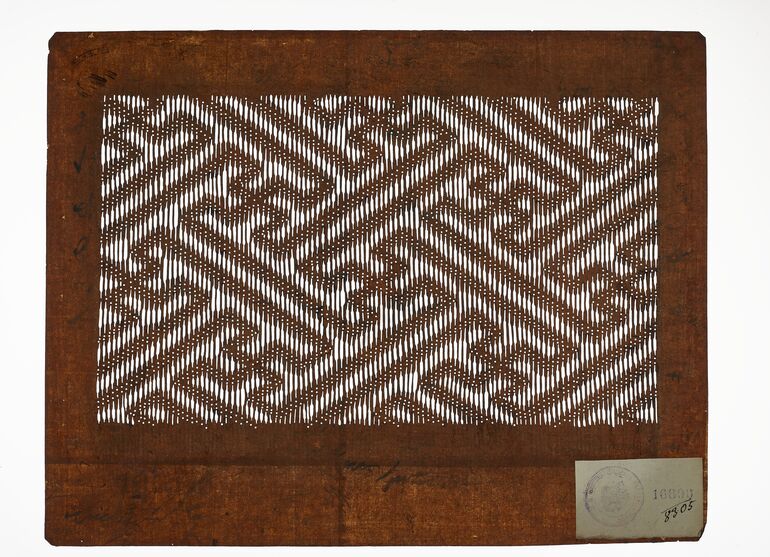
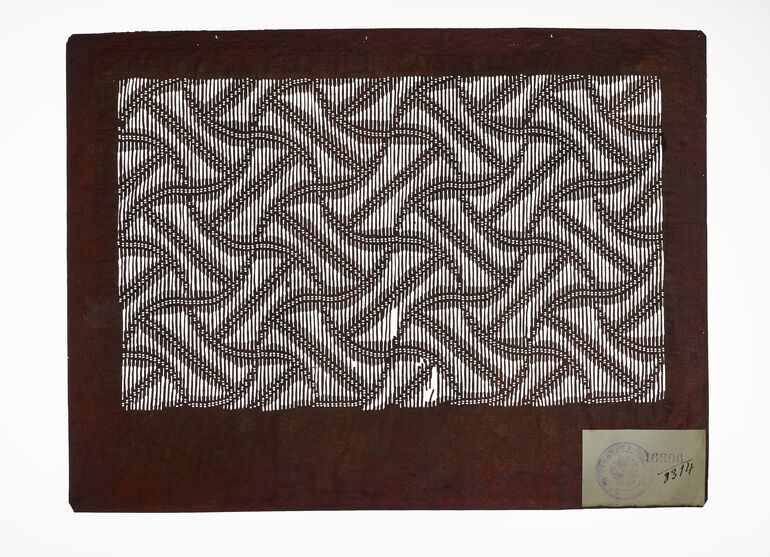
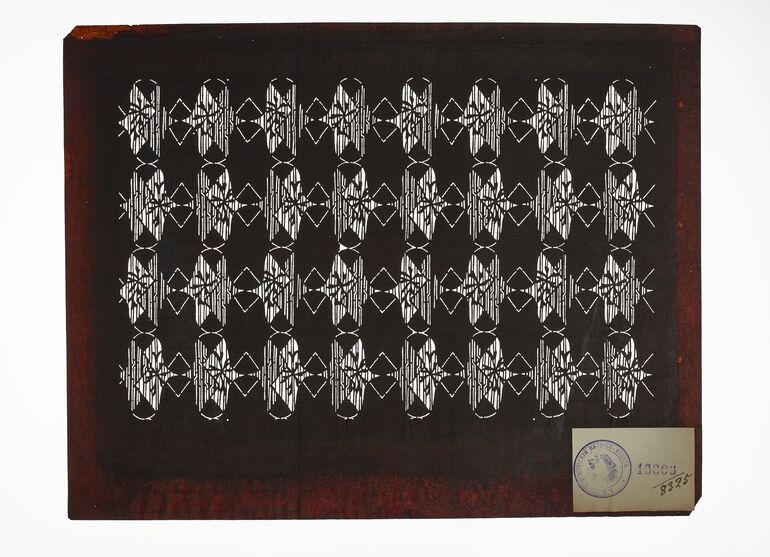
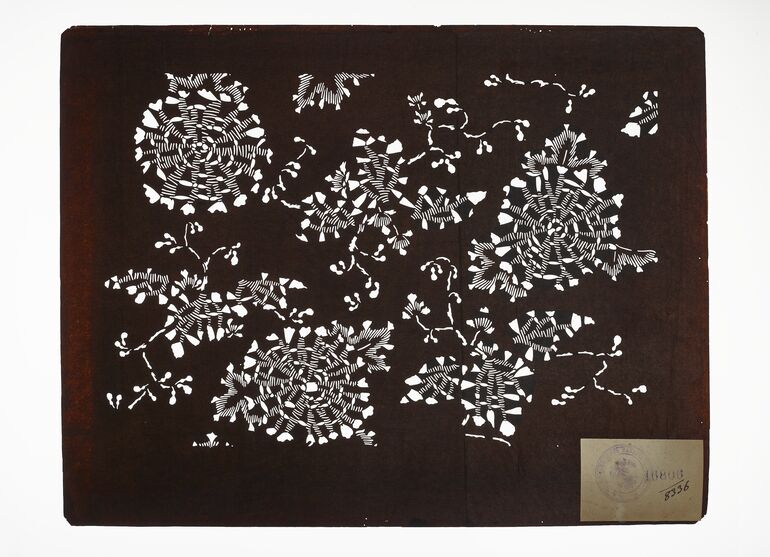
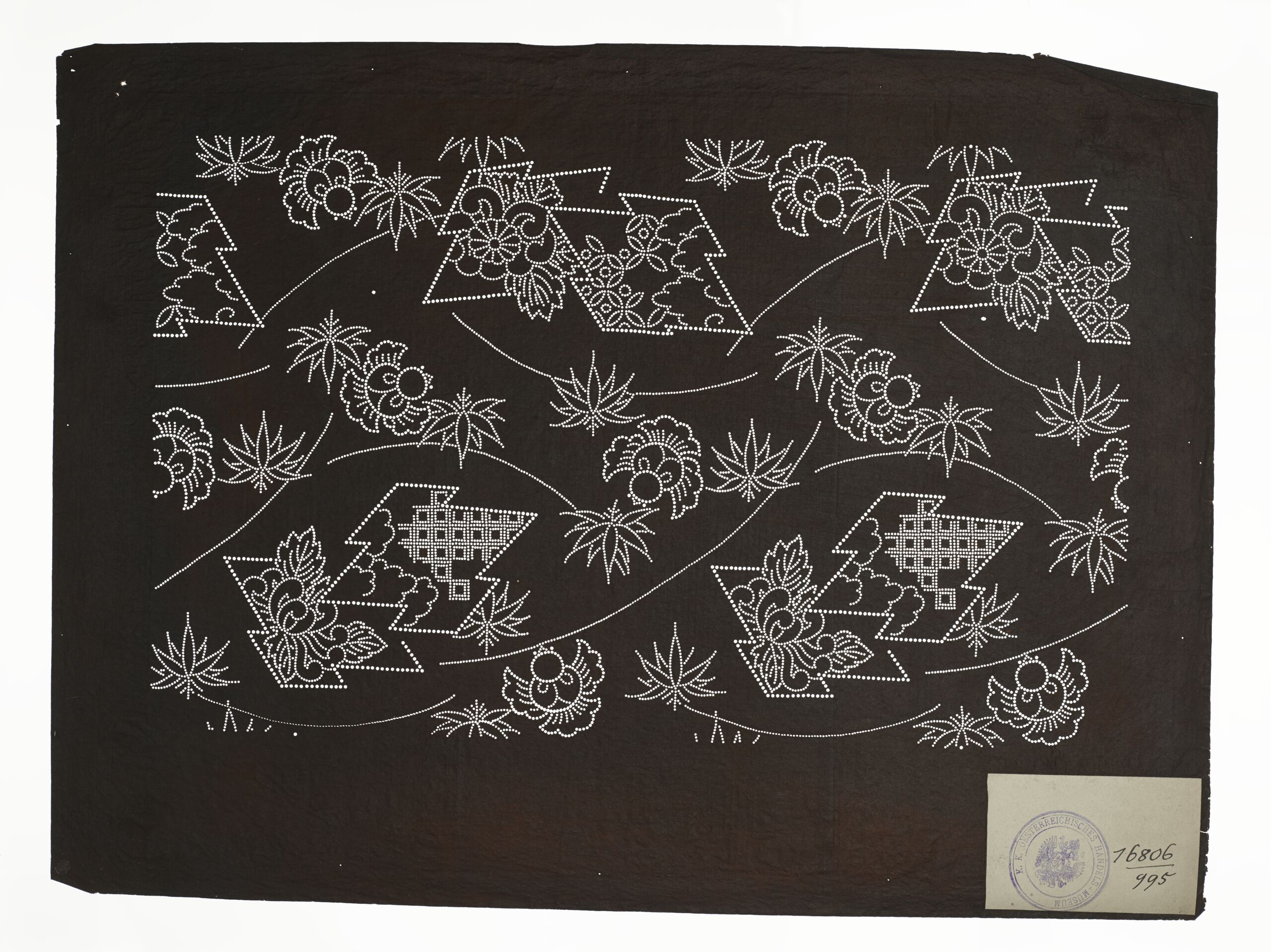
- Animal pattern (dōbutsu monyō 動物文様), plant pattern (shokubutsu monyō 植物文様), scattered pattern (chirashi monyō 散らし文様): matsukawabishi 松皮菱 („pine-bark-diamonds“), fluffed sparrows (fukura suzume ふくら雀), chrysanthemums, broadleaf bamboo (sasa 笹) and blades of grass
Collection
Period | Style | School
Material | Technique
Measurements
- height: 31.2 cm
- width: 41.8 cm
- 1 Muster - height: 21.7 cm
- 1 Muster - width: 35.1 cm
Inventory number
- OR 3925-995
Acquisition
- assumption , 1907
Department
- Asia Collection
Description
-
"Dyed ground" (jizomari 地染). Matsukawabishi 松皮菱 = combination of 3 diamonds; matsukawa 松皮 = pine-bark, bishi/hishi 菱 = diamond.
Fukura suzume (fluffed sparrow) is an auspicious motif, as the name can also be written with the characters fuku福 (happiness), ra 良 (good) and suzume 雀 (sparrow) or with the characters fuku福 (happiness), rai来 (coming) and suzume 雀 (sparrow). Its 'fluffed and puffed-up' shape gives the impression of a good, carefree life.
The chrysanthemum (kiku 菊) symbolizes longevity, which dates back to a Chinese legend. The Yellow River once originated in a chrysanthemum meadow, and a villager who drank from the spring achieved a long life. In Japan, the motif first appears in the Kokin-wakashū 古今和歌集 (early 10th century), while the Man’yōshū 万葉集 from the 8th century lists 157 plant species but does not contain a single poem about chrysanthemums. It is therefore assumed that the flower was first introduced to Japan from China at the end of the 8th or beginning of the 9th century.
-
stencil (katagami 型紙), Animal pattern (dōbutsu monyō 動物文様), plant pattern (shokubutsu monyō 植物文様), scattered pattern (chirashi monyō 散らし文様): matsukawabishi 松皮菱 („pine-bark-diamonds“), fluffed sparrows (fukura suzume ふくら雀), chrysanthemums, broadleaf bamboo (sasa 笹) and blades of grass, Anonym, MAK Inv.nr. OR 3925-995
-
https://sammlung.mak.at/en/collect/animal-pattern-dobutsu-monyo-動物文様-plant-pattern-shokubutsu-monyo-植物文様-scattered-pattern-chirashi-monyo-散ら_316372
Last update
- 25.04.2026
Related via
Artist
Artist
Location
Material