Title
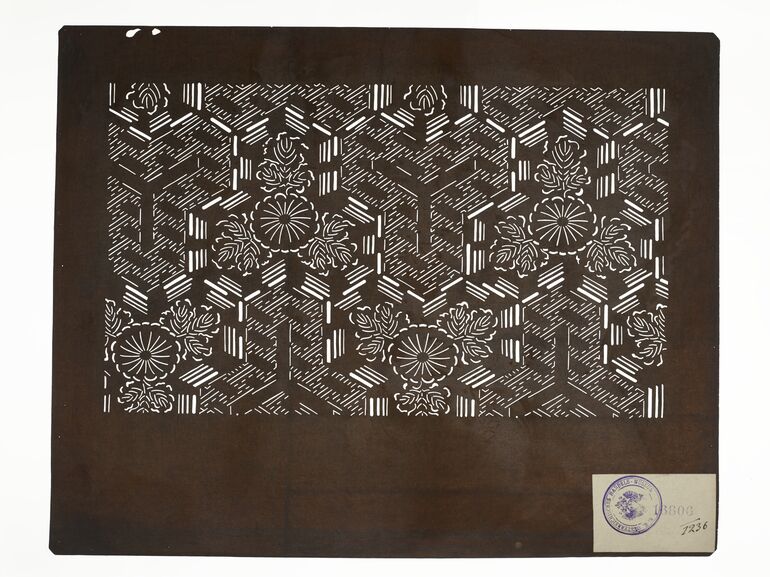
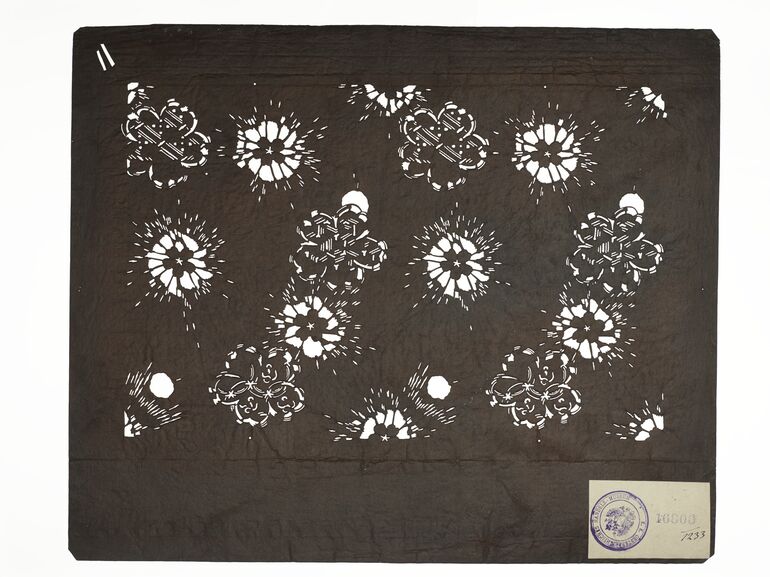
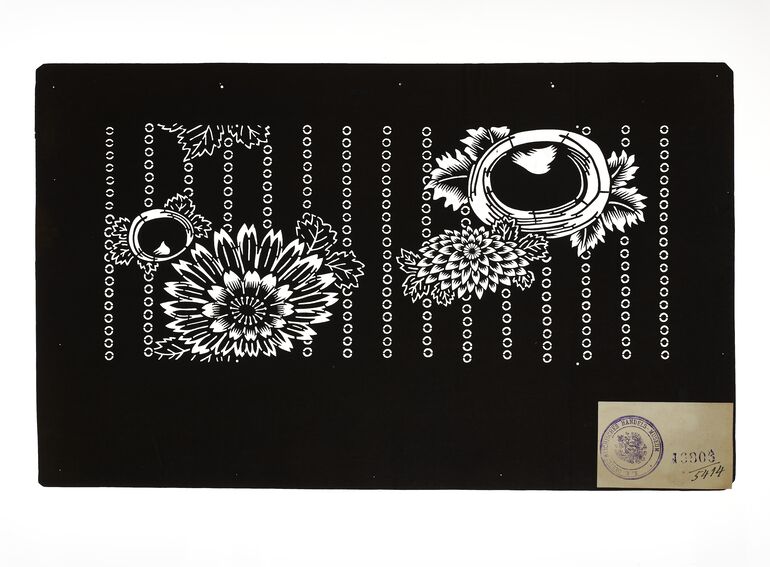
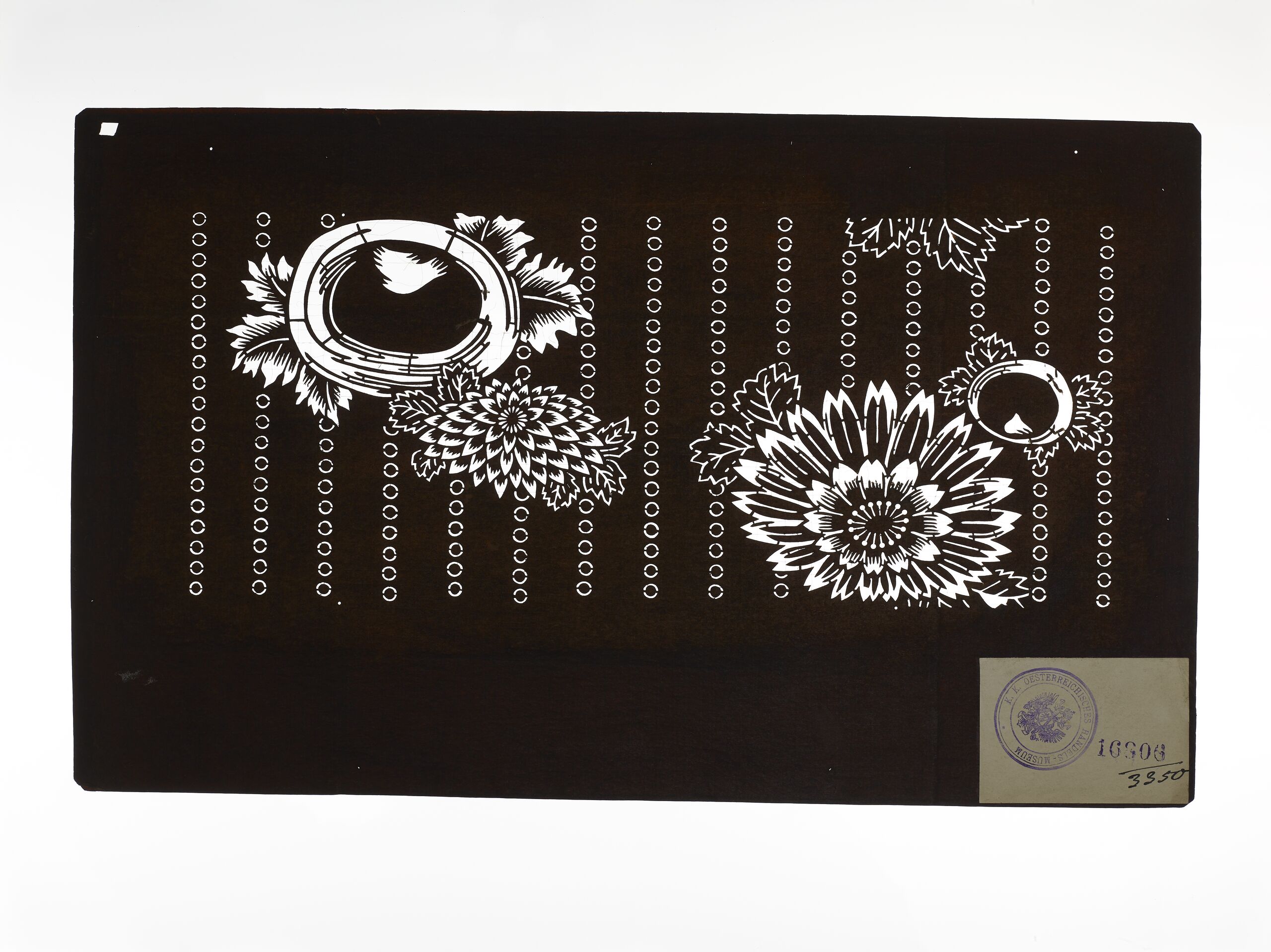
- Part of a set. Plant pattern (shokubutsu monyō 植物文様), stripe pattern (shima monyō 縞文様): chrysanthemums and manjugiku 万寿菊 (dumpling shape chrysanthemums) on stripes of kanoko 鹿の子
Collection
Period | Style | School
Material | Technique
Measurements
- height: 24.8 cm
- width: 40.8 cm
- 1 Muster - height: 14 cm
- 1 Muster - width: 33.2 cm
Inventory number
- OR 3925-3350
Acquisition
- assumption , 1907
Department
- Asia Collection
Description
-
"Dyed ground" (jizomari 地染), "main stencil" (omogata 主型).
The chrysanthemum (kiku 菊) symbolizes longevity, which dates back to a Chinese legend. The Yellow River once originated in a chrysanthemum meadow, and a villager who drank from the spring achieved a long life. In Japan, the motif first appears in the Kokin-wakashū 古今和歌集 (early 10th century), while the Man’yōshū 万葉集 from the 8th century lists 157 plant species but does not contain a single poem about chrysanthemums. It is therefore assumed that the flower was first introduced to Japan from China at the end of the 8th or beginning of the 9th century.
Manjugiku 万寿菊: A motif in the manner of Ogata Kōrin 尾形光琳 (1658 - 1716). Since the shape of the chrysanthemum (kiku 菊) is reminiscent of a filled dumpling (manjū 饅頭), it is called “manjugiku”. However, this motif is written with the characters for “long life (manju 万寿) “.
The tie-dye (shibori 絞り) pattern kanoko 鹿の子 similizes the white spots of deer calf (ka 鹿 = deer; ko 子 = kid).
-
stencil (katagami 型紙), Part of a set. Plant pattern (shokubutsu monyō 植物文様), stripe pattern (shima monyō 縞文様): chrysanthemums and manjugiku 万寿菊 (dumpling shape chrysanthemums) on stripes of kanoko 鹿の子, Anonym, MAK Inv.nr. OR 3925-3350
-
https://sammlung.mak.at/en/collect/part-of-a-set-plant-pattern-shokubutsu-monyo-植物文様-stripe-pattern-shima-monyo-縞文様-chrysanthemums-and-manjugiku-万寿菊_333989
Last update
- 25.02.2026
Related via
Artist
Artist
Location
Material