Kitchen and Cooking
Album curated by: Sebastian Hackenschmidt, 2025
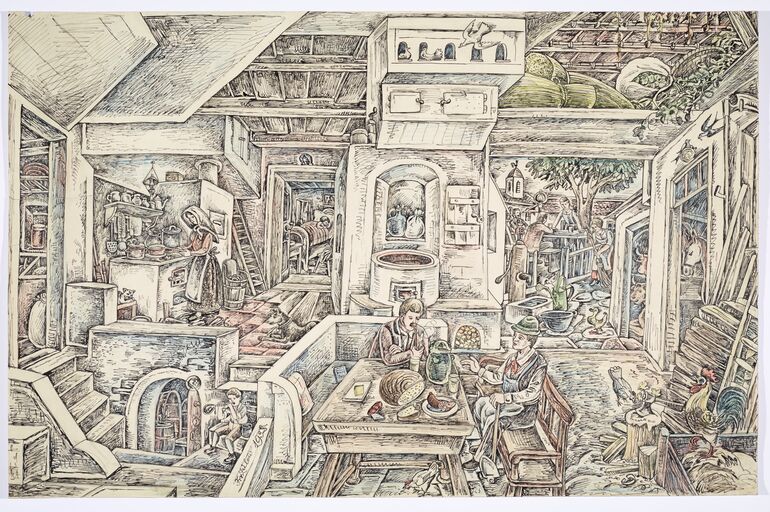
In European culture, cooking usually takes place in the kitchen, a room within an apartment or house that is primarily used for preparing and often also storing food. In addition to its actual purpose as a place for preparing food, the kitchen has repeatedly been a defining element in the development of living arrangements and a reflection of social structures throughout history.
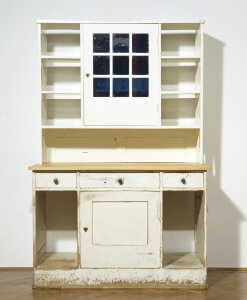
Josef Hoffmann, Credenza from the kitchen furnishings for the “Bergerhöhe” country house for Paul Wittgenstein, MAK inv.no. H 2800
MAK/Christian Mendez, CC BY-NC-ND 4.0
Traditionally, however, the kitchen was not a place of representation like the dining room, dominated by massive sideboards, or the carefully laid table where meals were eaten: due to functional processes, kitchen furniture and cooking appliances were usually simple and functional in design. When the design of everyday life increasingly became the focus of artistic interest around 1900, the kitchen also received greater attention. While it was transformed into a fitted kitchen in the first half of the 20th century under the dictates of strict space efficiency, in the second half it was discovered as a place of social distinction, for which a multitude of new utensils were developed.