Industrial Furniture
Album curated by: Sebastian Hackenschmidt, 2026
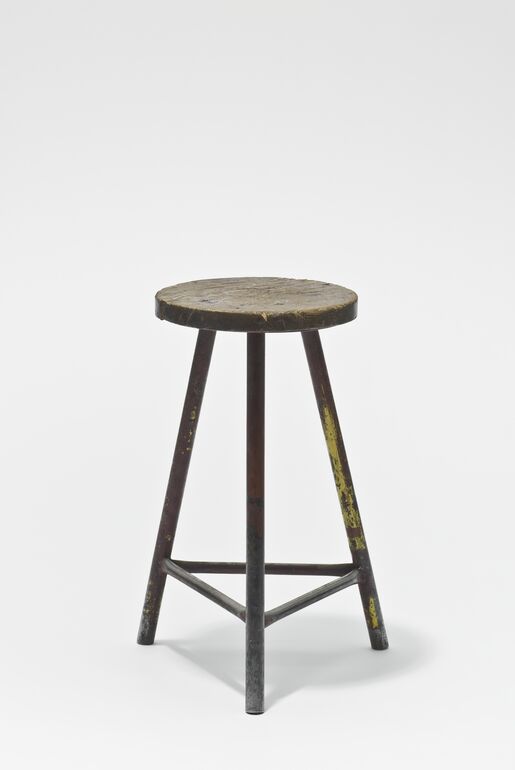
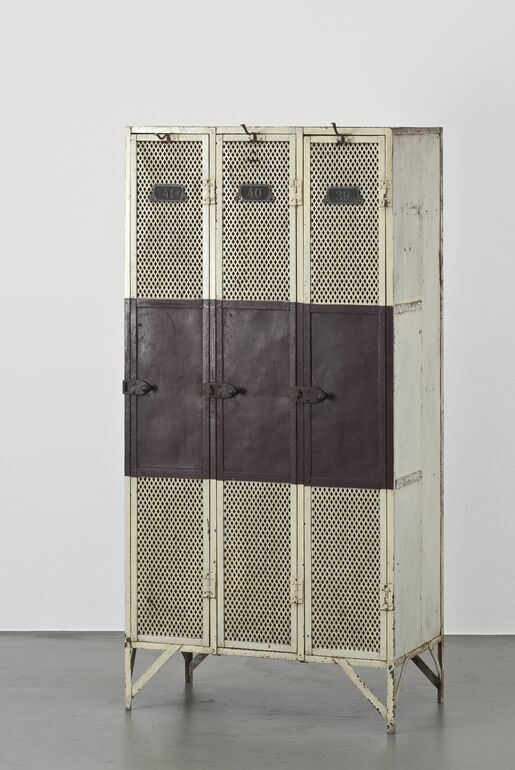
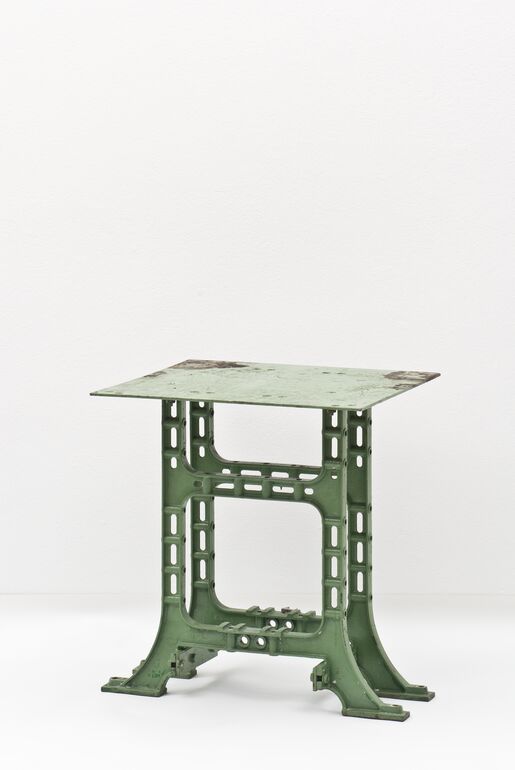
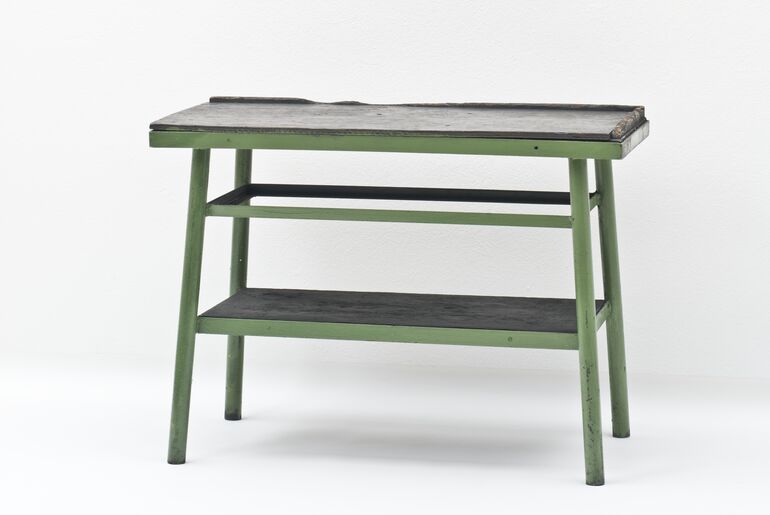
To this day, factories and industrial plants often use furniture that has been custom-built by workers and mechanics for specific purposes and activities and adapted to very specific production processes. This simple and functional “industrial furniture,” usually bolted or welded together from iron plates, sheet metal, tubular steel, and wooden boards, is not the main product of a factory—as is the case with industrial design—but rather specially manufactured parts of the factory equipment. As auxiliary equipment, they are usually manufactured without regard to design specifications: they are made or built as needed, not designed or shaped according to plan. Industrial furniture is primarily intended to meet the technical requirements and industrial work processes of a factory. Tables and workbenches should be robust work surfaces, shelves and racks should serve as clearly arranged storage for tools or manufactured goods, cabinets and lockers should enable the safe storage of factory-owned utensils or workers’ belongings, and stools should provide simple seating at the workplace. Since anything that does not promote production processes is irrelevant in the context of factories, even industrially manufactured furniture produced in series—such as lockers, tool cabinets, and work stools—is not decorated with ornaments, flourishes, or embellishments.